
Most new puppy owners make the same mistake: they wait. They wait until the puppy “settles in.” They wait until all the shots are done. They wait until the chewing gets bad enough that something has to change.
Here’s the problem with waiting your puppy is learning every single second, whether you’re teaching them or not. The only question is whether they’re learning the habits you want, or the ones you’ll spend the next year trying to undo.
If you’ve been searching for the exact right day, week, or milestone to start training your new puppy, this guide gives you all 16 of them from the moment you walk through the front door to the day your puppy blows past adolescence into a calm, well-mannered adult dog. Save this list you’ll want to come back to it as your puppy grows.
The Short Answer: Start the Day You Bring Your Puppy Home
Puppies are typically ready to come home around 8 weeks old, and that first day is also the best day to start training. Not obedience-school-level training but the small, quiet stuff: teaching your puppy their name, showing them where to potty, and letting them know that calm behavior gets rewarded.
Here’s the thing: training doesn’t mean drilling commands for 30 minutes a day. In the early weeks, training is happening in every interaction every meal, every nap, every trip outside. The 16 moments below show you exactly when to lean into each stage.
16 Best Times to Start Training Your New Puppy
The Moment You Walk Through the Door (Day 1)
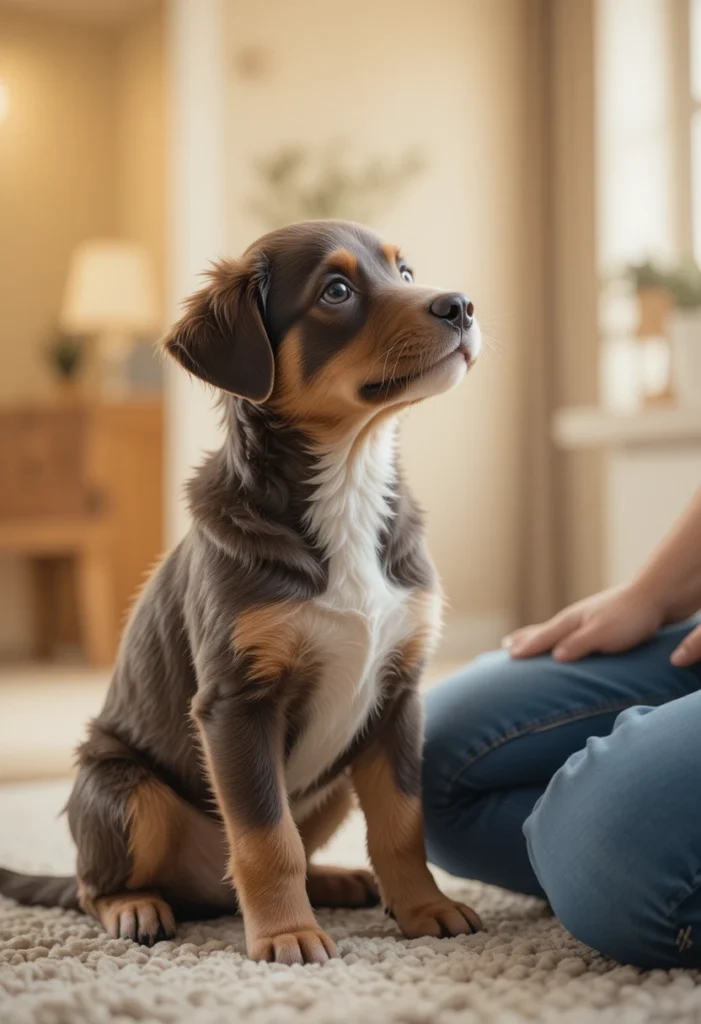
The second your puppy enters your home, they’re forming their first impressions of what life here is like. Keep this moment calm, not chaotic. Show them their potty spot immediately, let them sniff around on their own terms, and reward any moment of calm sitting or lying down.
This is not the day for a house full of visitors, loud greetings, or new-toy overload. A calm first day sets the tone for a confident puppy.
7–8 Weeks: The Foundation Window
At 7 to 8 weeks old, puppies are developmentally ready to start absorbing simple cues like “sit,” “come,” and their own name. Keep sessions to 2–3 minutes, use high-value treats, and end every session on a win.
Quick tip: A puppy this young has the attention span of a goldfish. Five short sessions a day will always beat one long one.
Before the First Meal
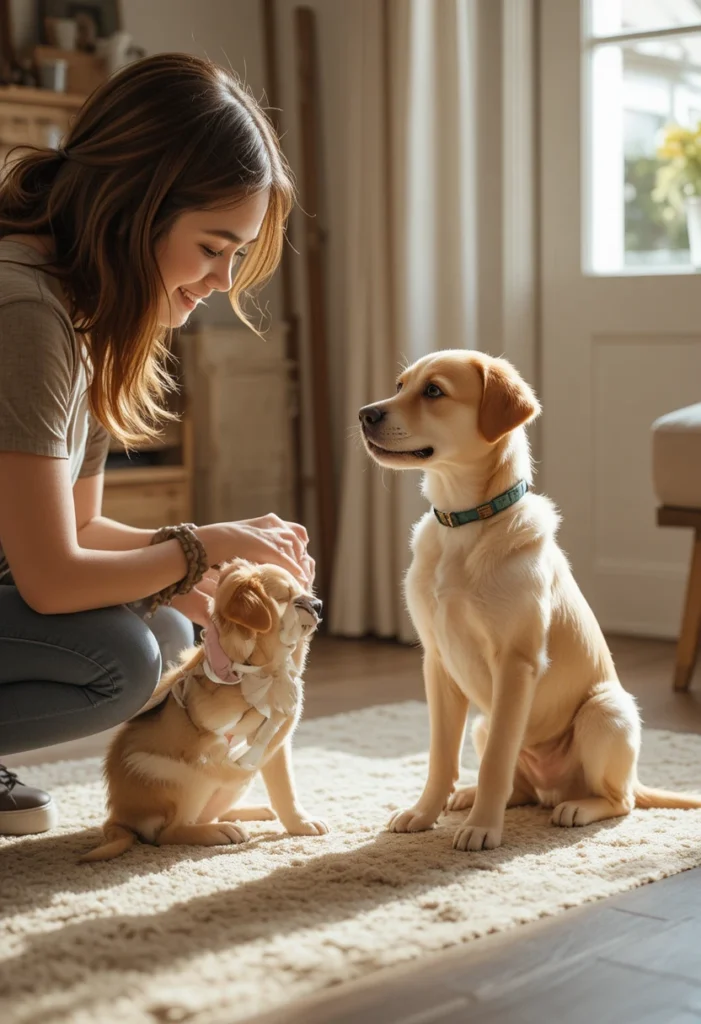
Mealtime is one of the easiest built-in training windows you already have. Before you set the bowl down, ask for a sit. This single habit sit before the bowl touches the floor teaches impulse control faster than almost anything else you can do in week one.
Read Also: How to Prevent Ticks in the Yard: 15 Proven Ways to Reclaim Your Outdoor Space
The First Night: Crate Training Starts Now
Don’t wait for a “better time” to start crate training the first night home is it. Make the crate feel safe with a soft blanket and a treat tossed inside, and keep initial crate time short and positive. Puppies who start crate training early tend to accept it far more easily than those introduced to it weeks later.
8–10 Weeks: Name Recognition & the First “Sit”
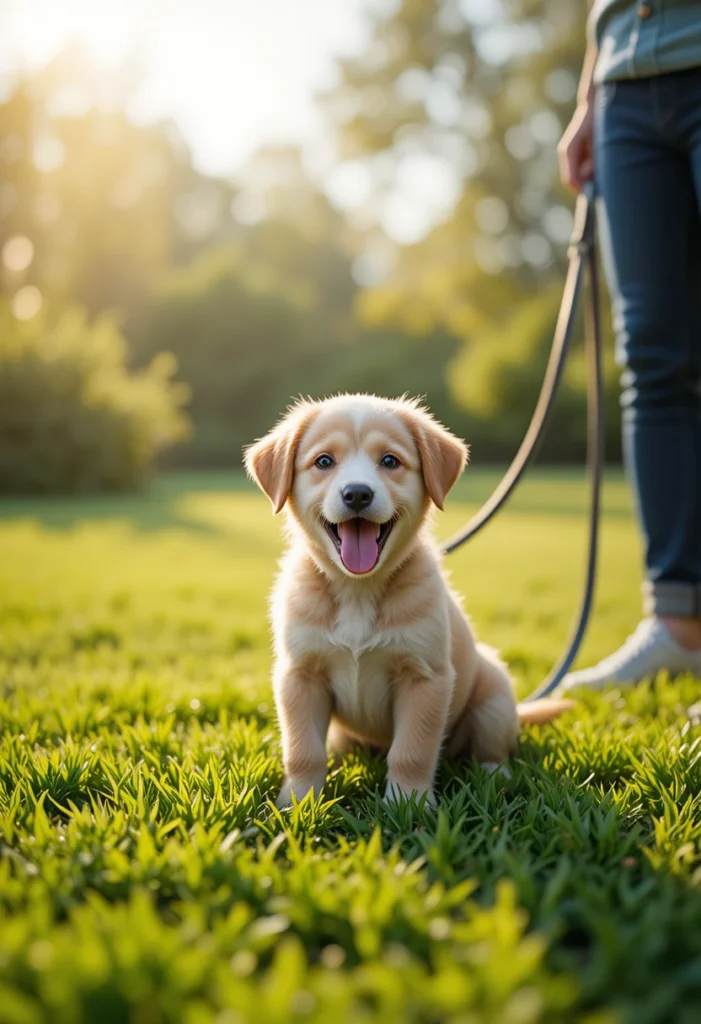
By week 8 or 9, your puppy should reliably look at you when you say their name. This is the building block for every other cue you’ll ever teach. Pair their name with a treat and praise every single time they glance your way you’re wiring in a lifelong habit of checking in with you.
After Every Nap: The Built-In Potty Training Trigger
Here’s a rule that makes potty training dramatically easier: puppies almost always need to eliminate immediately after waking up. The moment those eyes open, scoop them up and head straight outside. Do this consistently from day one, and you’ll shortcut weeks of accidents.
Save-worthy tip: nap → outside → praise. That three-step loop, repeated for a few weeks, is the entire secret to fast potty training.
9–10 Weeks: Leash Introduction Indoors First
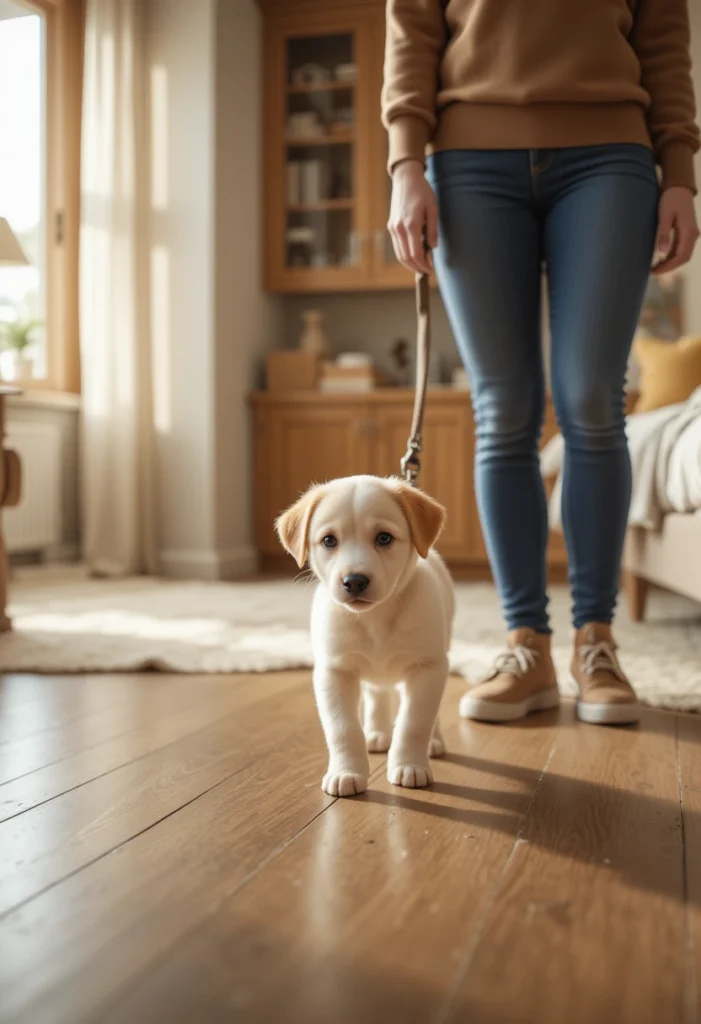
Don’t wait for a walk around the block to introduce the leash. Start indoors, where there are no distractions. Clip the leash on during meals or playtime so your puppy associates it with good things before you ever ask them to actually walk on it.
Before Vaccines Are Finished: Safe, Controlled Socialization
Many new owners assume they need to wait until the full vaccine series is complete before doing any socialization. That’s a costly delay the socialization window is closing fast (more on that below). Talk to your vet about low-risk ways to socialize early, such as carrying your puppy through a pet store, hosting healthy vaccinated dogs at your home, or letting friends and family visit.
10–12 Weeks: Handling & Grooming Desensitization
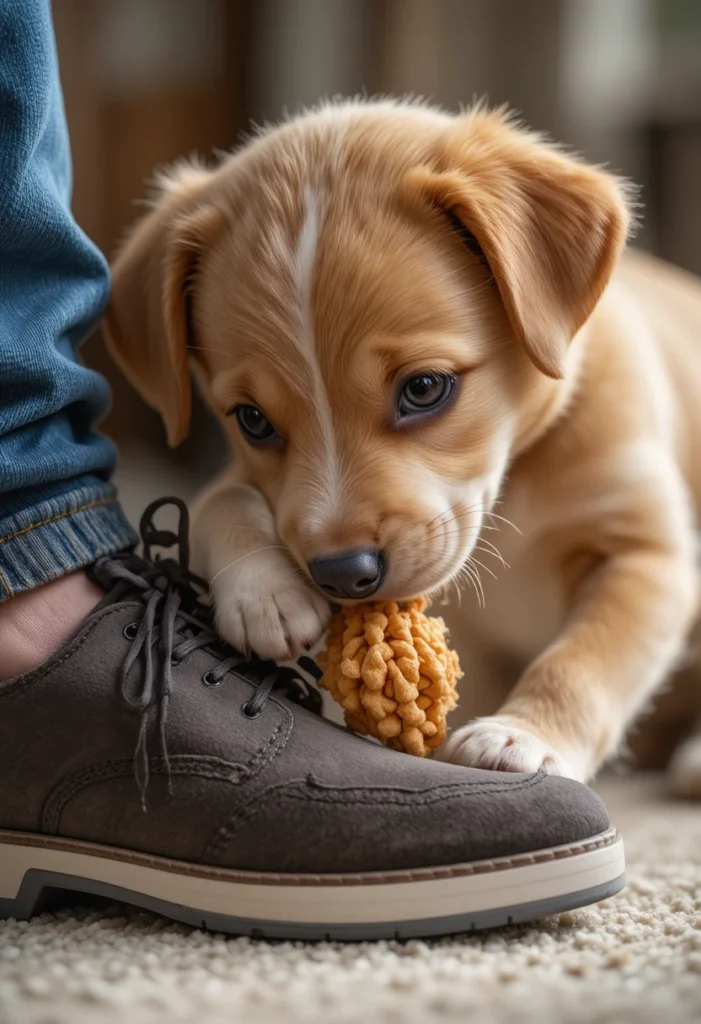
Start touching your puppy’s paws, ears, mouth, and tail now gently, and paired with treats so nail trims and vet exams don’t turn into wrestling matches later. A puppy who’s comfortable being handled at 10 weeks is dramatically easier to groom, examine, and medicate for the rest of their life.
The Critical Socialization Window: Before 16 Weeks
This is the single most important entry on this list. Puppies have a primary socialization window that closes around 16 weeks of age. Everything they need to feel comfortable with as adults other dogs, strangers, loud noises, car rides, stairs, vacuum cleaners needs positive exposure before this window shuts.
Miss this window, and you’re not just delayed you’re working against biology. Fears and anxieties that form after 16 weeks are far harder to undo than they would have been to prevent.
12–16 Weeks: Impulse Control Games
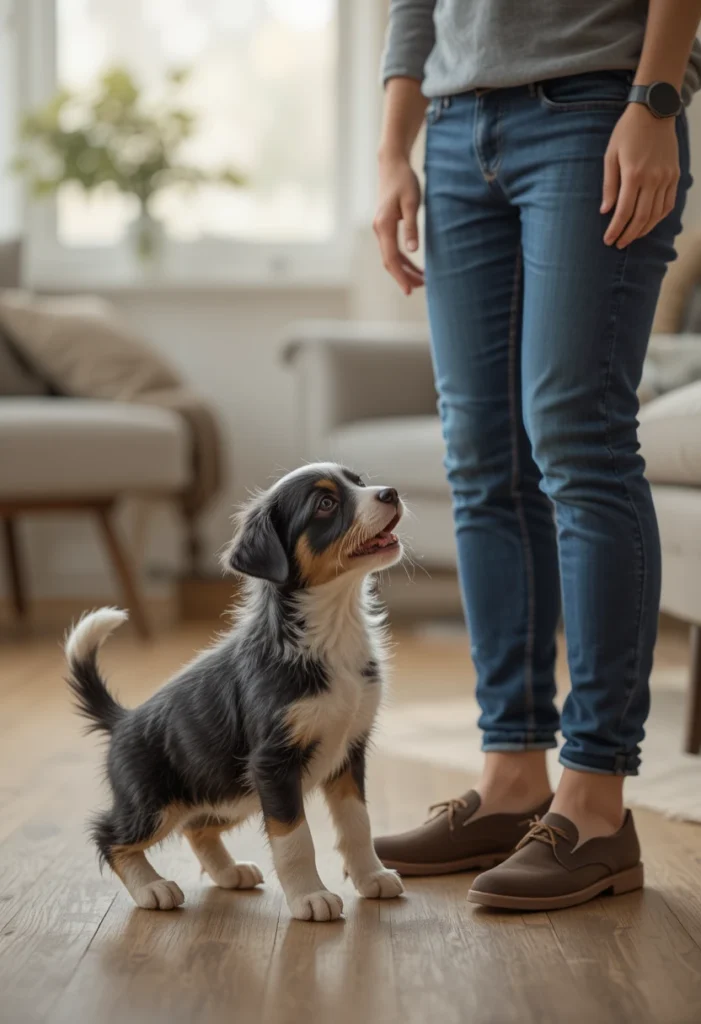
Once your puppy has a handle on sit and their name, layer in impulse control games like “wait” at doorways, “leave it” with treats on the floor, and short stay exercises. This is the age where your puppy’s brain is ready to handle a little more complexity.
The Instant Teething Starts: Bite Inhibition Training
Somewhere between 12 and 16 weeks, those needle-sharp puppy teeth start coming out, and the nipping ramps up. The moment you notice teething beginning is the moment to actively teach bite inhibition yelping or freezing when teeth touch skin, and immediately redirecting to an appropriate chew toy.
Waiting until the nipping becomes a “problem” means you’re now correcting a habit instead of shaping a new one always harder.
4–6 Months: Adolescent Prep & Distraction Training
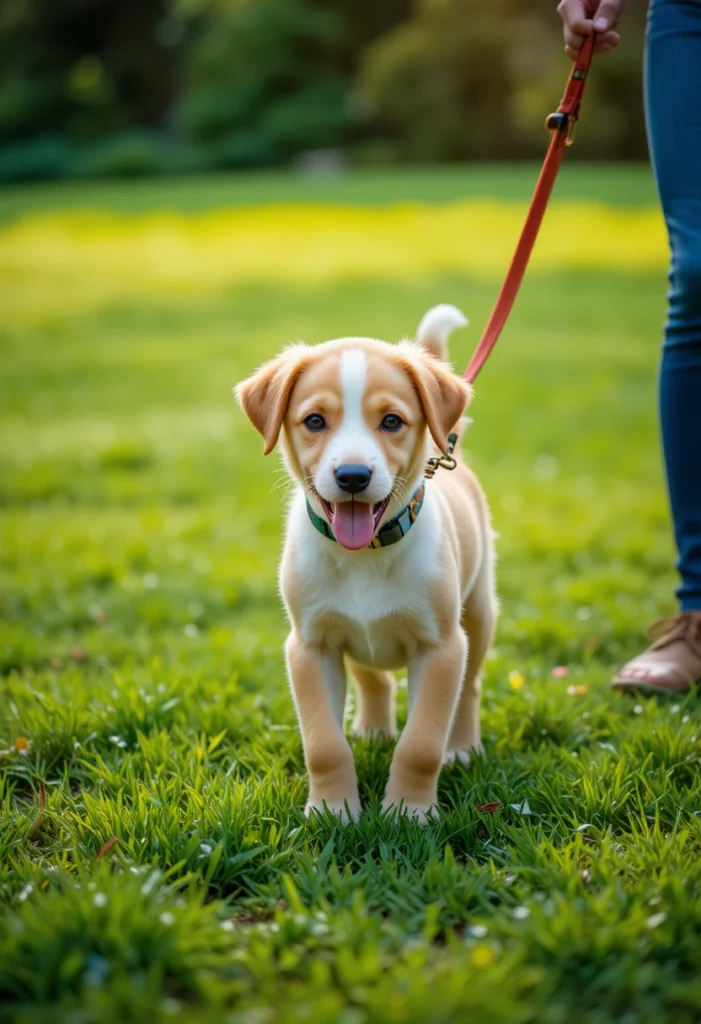
Right around 4 months, your sweet, focused puppy starts turning into a distractible adolescent. This is the time to start practicing known cues in busier environments the backyard, then the sidewalk, then the park. Don’t wait until adolescence hits to introduce distractions; start layering them in now so the transition is smooth.
The First Time You Notice Fear Not After It Becomes a Habit
If your puppy startles at the vacuum, cowers from a stranger, or freezes on stairs, that very first moment is your training window. Calmly reward any small step toward the scary thing, and never force or flood your puppy into a fear. Address it early, and it stays small. Ignore it, and it can calcify into a lifelong phobia.
Before Enrolling in Puppy Classes: As Early as 7–8 Weeks
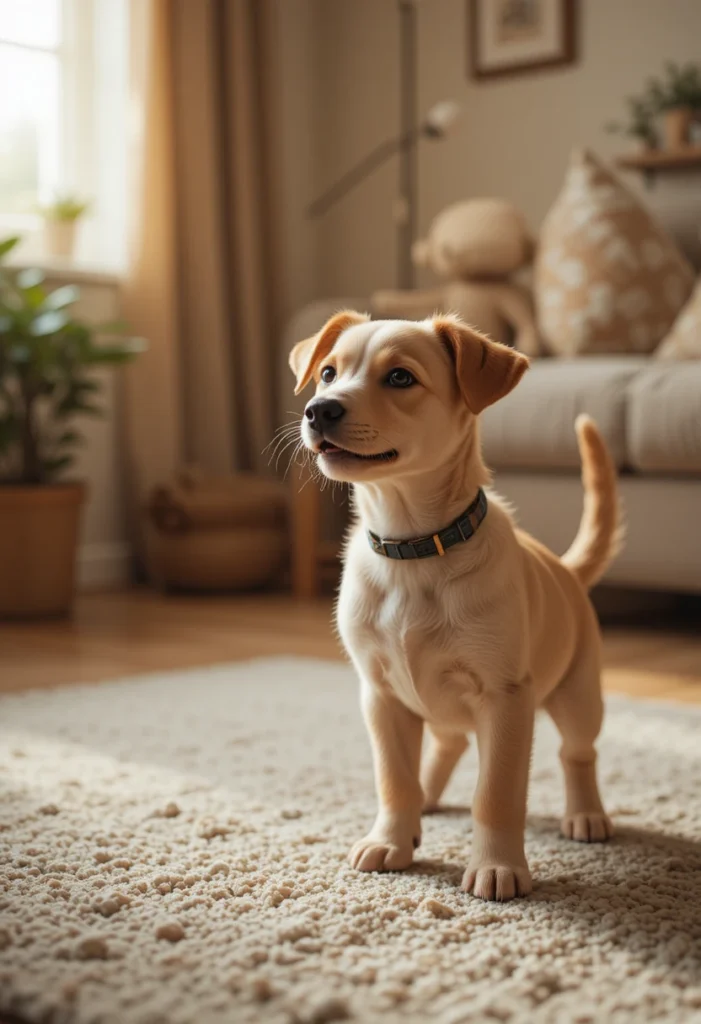
Many vets and trainers now recommend puppy classes as early as 7 weeks, as long as your puppy has had at least one round of vaccines and deworming. Don’t assume you need to wait for the full series ask your vet about a class that requires only the first shots. Early classes are one of the fastest ways to knock out socialization and basic obedience together.
Every Single Day After: Lifelong Reinforcement
Here’s the tip most people get wrong: training doesn’t have a finish line. Puppies typically understand and reliably respond to core cues by 5–6 months, but reinforcement needs to continue for life to keep those behaviors solid especially through the adolescent phase, when testing boundaries is completely normal.
Quick Recap: Your Puppy Training Timeline at a Glance
Day 1: Calm homecoming, potty spot introduction, crate setup
7–8 weeks: Name, sit, first puppy class option
8–10 weeks: Leash indoors, handling exercises
10–16 weeks: Critical socialization window don’t miss it
12–16 weeks: Bite inhibition, impulse control games
4–6 months: Distraction training, adolescent prep
6 months+: Lifelong reinforcement
Pin this timeline so you always know exactly what stage you’re in.
Frequently Asked Questions
Is it too late to start training if my puppy is already 4 months old?
Not at all. While the socialization window is most sensitive before 16 weeks, dogs of any age can learn new behaviors. You’ll simply need a bit more patience and consistency to build habits that a younger puppy would pick up faster.
How long should puppy training sessions be?
For puppies under 4 months, keep sessions to 2–5 minutes, several times a day. Short, frequent, and positive beats long and exhausting every time.
Do I need to wait until all vaccines are done to start training?
No. In-home training, handling exercises, and leash introduction can start immediately. For socialization around unfamiliar dogs, talk to your vet many recommend starting controlled exposure after the first round of shots, not the full series.
What’s the biggest training mistake new puppy owners make?
Waiting. Whether it’s waiting for a “problem” to appear before addressing it, or waiting for the puppy to “settle in” before starting any structure, delay is almost always the costliest mistake in puppy training.
Can I train a puppy without professional classes?
Yes most foundational training (potty training, sit, name recognition, crate training, leash basics) can be done at home. Professional classes add structured socialization and expert troubleshooting, which is valuable but not strictly required to get started.
Final Thoughts
There’s no single magic day to start training your puppy there are 16 of them, each one a small window where a little consistency pays off for years. Start with what’s in front of you today, whether that’s a first sit before dinner or a gentle paw touch during cuddle time, and the rest of this list will meet you exactly where your puppy is.