
Pet Rock became one of the strangest business successes in American history. In 1975, advertising copywriter Gary Dahl turned an ordinary stone into a novelty gift that sold more than a million units and reportedly made him a millionaire.
The secret was not the rock itself. It was the humor, clever packaging, perfect timing, and marketing idea behind it. What started as a joke became a nationwide craze and an unforgettable example of American consumer culture.
Who Was Gary Dahl, the Creator of Pet Rock?
Gary Ross Dahl was an American advertising copywriter who became famous for creating the Pet Rock. Before his unusual business idea, he worked in advertising and understood how to attract people’s attention through creative messaging.
His professional experience helped him recognize that people do not always purchase products because they need them. Sometimes, they buy something because it makes them laugh, feels unusual, or offers a memorable gift. This understanding became the foundation of the Pet Rock business.
How Did the Pet Rock Idea Start?
The story began during a conversation with friends at a bar in Los Gatos, California, in 1975. While listening to people complain about the responsibilities of owning pets, Dahl joked about having an animal that required no care.
His imaginary solution was a Pet Rock. It would not need food, water, exercise, grooming, or veterinary visits. It could not damage furniture or make noise.
The joke was simple, but Dahl recognized that it could become an entertaining novelty product. He started thinking about how to turn the idea into something people would actually purchase.
Why Did Pet Rock Become Popular in 1975?
The timing played a major role in the product’s success. America was coming out of a difficult period marked by the Vietnam War, the Watergate scandal, political uncertainty, and economic concerns.
People were interested in light entertainment and inexpensive gifts that could make them smile. The Pet Rock offered something different from traditional toys and household products.
Its launch also came shortly before the Christmas shopping season. This gave retailers an opportunity to sell it as a funny holiday present rather than an everyday household item.
The Genius Behind the Pet Rock Was Its Packaging
Dahl understood that selling an ordinary stone would be difficult. Instead, he presented it as a complete pet ownership experience. The packaging made customers feel they were buying something much more entertaining than a rock.
Each original Pet Rock came inside a small cardboard carrier with air holes. The stone rested on excelsior wood shavings, a type of fine wood material used for protective packaging.
The box looked like a miniature animal carrier. This simple presentation helped transform an ordinary stone into a recognizable novelty gift.
The Original Pet Rock Training Manual
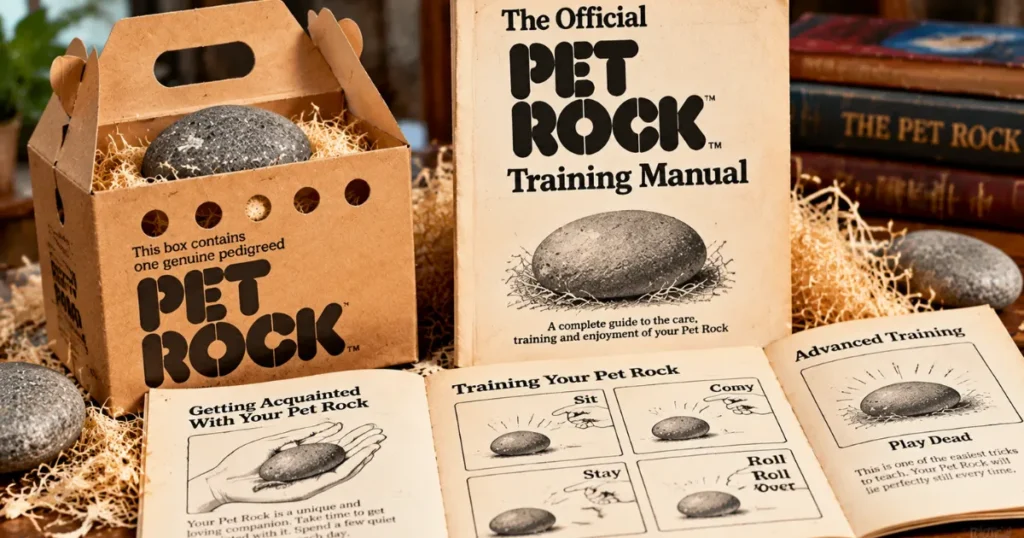
One of the most entertaining parts of the product was the Pet Rock Training Manual. It contained humorous instructions about caring for and training the stone.
Customers could read about teaching their rocks commands such as sit, stay, come, and roll over. One of the easiest tricks was playing dead because the rock naturally remained motionless.
The manual transformed the product into an interactive joke. Instead of purchasing a simple stone, customers received an entertaining gift that encouraged conversation and laughter.
How Gary Dahl Turned the Pet Rock Into a Million-Dollar Business
An amusing idea needed money, production, and distribution before it could become a real business. Dahl worked with investors and established Rock Bottom Productions to develop and sell the product.
The company sourced smooth stones from Rosarito Beach in Mexico. Reports describe the stones as costing approximately one cent each. Their low material cost made the concept attractive, although packaging, labor, distribution, and other expenses also affected the final profit.
The San Francisco Gift Show That Changed Everything
In August 1975, Dahl introduced the Pet Rock at a San Francisco gift show. Retail buyers quickly noticed its unusual appeal.
The product attracted attention from major department stores, including Neiman Marcus and Bloomingdale’s. Their interest helped move the Pet Rock beyond its original California market and into stores across the United States.
Retail orders gave Dahl an opportunity to produce the stones on a much larger scale. What began as a small novelty concept was becoming a serious commercial business.
How Much Did the Original Pet Rock Cost?
The original Pet Rock sold for approximately $3.95. That price made it an affordable novelty gift for many American shoppers.
The stone itself was inexpensive, but customers were paying for the complete experience. This included the cardboard carrier, wood shavings, training manual, and humorous concept.
This is an example of perceived value, where presentation and branding can make a basic product feel worth considerably more than its raw materials.
How Many Pet Rocks Did Gary Dahl Sell?
Gary Dahl estimated that he sold approximately 1.5 million Pet Rocks during the craze. Other historical accounts commonly place the total between 1.3 million and 1.5 million units.
At the reported retail price of $3.95, selling 1.5 million units represents approximately $5.9 million in potential retail sales value.
However, this figure does not represent Dahl’s personal earnings. Retailer margins, wholesale prices, operating costs, production expenses, and investor agreements all affected the actual profits.
Did Gary Dahl Really Become a Millionaire?
Yes. Historical reports describe Dahl as becoming a millionaire through the Pet Rock business.
His success came from turning a low-cost novelty idea into a product with enormous seasonal demand. The combination of inexpensive materials, attractive packaging, retail distribution, and media attention helped generate substantial profits.
However, the business was not profitable from the beginning. Dahl later recalled that the company had accumulated approximately $200,000 in debt before sales started bringing in significant money.
How Media Attention Made the Pet Rock a National Phenomenon
The Pet Rock benefited from more than store displays. Newspapers, magazines, and television helped turn a local novelty into a nationwide talking point.
Newsweek magazine published a story about the product, while newspapers across America covered the unusual business idea. The media attention introduced the Pet Rock to consumers who had never seen it in stores.
Television exposure also helped the product reach wider audiences. Its unusual concept made it a natural subject for entertainment programs because the entire idea was built around humor.
Why Everyone Wanted to Own or Give Away a Pet Rock
The Pet Rock was especially attractive as a Christmas gift. It was inexpensive, unusual, and easy to explain.
People could give it to friends, family members, or coworkers simply to share a joke. Its unusual appearance and funny training instructions made it an easy conversation starter.
This created powerful word-of-mouth marketing. People discussed the product because its very existence was surprising. The more people heard about it, the more curiosity it generated.
What Happened After the Pet Rock Made Gary Dahl a Millionaire?
The Pet Rock’s success did not last forever. Its biggest sales period was concentrated around the 1975 holiday season. Once Christmas passed and the novelty began to fade, consumer demand dropped sharply.
Dahl tried to extend the product’s popularity with new versions and related merchandise. However, the original excitement was difficult to recreate.
The Bicentennial Pet Rock and Other Follow-Up Products
In 1976, Dahl introduced a Bicentennial Pet Rock to connect the product with America’s 200th anniversary.
He also explored other novelty ideas, including the Official Sand Breeding Kit. This product followed the same humorous approach, but it did not achieve the same commercial success.
The experience showed that a successful novelty does not automatically create a lasting product line. The original Pet Rock had benefited from a special combination of timing, publicity, and consumer curiosity.
Copycat Products and Business Challenges
The Pet Rock’s popularity encouraged other sellers to introduce similar products. Although Dahl protected the Pet Rock name, the basic idea of selling an ordinary stone was difficult to control.
He also faced disagreements with his original investors over the distribution of profits. Reports about the dispute describe a legal judgment that required Dahl to pay a substantial six-figure settlement.
His experience demonstrates that a successful product can create business challenges beyond manufacturing and sales. Partnerships, ownership rights, financial agreements, and trademarks remain important even when a business begins as a joke.
Gary Dahl’s Life After the Pet Rock Craze
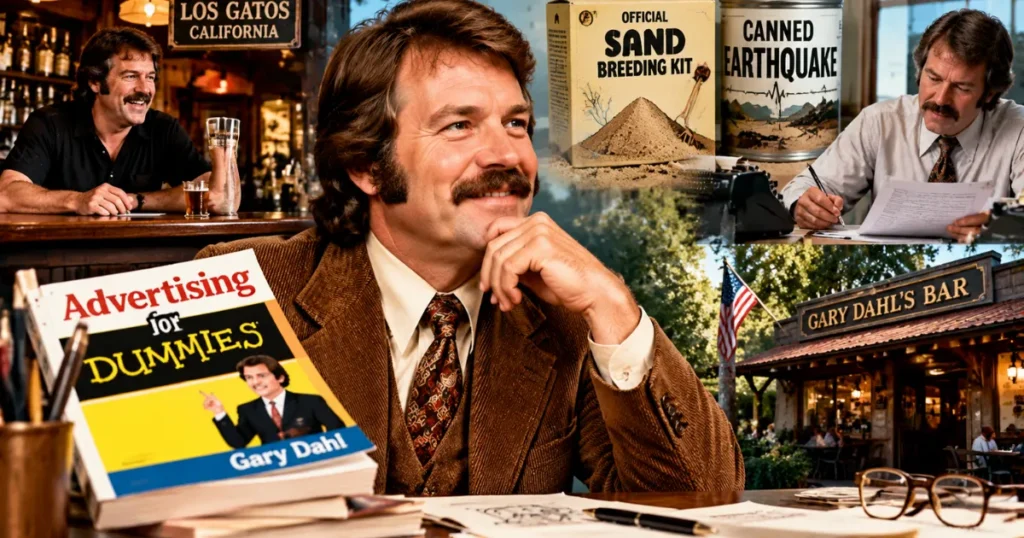
The Pet Rock made Dahl financially successful, but it also brought attention that he did not always welcome. People regularly approached him with unusual product ideas, hoping he could help them achieve similar success.
He continued working in advertising and explored other business interests. His professional life after the craze showed that he had interests beyond the novelty product that made him famous.
Gary Dahl’s Other Business Ideas
Dahl’s later projects included novelty products such as the Official Sand Breeding Kit and other unusual concepts.
However, none achieved the same commercial results. The original product had benefited from a rare combination of cultural timing, humor, media coverage, and consumer demand.
Dahl also became known for writing Advertising for Dummies, published in 2001. His experience offered an interesting example of how creative thinking and marketing knowledge can influence business success.
The Pet Rock’s Lasting Legacy in American Pop Culture
Although the original craze lasted only a few months, the Pet Rock remained recognizable for decades. It became a reference point whenever people discussed unusual products, unexpected fortunes, or strange American shopping trends.
The product also became part of the history of novelty toys. Its story demonstrated that a product did not need advanced technology or complicated manufacturing to attract millions of customers.
Read Also: Fresh Pet: Healthy Food, Care Tips, and Products for Pets
The Pet Rock in Movies and Popular Entertainment
One of the best-known references appeared in the 1999 comedy Office Space, directed by Mike Judge.
The film references the Pet Rock as an example of someone making money from an unusual idea. This helped introduce the story to younger audiences who had never experienced the original 1975 craze.
Its appearance in popular entertainment showed how deeply the Pet Rock had entered American culture.
Gary Dahl’s Death and the Story People Still Remember
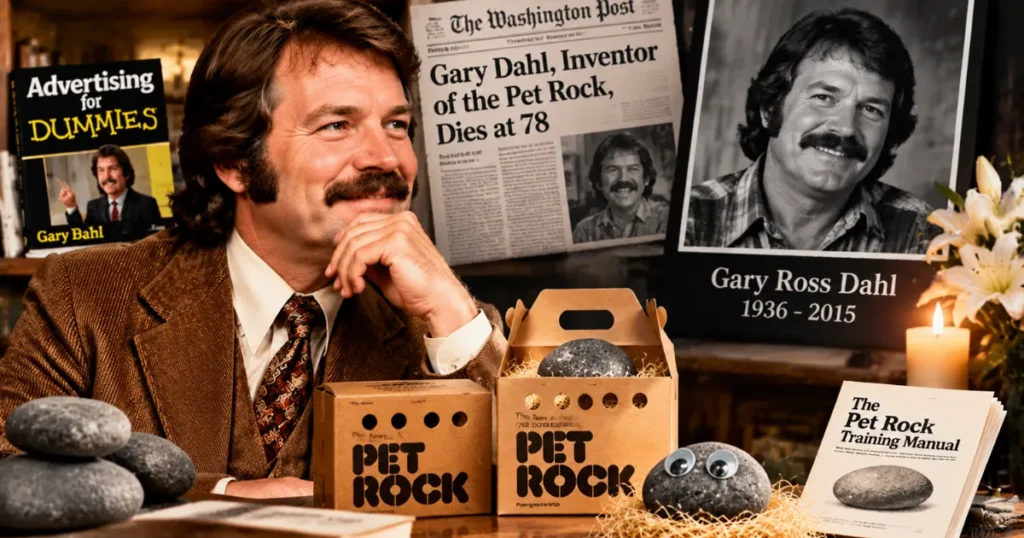
Gary Ross Dahl died on March 23, 2015, in Jacksonville, Oregon, at the age of 78.
His death received attention from major news organizations, including ABC News, CBS News, and The Washington Post. Many reports revisited the unusual story of how an advertising copywriter turned an ordinary stone into a million-dollar business.
His legacy continues to interest entrepreneurs, marketers, and historians because it combines humor, creativity, business risk, and an extraordinary commercial result.
What Modern Entrepreneurs Can Learn From the Pet Rock Business
The Pet Rock remains a useful business case study. Its success was not based on technological innovation or a complicated product. It came from understanding what customers might find entertaining and presenting that idea in a memorable way.
Sell an Experience, Not Just a Product
Dahl did not simply sell stones. He sold a funny ownership experience through the training manual, packaging, and product identity.
Modern businesses can apply the same principle by giving customers something memorable beyond the physical item. Packaging, storytelling, instructions, and customer experience can all influence buying decisions.
Timing Can Be Just as Important as the Idea
The Pet Rock reached stores shortly before Christmas 1975, when shoppers were looking for unusual gifts. Its arrival also matched a period when Americans were receptive to lighthearted entertainment.
This demonstrates the importance of understanding seasonal demand, customer interests, and cultural trends before launching a product.
Packaging Can Increase Perceived Value
A basic stone became a recognizable gift because Dahl presented it in a miniature pet carrier with a humorous instruction booklet.
This is a practical lesson in product positioning. Businesses should consider how presentation influences the way customers understand and value an item.
Publicity Can Make an Unusual Product Famous
News coverage and conversations between consumers helped the Pet Rock reach a much wider audience. Its unusual nature made it an easy subject for newspapers and television.
Today, social media can create similar attention for unexpected products. However, publicity alone cannot guarantee lasting sales or customer satisfaction.
Not Every Viral Product Becomes a Long-Term Business
The Pet Rock’s popularity declined quickly after its initial success. Its follow-up products could not recreate the same demand.
Entrepreneurs should understand the difference between a temporary viral product and a sustainable business. Long-term success usually requires repeat customers, ongoing demand, product development, and a clear market.
Why the Pet Rock Story Still Matters Today
The Pet Rock captured a unique moment in American history when consumers were ready for something simple, funny, and different. Gary Dahl recognized that opportunity and turned a casual joke into a product that sold approximately 1.5 million units.
Its history remains relevant because it shows how marketing, consumer psychology, packaging, timing, and creativity can influence buying decisions. Sometimes, the most memorable business ideas are not the most complicated ones.
FAQ’s
Who invented the Pet Rock?
Gary Ross Dahl, an American advertising copywriter, invented the Pet Rock in 1975. He developed the idea after hearing friends complain about the responsibilities of owning pets.
How did the Pet Rock make its creator a millionaire?
Dahl sold approximately 1.5 million Pet Rocks at around $3.95 each. His clever packaging, low material costs, retail partnerships, and national media attention helped turn the novelty product into a million-dollar business.
How much did an original Pet Rock cost in 1975?
An original Pet Rock retailed for approximately $3.95. It included a smooth stone, cardboard carrier, wood shavings, and a humorous training manual.
How many Pet Rocks were sold?
Gary Dahl estimated that he sold approximately 1.5 million Pet Rocks during the 1975 craze. Some historical accounts report slightly lower figures.
Why did Pet Rock become so popular?
The Pet Rock became popular because it combined humor, unusual packaging, affordable pricing, and excellent timing. Its Christmas 1975 launch and widespread media coverage helped it reach customers throughout America.
What happened to Gary Dahl after the Pet Rock success?
Dahl continued working in advertising, explored other novelty businesses, opened a bar, and wrote Advertising for Dummies. His later products did not achieve the same success as the Pet Rock.
Can you still buy an original Pet Rock today?
Original 1975 Pet Rocks occasionally appear through vintage collectible sellers and auction marketplaces. Modern reproductions and licensed versions also exist, but they are not necessarily original 1975 products.
Why did the Pet Rock craze end?
The craze declined after the 1975 Christmas shopping season because the novelty wore off. Similar products and changing consumer interests also made it difficult to maintain demand.
Conclusion
The Pet Rock captured a unique moment in American history and made Gary Dahl a millionaire through an unusually simple business idea. Its success came from understanding people, creating humor, and presenting an ordinary object in an extraordinary way.
More than five decades later, the story remains a valuable lesson in creative marketing and entrepreneurship. It proves that sometimes a great business opportunity begins with an idea nobody initially takes seriously.