
Your dog jumps on every guest who walks through the door. Treats get dropped from tiny hands and gobbled off the floor before you can blink. And every time you say “sit,” you get a blank stare followed by a full-body wiggle straight past you.
Sound familiar?
Here’s the good news: sit is one of the easiest commands to teach, and you don’t need to be a professional trainer to get it right. In this guide, you’ll find 11+ different ways to teach your dog to sit from the classic treat lure to no-food methods for dogs who couldn’t care less about kibble plus what to do when your dog just won’t sit, no matter how many treats you wave around.
Stick around, because method #9 is the one most owners skip and it’s usually the reason “sit” works at home but falls apart the second you step outside.
Save this guide before you start your first session you’ll want to come back to it as your dog progresses through the steps.
Why Teaching Your Dog to Sit Actually Matters
It’s easy to think of “sit” as a cute party trick. It’s not. It’s the foundation of almost everything else your dog will ever learn.
A dog who reliably sits on cue is a dog who:
- Waits calmly at the door instead of bolting outside
- Greets guests politely instead of jumping
- Sits at curbs and crosswalks instead of pulling into traffic
- Has an easy “reset button” when they’re overexcited, barking, or overwhelmed
Sit also builds something less obvious but just as important: trust. Every successful rep tells your dog, when I listen to you, good things happen. That’s the real groundwork for every other command you’ll ever teach.
What You’ll Need Before You Start
You don’t need fancy gear. Just gather:
- 20–30 small, soft training treats pea-sized, so your dog can eat them fast without pausing to chew
- A quiet, low-distraction room (the kitchen or living room works great)
- 5–10 minutes, two to three times a day
- Optionally, a clicker to mark the exact moment your dog gets it right
Here’s the thing: short, frequent sessions beat one long, frustrating one every time. A tired, bored dog doesn’t learn a sharp, engaged one does.
11+ Proven Ways to Teach Your Dog to Sit
Every dog learns a little differently. Some are food-motivated, some are toy-obsessed, and some do best when you take food out of the equation entirely. Try the method that fits your dog’s personality or mix a few together.
1. The Classic Treat Lure Method
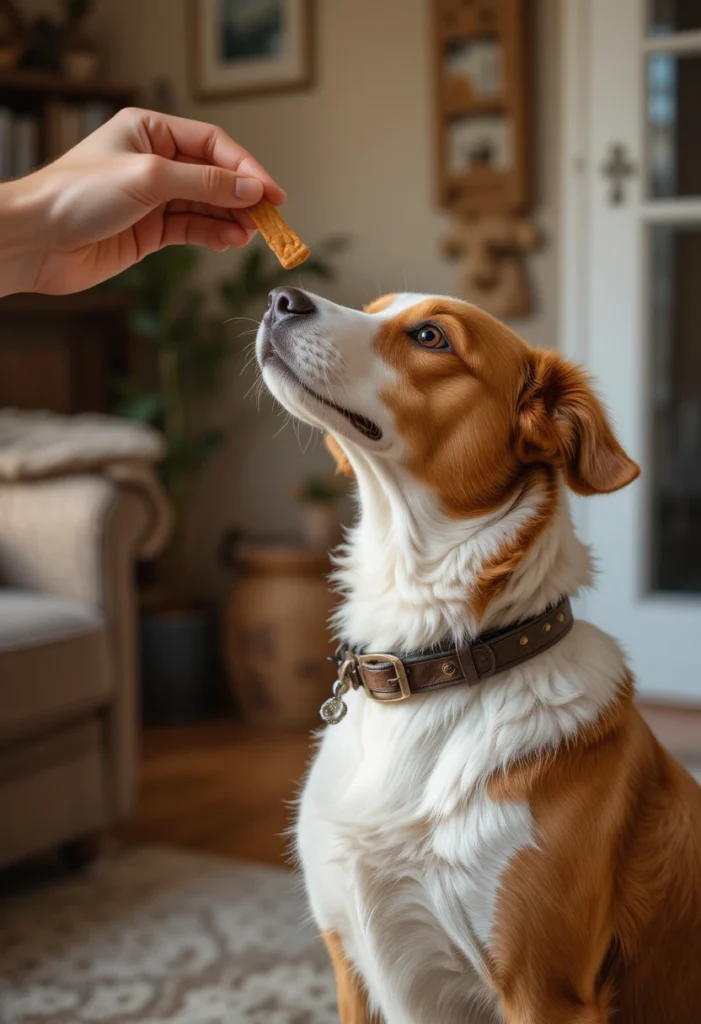
This is the go-to starting point for most dogs, puppies included.
- Hold a small treat between your fingers, right at your dog’s nose.
- Slowly move your hand up and back over their head, toward their tail.
- As their nose follows the treat up, their rear end naturally drops to the floor.
- The moment their bottom touches down, say “yes!” and give the treat.
Repeat this 8–10 times per session. Once your dog is nailing it consistently, you’re ready to move on don’t add the word “sit” yet. That comes in method #2.
2. The Hand Signal + Verbal Cue Method
Once your dog is following the lure into a sit almost automatically, it’s time to attach language to the action.
- Do the same hand motion as before, but with an empty hand no treat.
- Say “sit” the instant their bottom hits the floor, not before.
- Reward from your other hand or a treat pouch, not the hand doing the signal.
This step matters more than most owners realize: dogs learn body language far faster than words, so pairing a consistent hand signal with the cue gives you a backup system later in life especially useful for senior dogs who lose their hearing.
3. Capturing the Natural Sit
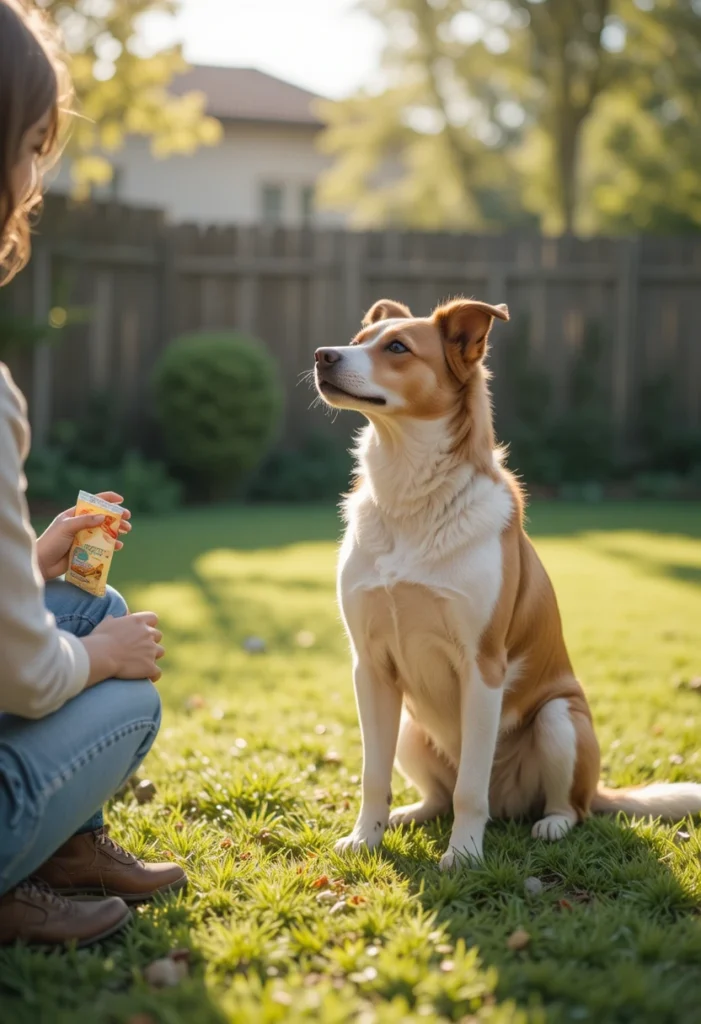
No lure needed here just good timing.
- Keep treats in your pocket and simply watch your dog throughout the day.
- The instant they sit on their own (they do this constantly), mark it with “yes!” and reward.
- After several repetitions, start adding the word “sit” right as their rear touches down.
This method is fantastic for dogs who are food-obsessed to the point of jumping at a lure, or for owners who want a completely relaxed, low-pressure approach.
Read Also: 10+ Best Dog Foods for a Sensitive Stomach (2026): Vet-Informed Picks That Actually Work
4. Clicker Training Method
A clicker adds precision that your voice can’t always match.
- Click the exact moment your dog’s rear touches the ground, then treat.
- The click becomes a clear, consistent “that’s it!” signal that’s faster and more exact than saying “good boy.”
- Once the sit is reliable, layer in the verbal cue the same way as method #2.
Quick tip: the click always comes before the treat, never after timing is everything with this method.
5. The Wall or Corner Method
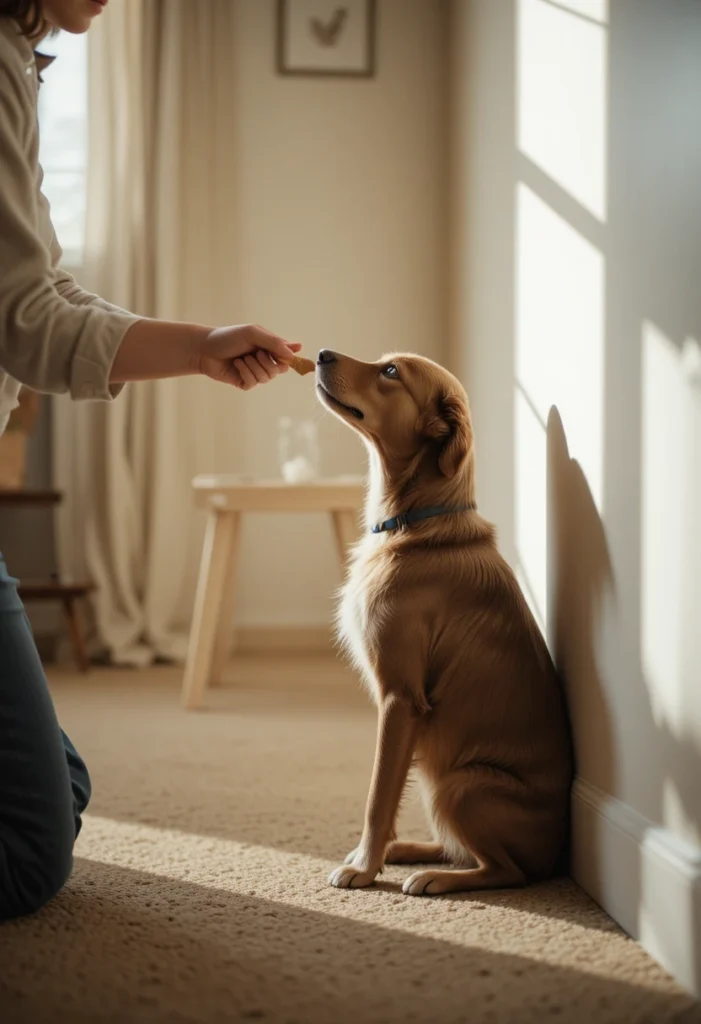
Great for dogs who back away instead of sitting, or who tend to shuffle sideways.
- Position your dog with a wall or corner directly behind them.
- Lure as usual since they can’t step backward, they’re far more likely to fold into a sit instead.
- Reward immediately, then gradually move away from the wall as they get the hang of it.
6. The Sit-to-Greet Method (for Jumpers)
If your main goal is stopping the jumping-on-guests problem, train sit specifically around greetings.
- Practice with a calm family member first: ask for “sit” as they approach.
- Reward for holding the sit as the person gets closer, pets them, and walks away.
- Slowly increase excitement level a stranger, a doorbell, a returning family member.
This is one of the most practical, real-life payoffs of the whole sit command, so don’t skip it once the basics click.
7. The Standing-to-Sit Chain Method
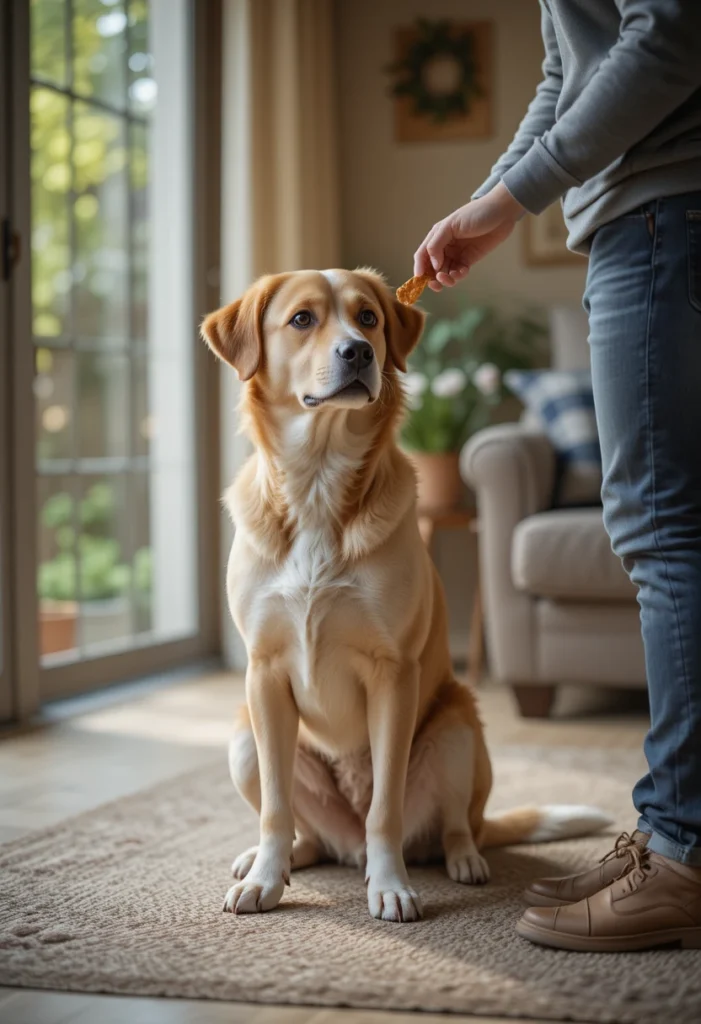
This builds a smoother, more automatic sit by linking it to movement.
- Walk your dog a few steps, then stop and lure into a sit.
- Reward, walk a few more steps, stop, sit again.
- Repeat in a loop this mimics real walks, where you’ll actually need the sit (at curbs, doorways, and crossings).
8. The “Say Please” Method
This turns sit into your dog’s default way of asking for things no treats required as a lure, just as a reward for life.
- Before opening a door, clipping on a leash, or setting down a food bowl, wait for a sit.
- Don’t say the cue at first just wait. Most dogs will offer a sit out of habit once trained.
- Reward with the thing they actually want (the door opening, the leash going on, the bowl going down).
Over time, this becomes a quotable training truth: a dog who sits automatically to get what they want rarely needs to be asked twice.
9. The Distraction-Proofing Method
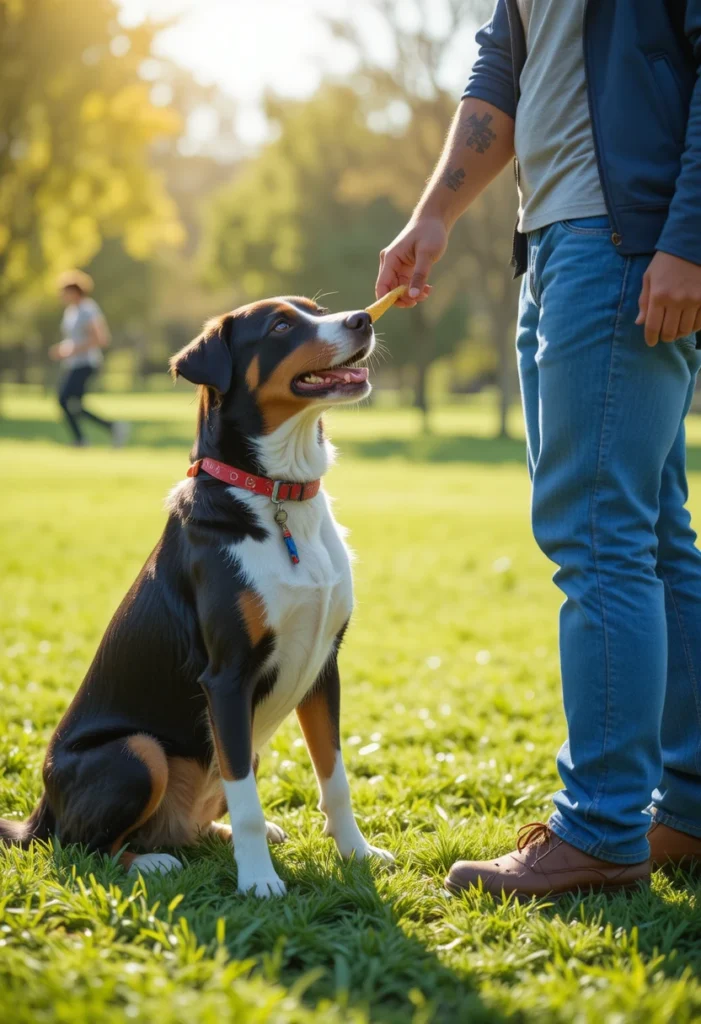
Here’s the catch almost every guide skips: a dog who sits perfectly in your kitchen may completely ignore you at the park. That’s not stubbornness it’s a training gap.
- Once sit is solid indoors, practice in the backyard.
- Then try a quiet sidewalk, then a slightly busier one.
- Only add distractions once each level is truly mastered if your dog struggles, drop back a level rather than pushing forward.
This single step is the difference between a dog who “sort of” knows sit and one who reliably sits anywhere, anytime.
10. The Delay/Duration Method
Once your dog sits on cue, teach them to hold it.
- Say “sit,” and instead of rewarding instantly, wait one extra second before treating.
- Gradually stretch that gap two seconds, five, ten.
- Release your dog with a clear word like “okay!” or “free!” so they know exactly when they’re allowed to get up.
Without this step, dogs often learn that sit means “touch the floor for a split second,” not “stay seated until told otherwise.”
11. The No-Food, All-Positive Method
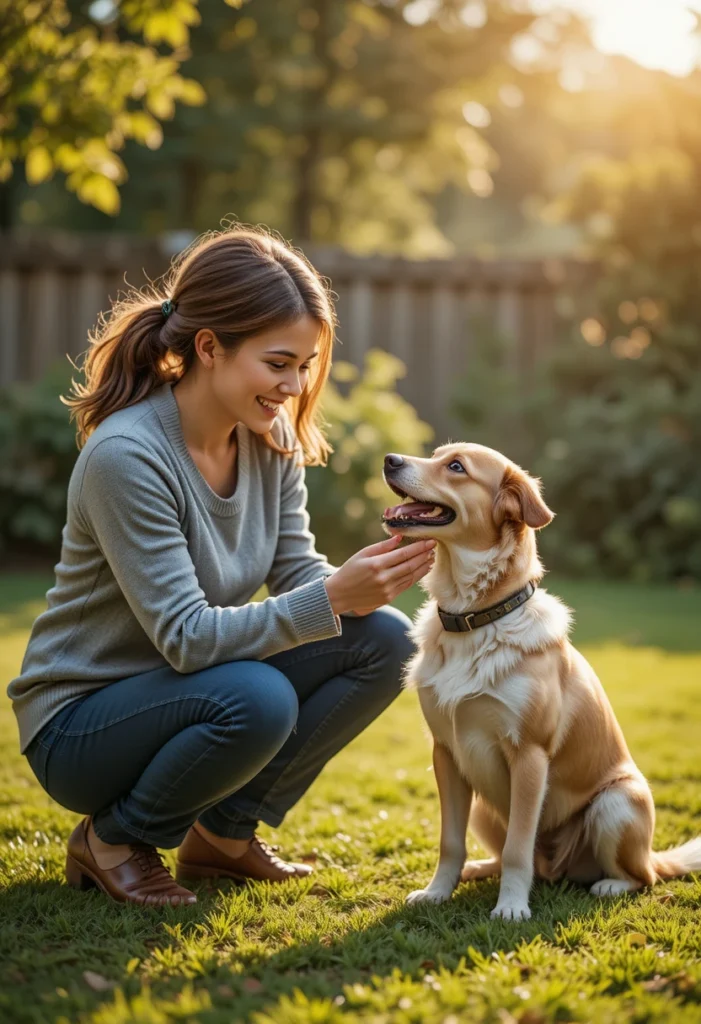
Some dogs are toy-driven, not food-driven and some owners simply prefer a lure-free approach from day one.
- Use a narrow platform, low step, or even a folded towel and place it against a wall.
- Invite your dog onto it; because the space is narrow, looking up at you naturally causes their rear to drop into a sit.
- Reward the position immediately with praise, play, or a favorite toy.
- Gradually move the platform away from the wall as your dog understands the position.
This approach removes the food lure entirely and lets your dog find the position through their own body awareness a favorite among positive-reinforcement trainers working with food-indifferent dogs.
Bonus: The Verbal-Only Fade Method
Once any of the above methods are working reliably with a hand signal, start fading it out:
- Say “sit” with a much smaller hand movement each time.
- Eventually, keep your hands completely still and use only your voice.
- If your dog hesitates, go back one step rather than repeating the cue multiple times.
Bonus: The Whole-Family Consistency Method
This isn’t a training technique so much as a training multiplier:
- Make sure everyone in the household uses the same word (“sit,” not sometimes “sit down”) and the same hand signal.
- Ask guests and kids not to repeat the command over and over if the dog doesn’t respond instantly.
- Consistency across every person your dog interacts with can cut training time dramatically.
Troubleshooting: What to Do If Your Dog Won’t Sit
Even with a solid method, dogs get stuck sometimes. Here’s how to handle the most common snags.
“My dog stands right back up.”
Add the delay method (#10) gradually, and make sure you’re rewarding while they’re sitting, not after they’ve already popped up.
“It works at home but not outside.”
This is almost always a distraction-proofing gap (#9). Go back a few levels of difficulty and rebuild slowly.
“My dog only sits crookedly or seems uncomfortable.”
Some dogs sit unevenly because of genuine physical discomfort, especially in the hips or hind legs. If a straight, comfortable sit never seems to click despite consistent practice, it’s worth a quick vet check to rule out a physical cause before assuming it’s a training issue.
“I keep repeating ‘sit, sit, sit’ and nothing happens.”
Say the cue exactly once. Repeating it teaches your dog that the real cue is actually “sit-sit-sit,” not a single word — which quietly undermines every other command you’ll teach later.
“My dog seems totally uninterested in treats.”
Switch to a higher-value reward (cooked chicken, cheese, or a favorite toy), or try the no-food method (#11) instead.
Common Mistakes That Slow Down Training
- Training only in one location. A sit that only works in the kitchen isn’t a reliable sit yet.
- Rewarding too late. If more than a second or two passes between the sit and the treat, your dog may not connect the two.
- Long, frustrating sessions. Five to ten focused minutes beats thirty distracted ones.
- Inconsistent cues between family members. Mixed signals slow every dog down.
- Skipping the “release” word. Without one, your dog never learns how long they’re expected to hold the position.
FAQ: Teaching a Dog to Sit
How long does it take to teach a dog to sit?
Most dogs pick up the basic motion within a handful of short sessions often just a few days. A fully reliable sit, including around distractions, can take a few weeks of regular practice.
What age can I start training my dog to sit?
Puppies can start learning simple sit training from around eight weeks old. Adult and senior dogs can absolutely learn it too — it’s never too late.
Should I use a clicker or just my voice?
Either works well. A clicker offers more precise timing, but a consistent marker word like “yes” works just as effectively for most owners.
Why does my dog sit at home but ignore me everywhere else?
This is one of the most common training gaps, and it’s almost always solved by practicing in gradually more distracting environments (see method #9) rather than assuming your dog is being defiant.
Is it ever too late to teach an older dog to sit?
No. Older dogs can absolutely learn new commands sessions may just need to be a bit shorter and more physically comfortable for them.
Do I need treats forever, or can I stop eventually?
You can gradually fade food rewards once the behavior is reliable, switching to praise, play, or real-life rewards (like the door opening) instead.
The Bottom Line
Teaching your dog to sit doesn’t require perfect technique or professional training it requires consistency, good timing, and the right method for your dog’s personality. Whether your pup is food-obsessed, toy-driven, or a total distraction magnet at the park, there’s a version of this command that will click for them.
Pick one or two methods from this list, keep your sessions short and upbeat, and celebrate the small wins. Before long, “sit” will be second nature and you’ll have the foundation for every command that comes next.