Your dog hears the doorbell and something in their brain just… flips. Ears up, tail wagging like a helicopter blade, and before you can even say “off,” all four paws leave the ground and they’re airborne, straight at your guest’s chest.
Sound familiar? You’re not alone, and more importantly your dog isn’t broken. Jumping is one of the most common behavior complaints dog owners bring to trainers, and it’s also one of the most fixable, as long as you understand why it’s happening before you try to stop it.
Here’s the thing: most advice out there tells you to “just ignore it,” and while that’s part of the puzzle, it’s nowhere near the whole picture. Below you’ll find 12 real, trainer-backed strategies including the one most people skip entirely (hint: it has nothing to do with your dog and everything to do with your guests). By the end, you’ll have a complete game plan for calm, four-paws-on-the-floor greetings, whether it’s you, your kids, or a stranger on a walk.
Why Do Dogs Jump on People in the First Place?
Before you can fix the behavior, it helps to understand it. Dogs jump on people for a few very predictable reasons:
- They want attention. In a dog’s world, eye contact, touch, and even scolding all count as attention so a swat or a “no!” can accidentally reward the exact behavior you’re trying to stop.
- They’re excited or over-aroused. Puppies especially haven’t learned impulse control yet, and greeting a beloved person can flood them with excitement they don’t know how to manage.
- It’s been rewarded before. If jumping has ever gotten your dog a scratch behind the ears, a laugh, or even a gentle push (which can feel like play to a dog), that behavior gets reinforced.
- They’re trying to get closer to your face. Dogs naturally greet each other nose-to-nose, and jumping is often just an attempt to reach a human face the same way.
Once you understand that jumping is a learned behavior not defiance or “bad temperament” it becomes much easier to retrain it with consistency instead of punishment.
Before You Start Training: Set Your Household Rules
Here’s a mistake almost every dog owner makes: training a “no jumping” rule that only applies sometimes. If grandma thinks it’s adorable when your dog jumps on her but you’re trying to teach the opposite, your dog is stuck getting two completely different messages.
Before your first training session, get everyone in the house on the same page:
- Decide together what a “correct” greeting looks like (sit, four paws down, or calm approach).
- Agree that no one rewards jumping, even “just this once.”
- Keep a small container of treats near the front door so anyone can reinforce good behavior on the spot.
This single step prevents more setbacks than almost anything else on this list.
12 Proven Ways to Stop Your Dog From Jumping on People
1. Turn Away and Ignore the Jump

The moment your dog jumps, turn your body sideways, fold your arms, and avoid eye contact. No pushing, no talking, no “down!” all of that is still attention. The instant all four paws touch the ground, calmly praise and reward.
This works because you’re removing the payoff (your attention) the second the unwanted behavior starts, and reintroducing it the second the behavior you want appears.
2. Reward “Four-on-the-Floor” Constantly
Don’t wait for a formal training session to reinforce good behavior. Anytime you notice your dog greeting someone with all four paws on the ground even briefly mark it with a happy “yes!” and a treat. Dogs repeat what gets rewarded, so make calm greetings the most rewarding option on the table.
3. Teach a Rock-Solid “Sit” for Greetings

A dog can’t jump and sit at the same time that’s what trainers call an incompatible behavior. Practice “sit” in low-distraction settings first, then gradually add excitement (a person walking in, a knock at the door) until your dog can hold a sit even when thrilled to see someone.
Read Also: How to Teach a Dog to Sit: 11+ Easy Methods That Actually Work
4. Manage the Environment Before Guests Arrive
Training takes time, and in the meantime, you don’t want your dog rehearsing the jump over and over. Use management tools while training is still in progress:
- A baby gate or exercise pen to create distance during arrivals.
- A leash held loosely so you can guide your dog into a sit.
- A separate room with a puzzle toy if the doorbell sends your dog into a frenzy.
Management isn’t “cheating” it’s what stops your dog from practicing the very behavior you’re trying to erase.
5. Use a Leash for Controlled Greetings
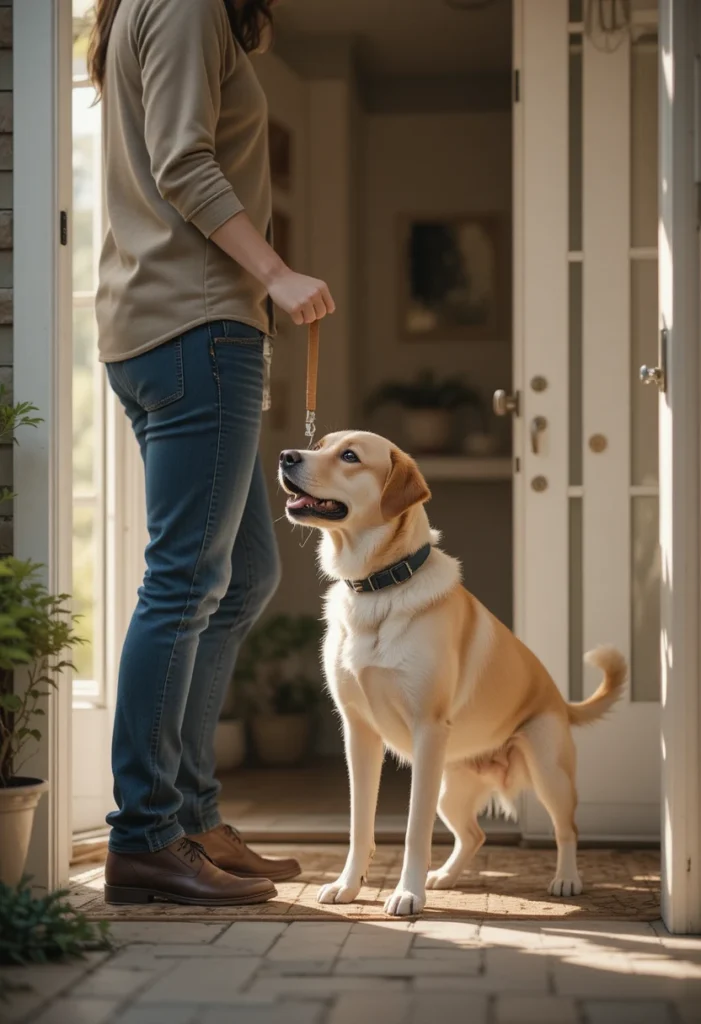
Clip on a leash before opening the door. Step on the leash close enough to your dog’s collar that jumping is physically uncomfortable but not restrictive, giving them just enough freedom to sit but not to launch upward. This takes the pressure off you to have perfect timing and gives your dog a built-in reason to stay grounded.
6. Teach an Incompatible Behavior Like “Find It”
Toss a treat at your dog’s feet and say “find it” the moment a visitor walks in. A dog with their nose to the ground physically cannot jump at the same time. This is especially useful for high-energy or easily overstimulated dogs who need a job to focus on during exciting moments.
7. Enlist Friends and Family to Follow the Rules
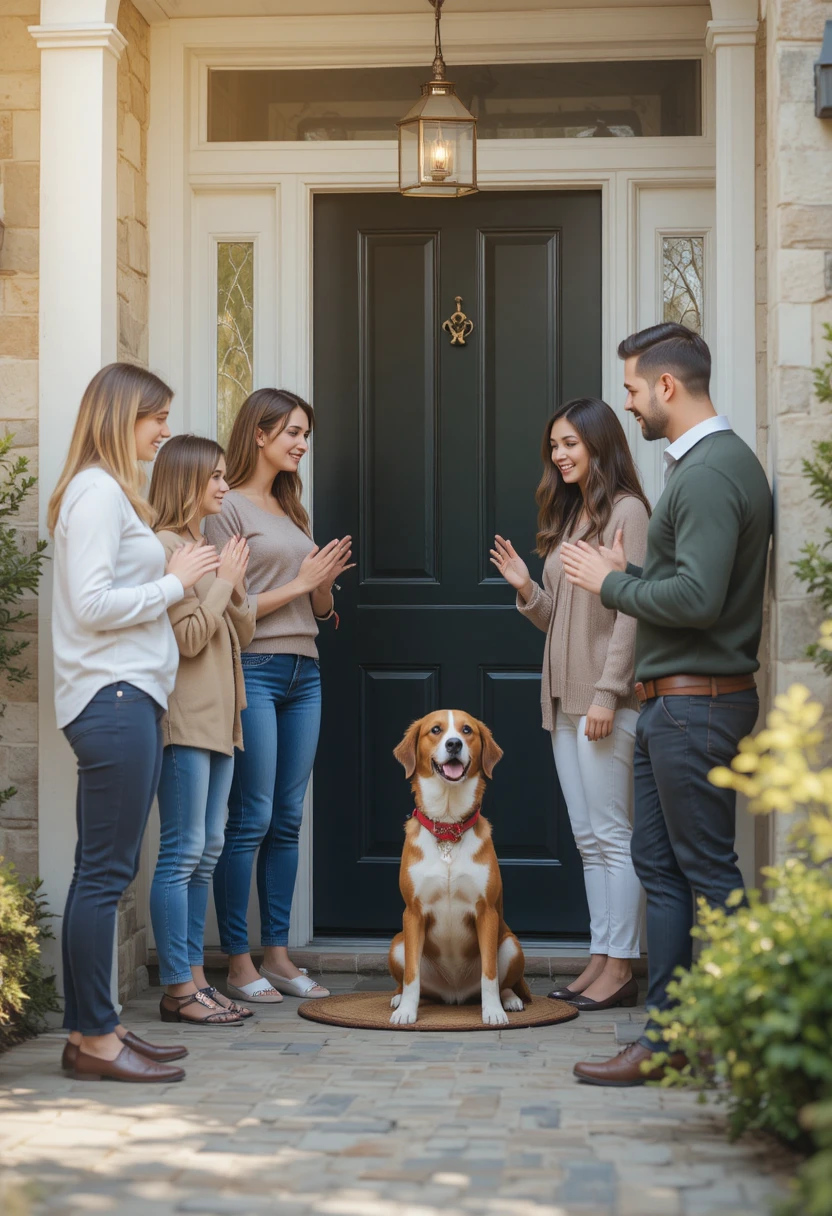
Your dog’s most common jumping victims are usually the people who visit most and they’re often the ones least likely to follow your rules. Give visitors a simple script before they walk in:
- “Please ignore her until all four paws are on the ground.”
- “If he jumps, just turn away no pushing or talking.”
- “Feel free to give her this treat once she’s sitting.”
8. Practice the “Sit to Say Please” Game
Turn greetings into a game with a clear rule: sitting makes people appear and jumping makes them disappear. Approach your dog, and the instant they sit, keep walking toward them and reward. If they pop up to jump, turn and step back immediately. Repeat until sitting becomes the automatic response to an approaching person.
9. Burn Off Excess Energy Before Visitors Arrive
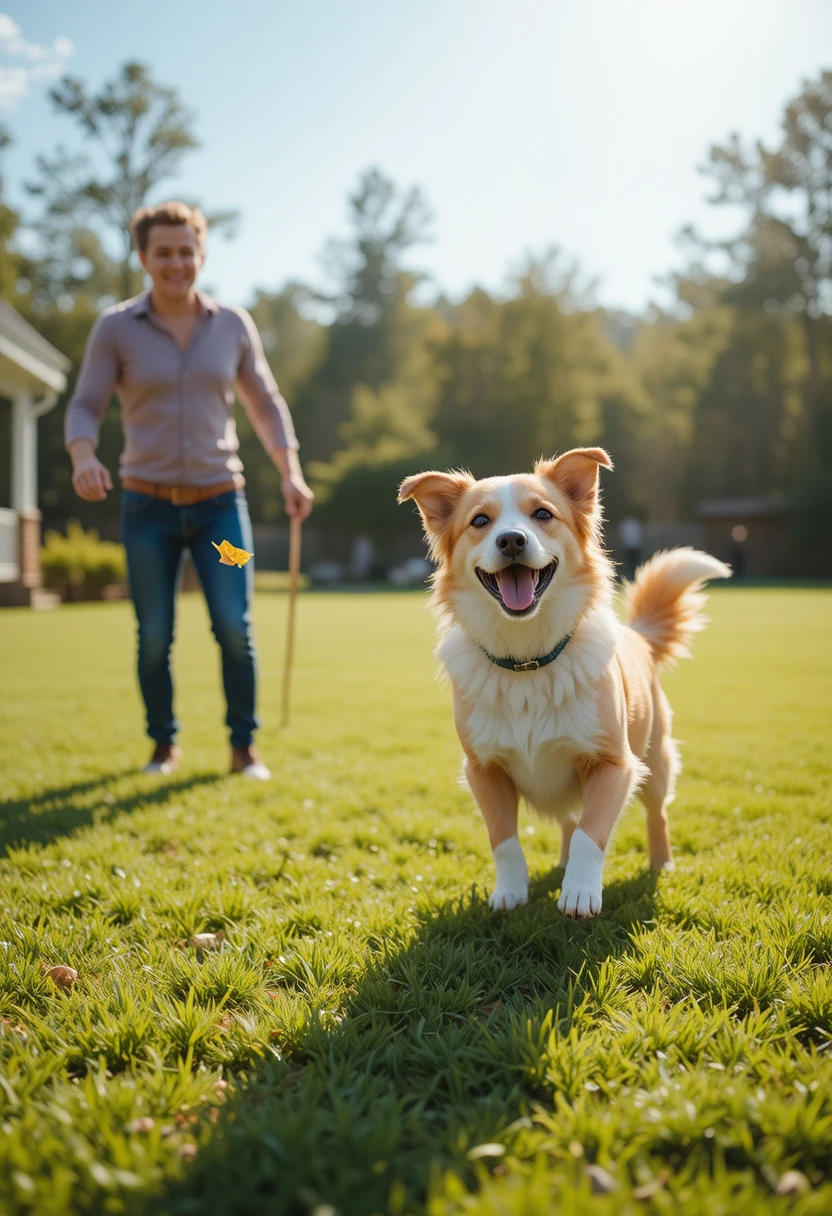
A tired dog is a calmer dog. If you know company is coming, take your dog for a brisk walk or a quick game of fetch beforehand. Mental enrichment works too a snuffle mat, a stuffed puzzle toy, or a short training session can take the edge off excitement before the doorbell even rings.
10. Use High-Value Treats for Impulse Control
Not all treats are created equal in your dog’s mind. For jumping-specific training, use something your dog rarely gets otherwise — small pieces of cheese, chicken, or freeze-dried liver. High-value rewards make it easier for your dog to choose the calm behavior over the exciting one.
11. Practice at the Door, Repeatedly
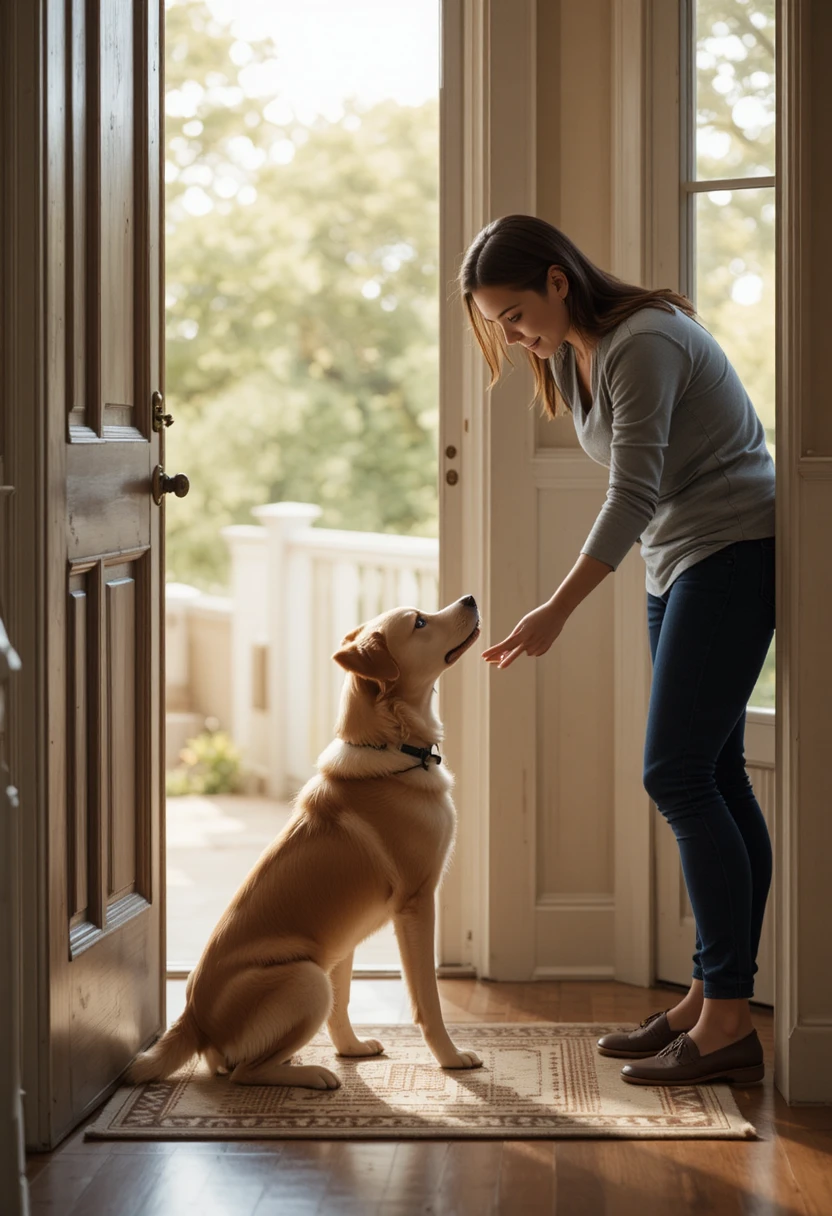
Set aside 5–10 minutes a day to simulate arrivals. Knock on your own door, walk in, and reward calm behavior. Go back out and repeat. Dogs generalize slowly, so the more reps they get in low-stakes practice, the more reliable they’ll be with real guests.
12. Stay Consistent Every Person, Every Time
The single biggest predictor of success isn’t the specific method you choose, it’s consistency. If jumping gets ignored 9 times out of 10 but tolerated on the 10th (because it’s cute, or you’re in a rush), your dog will keep testing it. Every person, every time, same rule.
Bonus: Know When to Call in a Professional
If jumping is paired with mouthing, growling, or your dog seems genuinely difficult to redirect even after weeks of consistent practice, it’s worth working with a certified professional dog trainer or a veterinary behaviorist. This is especially true for larger breeds where jumping poses a real injury risk, or if the behavior seems rooted in anxiety rather than excitement.
Common Mistakes That Undo Your Training
Even well-meaning owners can accidentally sabotage progress. Watch out for these:
- Yelling “no” or pushing your dog away — both can register as play or attention.
- Only training when you remember to — inconsistency confuses dogs far more than a hard rule ever would.
- Skipping the “guest briefing” — one enabling visitor can undo weeks of progress.
- Expecting instant results — most dogs need several weeks of consistent practice before the new habit sticks.
- Punishing after the fact — corrections only work in the exact moment; scolding your dog minutes later teaches nothing.
Puppy vs. Adult Dog Jumping: Does the Approach Change?
The core training method ignore the jump, reward the sit works for dogs of any age. The difference is mainly about timing and expectations.
Puppies are still building impulse control, so short, frequent practice sessions (a few minutes, several times a day) work better than long ones. Be patient; a wiggly 12-week-old puppy isn’t going to master a calm greeting overnight.
Adult dogs, especially those who’ve been jumping for years, may need extra management (leashes, gates) simply because the habit is more deeply rehearsed. The behavior isn’t harder to fix, but it may take more consistent repetition to override.
Frequently Asked Questions
Why does my dog only jump on certain people?
Dogs often jump more on people who react strongly with excitement, laughter, or pushing them away. Calm, neutral visitors tend to get jumped on less because there’s less “reward” in it for the dog.
Should I knee my dog or step on their paws to stop jumping?
No. Physical corrections like this can cause pain, injury, or fear, and they don’t teach your dog what to do instead. Reward-based redirection is both more humane and more effective long-term.
How long does it take to stop a dog from jumping?
Most dogs show noticeable improvement within 2–4 weeks of consistent daily practice, though full reliability around new people and high-excitement situations can take longer.
My dog only jumps when I come home is that different?
Not really it’s the same excitement-driven behavior, just directed at you specifically. The same “ignore the jump, reward the sit” approach applies; you’ll just need to practice it on yourself every time you walk in the door.
Is jumping ever a sign of a bigger behavior problem?
Occasionally. If jumping is accompanied by aggressive body language, resource guarding, or seems driven by fear rather than excitement, it’s worth consulting a professional trainer to rule out anything more complex.
Can small dogs get away with jumping since they’re not dangerous?
It’s tempting to let it slide, but small dogs who are allowed to jump often develop other pushy greeting behaviors, and it can still startle people or scare children. Consistency matters regardless of size.
Final Thoughts
Stopping a dog from jumping on people isn’t about punishment it’s about teaching your dog a better way to say hello, and making sure every person in their life reinforces that same lesson. Pick two or three tips from this list to start with (turning away, rewarding four-on-the-floor, and briefing your guests are a great starting trio), stay consistent, and give your dog time to build the new habit.