
A pet vet provides essential services, including wellness exams, vaccinations, parasite prevention, diagnostic testing, and medical treatment. Understanding these services helps pet owners make better health decisions at every stage of their pet’s life
A healthy pet needs more than food, water, and daily exercise. Regular veterinary care, preventive treatments, and proper nutrition help dogs and cats live healthier lives..
What Is a Pet Vet and Why Is Veterinary Care Important?
A pet vet, also called a veterinarian, is a licensed medical professional who diagnoses, treats, and helps prevent diseases in animals. Veterinarians care for dogs, cats, puppies, kittens, and other companion animals.
They also guide pet owners on nutrition, behavior, dental hygiene, and long-term wellness. Regular veterinary visits help identify health concerns before they become more serious.
What Does a Pet Veterinarian Do?
A veterinarian examines animals, checks their physical condition, and recommends suitable treatments. They may perform diagnostic tests, prescribe medication, administer vaccines, and carry out surgical procedures.
Veterinary teams also include veterinary technicians, assistants, and support staff. Each member helps provide safe medical care and supports communication with pet owners.
Why Do Pets Need Regular Veterinary Checkups?
Pets cannot explain when something hurts or feels unusual. Routine examinations help veterinarians notice changes in weight, movement, breathing, skin, teeth, and overall behavior.
Regular checkups also support disease prevention, vaccination planning, and parasite control. They give owners an opportunity to discuss nutrition, exercise, and changes in their pet’s health.
How Often Should You Take Your Pet to the Vet?
The right schedule depends on age, health, lifestyle, and medical history.
- Puppies and kittens: Need several visits during their early months for vaccinations, parasite prevention, and growth checks.
- Healthy adult pets: Usually benefit from at least one wellness examination each year.
- Senior pets: May need examinations every six months or more often.
- Pets with chronic conditions: Require follow-up visits based on their veterinarian’s treatment plan.
Your veterinarian can recommend a schedule that matches your pet’s individual needs.
Types of Pet Vet Services Available in the USA
Veterinary clinics provide different services depending on their facilities, staff, and medical capabilities. Some focus on preventive care, while others offer comprehensive treatment, surgery, and emergency services.
Understanding the available pet vet services helps you choose the right provider.
Preventive Veterinary Care and Wellness Exams
Preventive veterinary care helps protect pets before health problems develop. A wellness examination usually includes a physical assessment and a review of the pet’s medical history.
The veterinarian may check the eyes, ears, mouth, skin, heart, lungs, weight, and joints. They can also recommend bloodwork, vaccines, and parasite testing when appropriate.
Pet Vaccinations and Immunization Services
Pet vaccinations protect animals against several serious infectious diseases. Vaccination needs vary according to age, health, location, and lifestyle.
Common vaccines include:
- Rabies: Protects against rabies, a serious disease that can affect animals and humans.
- DHPP: Protects dogs against distemper, adenovirus, parvovirus, and parainfluenza.
- FVRCP: Protects cats against feline viral rhinotracheitis, calicivirus, and panleukopenia.
- Bordetella: Helps protect dogs against a common cause of kennel cough.
- Lifestyle vaccines: May protect against diseases such as Lyme disease and canine influenza.
The American Animal Hospital Association (AAHA) updated its canine vaccination guidance in 2024 to include leptospirosis as a core vaccine recommendation. Your veterinarian should determine which vaccines your pet needs.
Flea, Tick, and Heartworm Prevention
Fleas and ticks can cause skin irritation and transmit diseases. Heartworms are parasites that can damage the heart, lungs, and blood vessels.
Veterinarians recommend suitable flea and tick prevention, heartworm testing, and parasite control based on regional risks and your pet’s lifestyle. Dogs and cats may need different products and treatment schedules.
Pet Diagnostic Testing and Health Screenings
Veterinary diagnostic testing helps identify health problems that physical examinations alone may not reveal.
Common tests include:
- Heartworm testing.
- Fecal examinations for intestinal parasites.
- Tick-borne disease testing.
- Blood chemistry and complete blood counts.
- Urinalysis.
- Additional tests based on symptoms and medical history.
These tests help veterinarians investigate infections, organ problems, and other medical concerns.
Pet Microchipping Services
A pet microchip is a small identification device placed under the skin, usually between the shoulder blades. It contains a unique identification number that can be read with a compatible scanner.
Owners must register the chip and keep their contact details updated. A microchip does not track a pet’s live location, so a collar and identification tag remain useful.
Dental Care and Oral Health Services
Poor dental hygiene can lead to plaque, tartar, gum inflammation, and periodontal disease. Some pets also develop pain that makes eating uncomfortable.
Veterinarians can examine the mouth, recommend professional dental cleaning, and identify damaged teeth. Regular brushing with pet-safe toothpaste also supports good oral health.
Pet Surgery and Medical Treatment
Some veterinary conditions require surgery or specialized medical treatment. Common procedures include spaying, neutering, wound repair, and soft tissue surgery.
Veterinary teams also manage chronic conditions such as diabetes, arthritis, and kidney disease. Treatment depends on the diagnosis, the pet’s condition, and available medical options.
Emergency and Urgent Veterinary Care
Emergency veterinary care is necessary when a pet has a serious injury or sudden medical problem.
Warning signs include:
- Difficulty breathing.
- Seizures or collapse.
- Severe bleeding.
- Suspected poisoning.
- Inability to stand.
- Sudden abdominal swelling.
- Loss of consciousness.
Contact an emergency animal hospital immediately if these signs appear. Community preventive clinics are not substitutes for emergency facilities.
Pet Vet Care for Every Stage of Your Pet’s Life
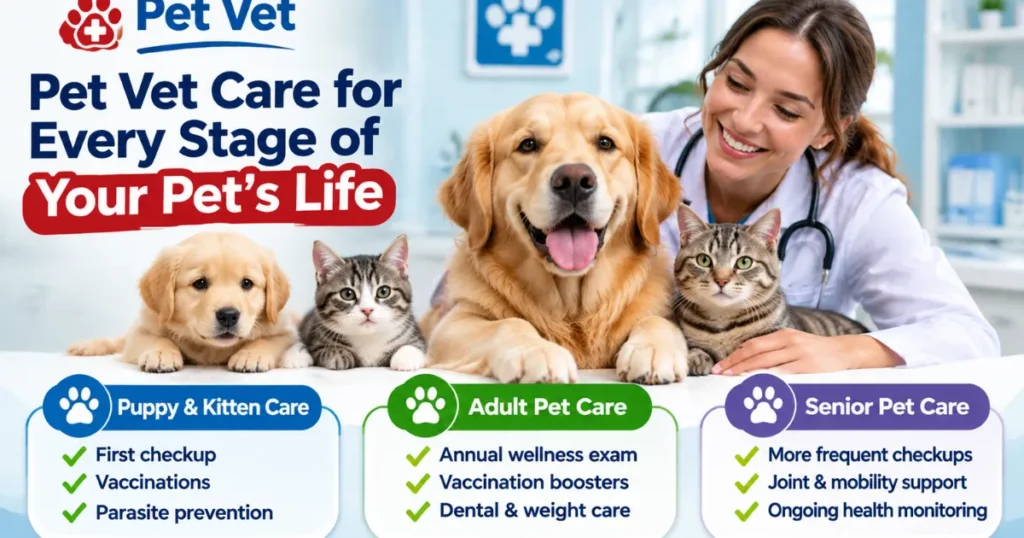
Pets have different medical needs as they grow. A suitable pet wellness plan should change with their age, activity, and health.
Veterinary Care for Puppies and Kittens
Young pets need early examinations to check their growth and development. Veterinarians establish vaccination schedules and recommend suitable parasite prevention.
They can also discuss feeding routines, socialization, dental development, microchipping, and spaying or neutering. Early guidance helps owners build healthy habits.
Veterinary Care for Adult Dogs and Cats
Adult pets need regular wellness exams, appropriate vaccinations, and parasite prevention. Their veterinarian may also monitor weight, dental health, skin condition, and activity levels.
Changes in appetite, thirst, or behavior should be discussed during a veterinary visit. These signs can sometimes indicate an underlying health problem.
Veterinary Care for Senior Pets
Older animals may develop arthritis, dental disease, vision changes, and chronic medical conditions. They may also need closer monitoring of their kidneys, heart, and other organs.
Senior pet care often includes more frequent examinations and additional diagnostic testing. The goal is to maintain comfort, mobility, and quality of life.
How to Choose the Best Pet Vet Clinic Near You
Finding the right veterinarian is an important part of responsible pet ownership. Look beyond convenience and consider the clinic’s qualifications, services, communication, and facilities.
Check Veterinary Qualifications and Experience
Choose a clinic with appropriately licensed veterinarians and qualified veterinary professionals. Ask about their experience with your pet’s species, breed, age, or medical condition.
You can also check whether the clinic offers specialized services when your pet needs additional care.
Compare Veterinary Services and Clinic Facilities
Not every veterinary clinic offers the same treatments. Some provide vaccinations and preventive services, while others offer surgery, dental procedures, imaging, and advanced diagnostics.
Check the clinic’s capabilities before booking. This helps avoid unnecessary delays when your pet needs a particular service.
Consider Location and Appointment Availability
A nearby clinic can make routine visits easier. Check its opening hours, weekend availability, appointment options, and emergency arrangements.
Some providers also offer online booking, walk-in services, and digital patient records.
Look for Compassionate and Fear Free Pet Care
A calm veterinary environment can help reduce stress during examinations. Fear Free veterinary care focuses on reducing fear, anxiety, and stress through suitable handling and environmental changes.
PetVet365’s Plymouth hospital, for example, highlights Fear Free care, veterinarian-led treatment, and same-day and weekend appointments.
Affordable Pet Vet Care: Understanding Veterinary Costs

Veterinary expenses depend on the clinic, location, treatment, and your pet’s medical needs. Routine examinations usually cost less than surgery or advanced diagnostic procedures.
The American Veterinary Medical Association (AVMA) reported average annual veterinary spending of $595 per dog-owning household and $426 per cat-owning household in its 2026 pet ownership data. These are household averages, not prices for individual appointments.
Read Also: PET Milk: Benefits, Uses, Nutrition, and Safety for Pets
How Much Does a Pet Vet Visit Cost in the USA?
The cost of a pet vet visit depends on the service provided. Common expenses include:
- Routine wellness examinations.
- Vaccinations and booster shots.
- Heartworm and fecal testing.
- Microchipping.
- Dental cleaning.
- Surgery and medical treatment.
Ask for an estimate before approving treatment. Request a breakdown of examination fees, tests, medications, and follow-up visits.
Ways to Save Money on Veterinary Care
Preventive care can help reduce the risk of some costly health problems. Compare local clinic prices and ask about wellness packages or vaccination services.
Other options include pet insurance, community veterinary clinics, payment plans, and financial assistance programs. Review insurance exclusions, waiting periods, deductibles, and annual limits before choosing a policy.
Affordable Pet Vet Clinics and Community Veterinary Services
Community clinics provide access to essential preventive services at convenient locations. They may offer vaccinations, microchipping, heartworm testing, fecal testing, and parasite prevention.
These clinics can help pet owners manage routine health needs. However, pets with illnesses or injuries may require a full-service veterinary hospital.
PetVet, PetVet365, and Other Veterinary Care Options
Several organizations use similar names but operate different veterinary services. Understanding their differences helps pet owners find suitable care.
What Are PetVet Care Centers?
Its facilities provide access to different levels of care, including routine wellness visits, emergency services, and specialty treatment. Each hospital maintains its own local team and identity while receiving support from the wider organization.
Its website reports more than 400 locations, 9,500 team members, and over 25 million pet visits annually. These figures describe the network’s reported scale, not the number of PetVet community clinics.
Pet Vet Supplies and Everyday Pet Care Essentials
Veterinary care also involves maintaining a healthy home environment. Suitable pet supplies can support nutrition, grooming, exercise, and everyday hygiene.
Common essentials include:
- Complete and balanced pet food.
- Food and water bowls.
- Grooming brushes and nail clippers.
- Pet-safe dental products.
- Toys and enrichment products.
- Leashes, collars, and carriers.
- Veterinarian-recommended parasite prevention.
Essential Pet Health Tips Every Pet Owner Should Know
Good pet health depends on consistent daily care. Veterinary visits are important, but nutrition, exercise, grooming, and a safe home environment also matter.
Follow a Consistent Pet Nutrition Plan
Choose complete and balanced pet food that matches your animal’s age, size, and health needs. Puppies, kittens, adults, and senior pets may require different nutritional support.
Avoid changing food suddenly or giving large amounts of treats. Ask your veterinarian before starting supplements or prescription diets.
Maintain Your Pet’s Dental Hygiene
Brush your pet’s teeth with a suitable toothbrush and pet-safe toothpaste. Human toothpaste may contain ingredients that are unsafe for animals.
Watch for bad breath, bleeding gums, loose teeth, or difficulty chewing. These signs deserve a veterinary examination.
Keep Your Pet Active and Maintain a Healthy Weight
Regular physical activity supports muscle strength, joint health, and mental well-being. Dogs may benefit from walks and interactive games, while cats need climbing spaces and play sessions.
Monitor food portions and body condition. Your veterinarian can help create a safe weight-management plan.
Protect Your Pet From Fleas, Ticks, and Parasites
Use preventive products recommended for your pet’s species, age, and weight. Follow the correct schedule and avoid sharing medication between animals.
Regular grooming can help you notice fleas, ticks, skin irritation, and unusual hair loss.
Support Your Pet’s Mental Health and Behavior
Pets need attention, stimulation, and a stable routine. Interactive toys, training, play, and safe resting spaces can support their emotional well-being.
Sudden aggression, hiding, or unusual behavior may indicate stress or illness. Discuss persistent changes with a veterinarian.
Practice Regular Grooming and Hygiene
Brush your pet’s coat according to its type and length. Check the ears, skin, paws, and nails during routine grooming.
Use pet-safe cleaning products and avoid putting cotton swabs deep inside the ears. Ask a professional groomer or veterinarian for help when needed.
Common Pet Health Problems and Warning Signs
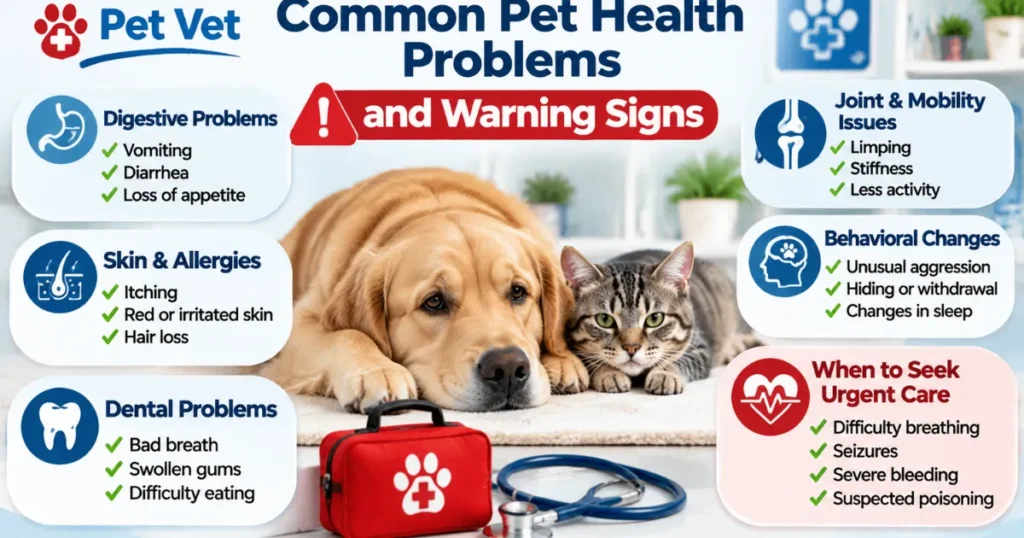
Recognizing early changes can help pet owners seek treatment sooner. Some symptoms are mild, while others require urgent medical attention.
Digestive Problems in Dogs and Cats
Vomiting, diarrhea, constipation, and reduced appetite can have several causes. These include dietary changes, infections, parasites, and other medical conditions.
Contact your veterinarian if symptoms persist or worsen. Repeated vomiting, severe abdominal pain, or weakness needs prompt attention.
Skin Problems and Allergies
Excessive scratching, redness, hair loss, and irritated skin may indicate allergies, parasites, or infections. Repeated ear infections can also be linked to underlying skin problems.
A veterinarian can examine the affected area and recommend suitable testing or treatment.
Dental and Oral Health Problems
Bad breath, swollen gums, drooling, and difficulty eating may indicate dental disease. Some pets hide oral pain, so changes in chewing habits are important.
Routine dental examinations help identify problems before they become more severe.
Joint Problems and Mobility Issues
Limping, stiffness, difficulty climbing stairs, and reduced activity can indicate joint pain or injury. These problems are common concerns in older pets but can affect younger animals too.
A veterinarian can assess movement and recommend treatment, pain management, or physical rehabilitation.
Behavioral and Emotional Changes
Unusual aggression, excessive licking, hiding, and changes in sleeping habits may signal stress or physical discomfort.
Do not assume every behavior change is simply a training issue. A veterinary examination can help rule out medical causes.
When Should You Take Your Pet to a Veterinarian Immediately?
Seek emergency veterinary help if your pet experiences:
- Difficulty breathing or choking.
- Seizures or unconsciousness.
- Severe bleeding or major injuries.
- Suspected poisoning.
- Collapse or inability to stand.
- Inability to urinate.
- Sudden abdominal swelling.
What to Expect During a Pet Vet Appointment
Knowing what happens during a veterinary visit can make the experience easier for pets and their owners. The process usually includes reviewing medical history, examining the animal, and discussing suitable care.
Before Your Veterinary Visit
Prepare your pet’s vaccination records, previous test results, and medication list. Write down any changes in appetite, behavior, weight, or bathroom habits.
Use a secure carrier for cats and a suitable leash or harness for dogs. Bring a stool sample if the clinic requests one.
During the Veterinary Examination
The veterinarian may check your pet’s temperature, heart rate, breathing, eyes, ears, teeth, skin, and joints. They may also assess body weight and overall condition.
Depending on the findings, additional tests or treatments may be recommended. Ask questions if you need clarification about a diagnosis or treatment plan.
After the Vet Visit
Follow the veterinarian’s instructions for medication, feeding, and recovery. Keep track of any side effects or unusual symptoms.
Schedule recommended follow-up appointments and update your pet’s medical records.
How Technology Is Making Veterinary Care Easier
Digital tools help pet owners manage appointments and access important health information. They can also improve communication between veterinary teams and clients.
Online Veterinary Appointments and Scheduling
Many clinics offer online booking and appointment reminders. Some community clinics also provide pre-registration to make check-in easier.
Check the clinic’s website for available services, operating hours, and appointment requirements.
Digital Pet Health Records and Patient Portals
Digital patient portals can make important veterinary information easier to access. Depending on the provider, records may include vaccination history, laboratory results, and visit summaries.
Telehealth and Virtual Veterinary Consultations
Veterinary telehealth allows pet owners to communicate with veterinary professionals remotely. It may help with follow-up discussions, general guidance, and certain non-emergency concerns.
However, virtual consultations cannot replace every physical examination. Diagnosis, testing, and treatment may require an in-person visit.
Pet Microchip Registration and Recovery Technology
Microchips help connect lost pets with their registered owners. Veterinary clinics and animal shelters can scan a chip to retrieve its identification number.
Keep your registration details current. A microchip is an identification tool, not a GPS tracker.
How to Make Veterinary Care More Comfortable for Your Pet
Some animals become anxious during car rides or veterinary examinations. Preparing them gradually can make visits less stressful.
Prepare Nervous Dogs and Cats Before a Vet Visit
Allow cats to become familiar with their carriers before appointments. For dogs, practice calm car rides and positive handling at home.
Treats and praise can help create positive associations. Avoid forcing an anxious pet into a stressful situation when a slower approach is possible.
Choose a Pet-Friendly and Fear Free Veterinary Clinic
Look for clinics that use gentle handling and stress-reduction techniques. Fear Free practices may use quieter spaces, suitable restraint methods, and positive reinforcement.
Help Your Pet Recover From Stress After an Appointment
Give your pet a quiet place to rest after the visit. Provide fresh water and maintain its normal routine when possible.
Follow any instructions about exercise, feeding, or medication. Contact the clinic if your pet develops concerning symptoms.
How to Build a Complete Pet Wellness Routine
A consistent pet wellness routine makes it easier to monitor health between veterinary visits. Small daily habits can support long-term comfort and well-being.
Create a Veterinary Visit Schedule
Keep track of wellness examinations, vaccinations, dental checks, and parasite testing. Schedule additional appointments when your veterinarian recommends them.
Keep Track of Vaccinations and Preventive Treatments
Maintain an updated record of vaccines, medications, and test results. Set reminders for upcoming treatments and booster appointments.
Never assume every pet needs the same vaccination or parasite prevention schedule.
Monitor Your Pet’s Daily Health
Pay attention to appetite, thirst, energy, movement, and bathroom habits. Regular weight checks can also help identify changes.
Record unusual symptoms and share them with your veterinarian. Small changes can provide useful information during an examination.
Build a Relationship With a Trusted Veterinarian
A veterinarian who understands your pet’s medical history can provide more informed guidance. Regular visits also make it easier to discuss changes and long-term health goals.
Keep communication open and ask about treatment options, costs, and expected outcomes.
Community Pet Vet Clinics vs. Full-Service Veterinary Hospitals
Both types of providers support animal health, but they serve different needs. Knowing the difference helps pet owners choose the right level of care.
What Services Do Community Pet Vet Clinics Provide?
Community clinics generally focus on preventive veterinary services. These may include vaccinations, microchipping, parasite prevention, and selected diagnostic tests.
What Does a Full-Service Veterinary Hospital Offer?
A full-service veterinary hospital can provide broader medical care. Depending on its facilities, services may include illness diagnosis, advanced testing, surgery, dental treatment, and ongoing disease management.
Some hospitals also offer emergency and specialty services.
Which Veterinary Care Option Is Right for Your Pet?
Choose a community clinic for suitable routine preventive services. Visit a full-service veterinarian when your pet has symptoms, injuries, or a medical condition requiring diagnosis and treatment.
For serious or sudden symptoms, contact an emergency animal hospital. Always check the provider’s available services before visiting.
Expert Advice for Responsible Pet Ownership
Responsible pet ownership means paying attention to health, safety, and daily needs. Veterinary guidance helps owners make informed decisions.
Never Ignore Changes in Your Pet’s Behavior
A sudden change in appetite, movement, sleep, or social behavior may indicate discomfort or illness. Monitor the change and contact your veterinarian when needed.
Avoid Giving Human Medication to Pets Without Veterinary Advice
Some medicines intended for people can seriously harm animals. The FDA warns that ibuprofen and naproxen may be harmful to pets, while acetaminophen can be fatal to cats.
Never give human medication without veterinary direction. <Cite refs={[“turn768647search2”]}/>
Follow Professional Advice About Pet Supplements
Not every pet needs additional vitamins or supplements. Some products may interact with medication or cause unwanted effects.
Ask your veterinarian before introducing a new supplement or changing your pet’s diet.
Maintain a Pet Emergency Preparedness Plan
Keep your regular veterinarian’s contact details and identify a nearby emergency animal hospital. Store medical records and medication information somewhere easy to access.
A basic pet first-aid kit can include gauze, bandages, saline solution, and a digital thermometer. Ask your veterinarian which supplies are suitable for your animal.
FAQ’s
What Is a Pet Vet?
A pet vet is a licensed veterinarian who provides medical care for animals. Services may include wellness examinations, vaccinations, disease diagnosis, treatment, and preventive healthcare.
What Services Does a Pet Vet Provide?
Common services include physical examinations, vaccinations, microchipping, parasite prevention, diagnostic testing, dental care, and medical treatment. Available services depend on the clinic.
How Often Should My Pet Visit the Vet?
Healthy adult dogs and cats generally need at least one wellness examination each year. Puppies, kittens, senior pets, and animals with medical conditions may need more frequent visits.
How Much Does a Pet Vet Visit Cost in the USA?
Costs depend on the clinic, location, and required services. Vaccinations and routine examinations generally cost less than surgery or advanced diagnostic testing. Request a price estimate before treatment.
Does Tractor Supply Have PetVet Clinics?
Yes. Participating Tractor Supply locations host PetVet community veterinary clinics. They provide preventive services such as vaccinations, testing, microchipping, and parasite prevention.
Can I Visit PetVet Without an Appointment?
PetVet generally accepts walk-ins at its community clinics. Online pre-registration is available, but it does not reserve a place in line. Check your local clinic’s schedule before visiting.
Does PetVet Offer Vaccinations for Dogs and Cats?
Yes. PetVet offers various dog and cat vaccinations. Available vaccines depend on the clinic, animal, and recommended vaccination schedule.
What Is the Difference Between PetVet and PetVet365?
PetVet focuses on convenient community preventive care services. PetVet365 operates veterinarian-led hospitals that offer broader services, including wellness examinations, diagnostics, and dental care.
Does My Pet Need Annual Wellness Exams?
Annual wellness examinations help veterinarians monitor your pet’s health and identify potential problems. Some pets need more frequent examinations based on age or medical conditions.
Conclusion
Choosing the right pet vet helps protect your animal’s health throughout its life. Regular examinations, vaccinations, proper nutrition, and preventive treatments all support better pet wellness.
Whether you use PetVet community clinics, PetVet365, or a full-service veterinary hospital, choose care that matches your pet’s needs. Consistent attention and professional guidance can help your dog or cat enjoy a healthier, happier life.