
If you’ve ever watched your new puppy face-plant mid-play, snoring before their paw even hits the ground, you’re not imagining things that’s completely normal. Puppies aren’t lazy, and they’re not sick. They’re doing exactly what their tiny, rapidly developing bodies need them to do: sleep. A lot.
New puppy parents are often blindsided by just how much shut-eye a growing pup requires and even more surprised by how much bad sleep advice is floating around. Wake them up so they sleep better at night? Let them nap on the couch all afternoon? Some of it is myth, some of it is outdated, and almost none of it accounts for how dramatically a puppy’s sleep needs shift week to week.
This guide breaks down exactly how much sleep your puppy needs at every stage from the first wobbly days home through the 90-day mark when a real routine starts to click into place — plus the warning signs every owner should know, and a simple system for building a sleep schedule your whole household (and your puppy) can actually stick to.
Quick Answer: Puppy Sleep Needs by Age
Here’s the short version before we dig into the details.
| Puppy Age | Average Sleep Per Day | What’s Happening |
|---|---|---|
| 0–2 weeks (newborn) | 20–22 hours | Almost constant sleep; brain and body growth in overdrive |
| 2–8 weeks | 18–20 hours | Eyes and ears open, first steps, short bursts of play |
| 2–4 months | 16–18 hours | More alert and active, still needs frequent naps |
| 4–6 months | 14–16 hours | Bladder control improves, sleeping through the night begins |
| 6–12 months | 12–14 hours | Sleep pattern starts resembling an adult dog’s |
| Adult dog (1+ years) | 10–14 hours | Settled routine, naps mostly built around your schedule |
Save-worthy takeaway: A general rule of thumb is that the younger the puppy, the more sleep they need and that sleep isn’t downtime, it’s construction time for their growing body and brain.
Why Do Puppies Sleep So Much?
It can feel excessive watching an eight-week-old puppy sleep 20 hours in a single day, but there’s real biology behind it.
Growing bones, muscles, and organs takes energy and that energy gets replenished during sleep. A puppy’s body is essentially building itself from scratch in a matter of months, and deep sleep is when growth hormone release peaks and tissue repair happens.
Their brains are also working overtime. Puppies absorb an overwhelming amount of new information every single day new smells, new sounds, new faces, new rules. Sleep is when the brain sorts through all of that input and files it away as long-term memory. Skimp on sleep, and you may notice your pup struggling to retain training cues or becoming unusually cranky and reactive.
Digestion plays a role too. Ever notice your puppy conking out minutes after a meal? That’s not a coincidence digesting food takes a surprising amount of energy, and a nap often follows naturally.
Think of your puppy’s sleep less like “downtime” and more like the single most productive thing they do all day.
Puppy Sleep Needs Week by Week
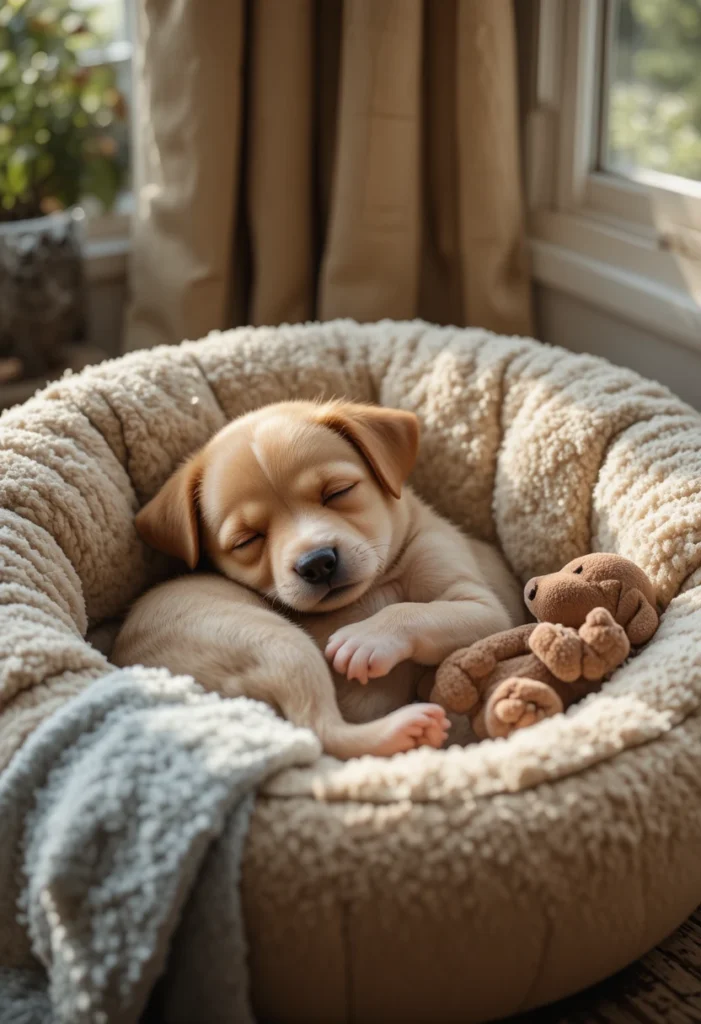
0–2 Weeks: The Newborn Stage
If you’re fostering or hand-raising very young puppies, know that newborns sleep an astonishing 20 to 22 hours a day. At this stage, they can’t regulate their own body temperature or fully open their eyes yet — sleep (alongside nursing) is essentially their entire world.
Read Also: How to Perform Pet CPR: 13+ Tips Every Dog Owner Should Know
2–8 Weeks: Eyes Open, World Opens
Around two to four weeks, puppies’ eyes and ears open and they take their first wobbly steps. This is also when personality starts to peek through. But don’t be fooled by the sudden burst of curiosity these pups are still sleeping 18 to 20 hours a day, often in short 20–30 minute cycles between quick bursts of play, nursing, and exploring.
2–4 Months: The “Adopted Puppy” Stage
This is the age range most new owners bring their puppy home, and it’s where sleep questions get the most confusing. Expect 16 to 18 hours of sleep daily, broken into naps of 30 minutes to two hours. Your puppy is becoming genuinely interested in the world around them which is exhausting for a brain and body this young.
4–6 Months: Sleeping Through the Night
Here’s the milestone every exhausted new puppy owner is waiting for. Between four and six months, bladder control improves significantly, and many puppies start sleeping through the night without needing a potty break. Total daily sleep drops to around 14 to 16 hours.
A helpful rule of thumb: translate your puppy’s age in months into hours, and that’s roughly how long they can hold their bladder. A 3-month-old puppy, for instance, can typically go about 3 hours between potty breaks overnight.
6–12 Months: Settling Into a Routine
By six months, your puppy’s sleep schedule starts closely mirroring an adult dog’s around 12 to 14 hours a day. Many pups at this stage also begin syncing their sleep schedule to yours, winding down when you do and waking with the household in the morning.
The First 30 Days: What to Actually Expect
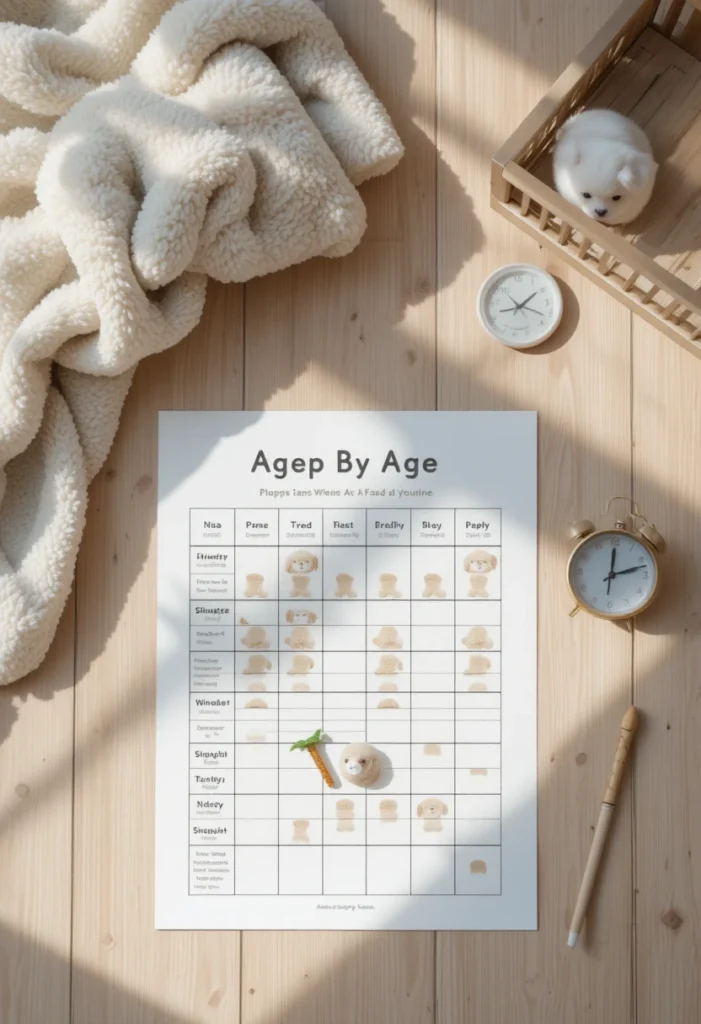
The first month home is almost always the roughest on everyone’s sleep yours included.
- Expect frequent night wake-ups. A young puppy’s small bladder simply can’t hold through an 8-hour night yet.
- Naps will look chaotic at first. Your puppy may fall asleep mid-toy, mid-meal, or mid-zoomie. Let them.
- Don’t fight the schedule build around it. Rather than forcing your puppy onto your calendar, plan potty breaks, feeding, and training sessions around their natural nap rhythm.
- Resist the urge to keep them awake “so they’ll sleep better tonight.” This is one of the most common and most counterproductive myths in puppy care. Overtired puppies often become more wound up, not less, making bedtime harder, not easier.
The First 60 Days: Building Real Structure
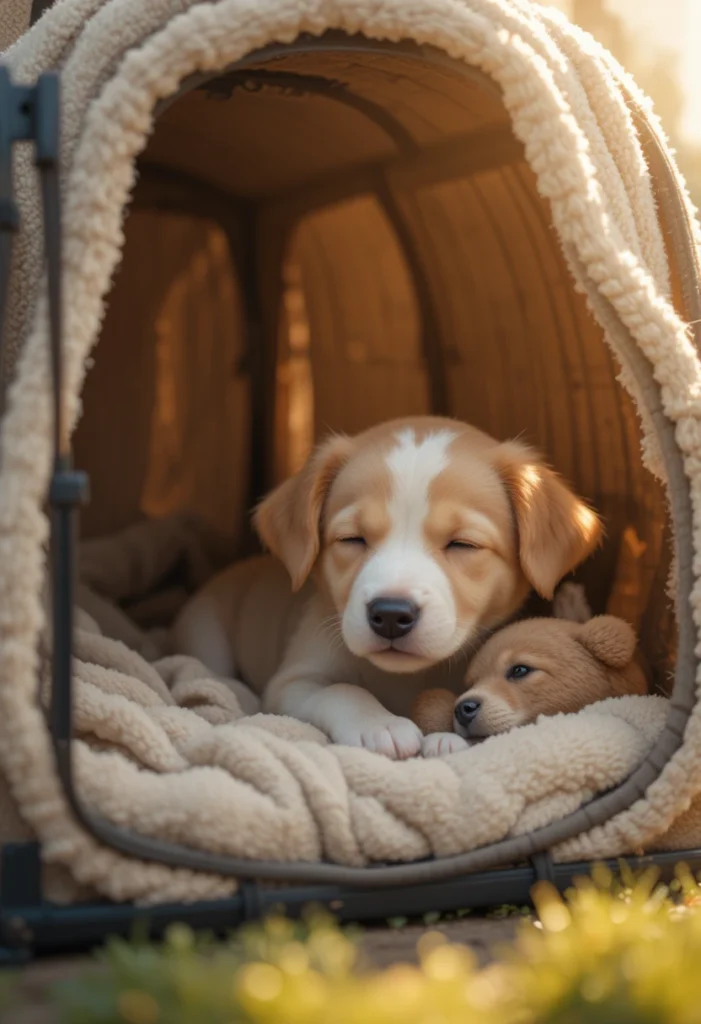
By the second month with your puppy, patterns start to emerge, and this is the ideal window to introduce gentle structure.
- Start a consistent bedtime and wake time, even if the overnight stretch is still interrupted by potty breaks.
- Use crate training to your advantage. A properly introduced crate becomes a safe, cozy sleep space rather than a punishment and it helps prevent your puppy from wandering and getting into trouble while half-asleep.
- Watch for the “witching hour.” Many puppies get a sudden burst of hyperactive energy in the early evening. This isn’t a sign they don’t need sleep it’s often the opposite, a sign of overtiredness that needs a calm wind-down routine, not more stimulation.
- Track naps loosely, aiming for a nap roughly every 1–2 hours of awake time for pups under 4 months.
The First 90 Days: The Routine Really Clicks
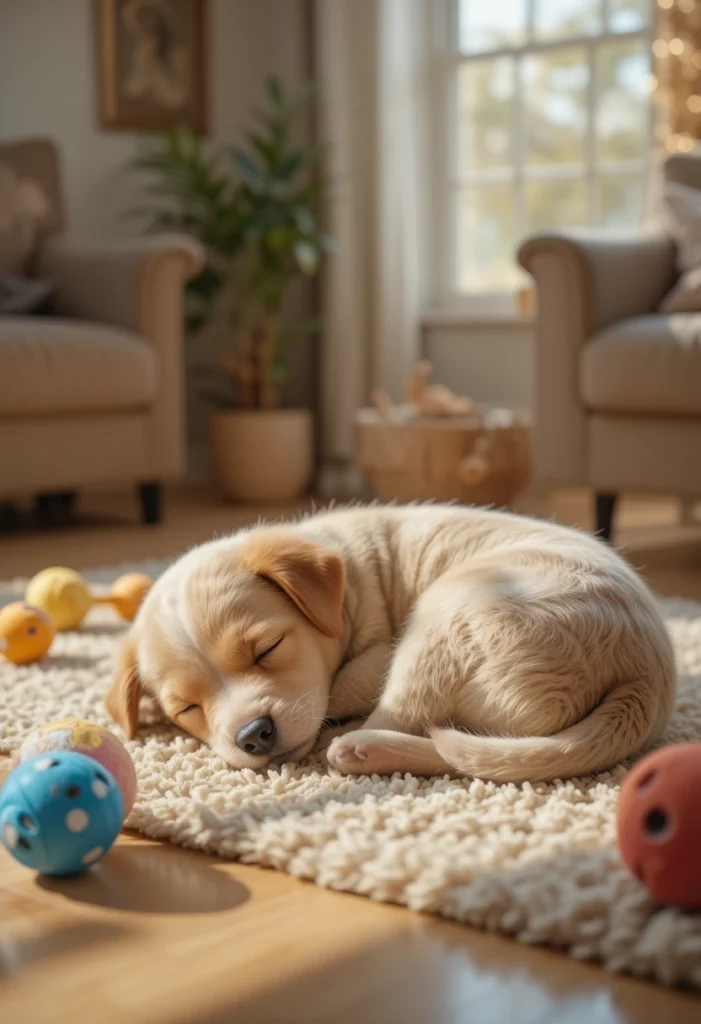
By day 90, most families start to feel like they’ve turned a corner.
- Nighttime potty breaks often shrink to one or none, depending on breed and size.
- Naps become more predictable, typically clustering around meals, play sessions, and training.
- Your puppy starts self-soothing into naps rather than needing to be held or rocked to sleep.
- This is a great point to reassess your puppy’s sleep space. If they’ve outgrown their crate or their sleep area no longer fits their needs, now’s the time to upgrade it.
Save-worthy tip: If your puppy still seems wildly inconsistent at the 90-day mark, it’s worth a check-in with your vet but a little unpredictability is still completely normal, especially in larger breeds who mature more slowly.
Signs Your Puppy’s Sleep Schedule Is Healthy
- Falls asleep within a few minutes of settling down (not fighting sleep for 20+ minutes)
- Wakes up calm rather than frantic or disoriented
- Naps regularly throughout the day without needing to be forced
- Shows steady energy during awake periods not constant crankiness or hyperactivity
- Gradually needs fewer nighttime wake-ups as they age
Signs of a Sleep Problem to Watch For
While variation is normal, a few patterns are worth paying attention to:
- Excessive sleep beyond what’s typical for their age, especially paired with lethargy, low appetite, or disinterest in play
- Very little sleep or constant restlessness, which can point to anxiety, discomfort, or an inconsistent environment
- Sudden changes in sleep habits a puppy who was sleeping well and abruptly stops may be dealing with pain, illness, or stress
If any of these show up, especially alongside other symptoms like vomiting, limping, or appetite changes, a vet visit is the safest next step. Trust your gut here you know your puppy’s normal better than anyone.
Puppy Sleep Regression: Why Good Sleepers Suddenly Stop Sleeping Well
Just when you think you’ve cracked the code, your puppy may hit a sleep regression a stretch where a previously good sleeper suddenly starts waking at night or resisting naps again. This is common during growth spurts, teething, or big life changes (a move, a new pet, a shift in routine). The good news: it’s almost always temporary. Stick to your established routine, stay calm and consistent, and most pups settle back into their rhythm within a couple of weeks.
How to Build the Perfect Puppy Sleep Schedule
- Pick a consistent bedtime and wake time puppies thrive on predictability.
- Create a calm wind-down routine before bed (a short walk, a quiet cuddle, dimmed lights).
- Let your puppy sleep undisturbed. As tempting as it is to scoop up a sleepy pup for cuddles, uninterrupted sleep matters for development let them rest in their own space.
- Use light and activity as cues. A morning walk in natural sunlight and a calmer, dimmer evening environment help regulate their internal clock, much like it does for us.
- Match naps to activity, not the clock. After play, training, or a meal, expect (and allow) a nap.
- Give them their own sleep space. A crate or dedicated bed helps puppies learn to fall asleep independently, rather than relying on being held.
Frequently Asked Questions
How much sleep does an 8-week-old puppy need?
Around 18 to 20 hours a day, spread across many short naps and nighttime sleep.
When do puppies start sleeping through the night?
Most puppies begin sleeping through the night somewhere between 4 and 6 months old, though this varies by size and individual development smaller breeds sometimes take a bit longer.
Is it bad if my puppy sleeps more than the “average” for their age?
Occasional extra sleep after a big, active day is normal. Consistently excessive sleep paired with low energy or appetite changes is worth mentioning to your vet.
Should I wake my puppy up to keep them on a schedule?
Generally, no. Interrupting sleep can leave puppies overtired and harder to settle later. Let sleeping puppies lie unless a vet has advised a specific waking schedule for feeding or medical reasons.
Do bigger breeds need more sleep than small breeds?
Often, yes. Larger breeds tend to grow faster and for longer, which typically means they need extra sleep to support that rapid development.
The Bottom Line
Your puppy’s sleep schedule will look wildly different at 8 weeks than it does at 8 months and that’s exactly how it should be. In the first 30 days, expect chaos. By day 60, expect the beginnings of a rhythm. By day 90, expect something that finally resembles a routine. Support that natural process by giving your puppy a calm, consistent sleep environment, resisting the urge to interrupt their rest, and watching for the signs that tell you things are on track.