
You crouch down to pet your dog after a walk, run your fingers through their fur near the ear, and feel it a small, hard bump that wasn’t there yesterday. Your stomach drops. Is it a tick? Has it been there long enough to make your dog sick?
If that scenario makes your skin crawl, you’re not alone. Ticks aren’t just gross they’re one of the most efficient disease-spreading parasites your dog will ever encounter, capable of passing along Lyme disease, ehrlichiosis, anaplasmosis, and Rocky Mountain spotted fever with a single bite. And here’s the part most owners don’t realize: relying on just one method of protection leaves gaps a tick can slip right through.
Save this guide because below are 19 tick prevention ideas, organized into four categories (vet-approved treatments, natural remedies, yard defense, and daily habits), so you can build layered protection instead of hoping one product does all the work. Stick around for the yard-care tricks in the middle most dog owners skip that section entirely, and it’s often the missing piece.
Why Tick Prevention for Dogs Deserves More Than an Afterthought
Ticks don’t need a forest to find your dog. They wait in tall grass, leaf piles, and even manicured backyards, climbing onto a blade of grass and grabbing on the moment your dog brushes past a behavior researchers call “questing.”
Once attached, a tick can transmit disease-causing pathogens in as little as a few hours, though many diseases require longer attachment times to transmit. That window is exactly why prevention beats treatment: the goal isn’t just killing ticks after they bite, it’s stopping the bite from happening or ending it fast in the first place.
That’s why the strongest approach isn’t a single product. It’s a layered system: something that protects your dog’s body, something that protects your yard, and habits that catch anything the first two miss.
Vet-Approved Tick Prevention Methods (Your First Line of Defense)
These are the methods veterinarians consistently recommend as the foundation of tick protection, because they’re tested for both effectiveness and safety at the correct dosages.
1. Topical Spot-On Treatments

Applied directly to your dog’s skin (usually between the shoulder blades), spot-on treatments distribute through the natural oils of the coat and either repel ticks before they attach or kill them on contact. Most last around 30 days per application.
Here’s the thing: not all spot-ons work the same way. Some only kill ticks after they’ve bitten; others actively repel ticks so they never attach at all. If your dog spends time in tick-heavy areas, a repellent-style formula offers an extra layer that bite-only formulas don’t.
2. Oral Chewable Tablets
Flavored chewables have become popular because there’s no messy application and no worry about the medication rubbing off on furniture or kids. The tradeoff: most oral preventives work by killing the tick after it bites and begins feeding, which means they don’t stop attachment the way topical repellents can.
That’s not a dealbreaker oral preventives are still highly effective at preventing disease transmission when used correctly but it’s worth knowing the difference when you’re choosing between products.
3. Tick Collars

Modern tick collars have come a long way from the old-fashioned versions. Today’s collars slowly release active ingredients across the skin’s surface for months at a time, offering long-lasting, low-maintenance protection especially useful for multi-dog households where daily application is a hassle.
Read Also: Why Is My Cat Sneezing? 12+ Reasons Behind Those Tiny Achoos
4. Vet-Recommended Tick Shampoos and Dips
Medicated shampoos and dips aren’t usually a primary prevention method, but they’re a smart addition after a hike or camping trip, especially for dogs with thick or long coats where ticks are easy to miss. Look for a product specifically formulated for ticks (not just fleas) and follow label directions closely.
Quick tip: Always check the label for species and weight-specific dosing, and never use a product formulated for dogs on a cat in a multi-pet household some active ingredients that are safe for dogs are dangerous for cats.
Natural & Home-Based Tick Prevention Ideas
Here’s the thing about natural remedies: they can be a genuinely useful supporting layer, but they generally shouldn’t replace a vet-approved preventive on their own, especially in high-risk tick areas. Think of them as reinforcements, not replacements.
5. Cedarwood Essential Oil Spray

Cedarwood oil has natural insect-repellent properties and is one of the more commonly used oils in DIY tick sprays. Mix a few drops with water in a spray bottle and mist your dog’s coat before outdoor time avoiding the eyes, nose, and any broken skin.
6. Lavender and Lemongrass Blend
A gentle blend of lavender and lemongrass, diluted heavily in water, is often used as a light repellent spray. Lavender is generally well-tolerated by dogs, while lemongrass can be more irritating for sensitive dogs start with a small test patch before spraying the whole coat.
7. Apple Cider Vinegar Rinse

Diluted apple cider vinegar (roughly equal parts water and vinegar) misted onto a dry coat is a popular home remedy believed to create an environment ticks find less appealing. It’s inexpensive and low-risk, but treat it as a mild supplement, not a standalone defense.
8. Diatomaceous Earth (Food-Grade)
This fine powder, made from fossilized aquatic organisms, works mechanically rather than chemically it damages the outer shell of ticks and fleas, causing them to dry out. It can be lightly applied to bedding or areas your dog frequents, left for about 24 hours, then vacuumed up. Always choose the food-grade version, and avoid your dog’s eyes, nose, and mouth if applying it directly to their coat.
9. Rosemary Rinse

Boiled fresh rosemary, cooled and strained into a spray bottle, is a mild traditional repellent some owners use as a post-bath rinse. It’s not a heavy hitter against ticks, but it adds a pleasant, natural-smelling layer with minimal risk.
Yard & Environment Tick-Proofing Ideas (The Step Most Owners Skip)
Here’s a fact that changes how most people think about tick prevention: most ticks in a yard are found within just a few feet of the lawn’s edge where grass meets woods, trees, or overgrown brush. That means you don’t need to treat your entire property to make a real difference. You need to focus on the border.
10. Mow Your Lawn Short and Create a Buffer Zone
Ticks thrive in tall grass because it offers moisture and shade. Keeping your lawn cut short removes that shelter. For extra protection, create a 3-foot buffer of wood chips or gravel between your lawn and any wooded or brushy areas ticks are far less likely to cross an exposed, dry strip.
11. Use Cedar Mulch as a Natural Border

Cedar naturally repels many pests, including ticks. Lining garden beds and yard borders with cedar mulch adds a passive barrier that also just so happens to make your landscaping look intentional.
12. Introduce Beneficial Nematodes
These microscopic, worm-like organisms live in soil and feed on tick larvae, interrupting the tick life cycle before it becomes a full-blown yard infestation. They’re available at garden centers, mixed with water, and spread across your yard with a sprayer.
13. Clear Leaf Litter, Wood Piles, and Debris

Rotting wood, leaf piles, and overgrown ground cover create the exact dark, damp conditions ticks need to survive between hosts. A weekend of yard cleanup trimming shrubs, stacking firewood off the ground, and clearing debris removes their habitat entirely.
14. Consider Professional Yard Treatment for High-Risk Areas
If your property backs up to woods, fields, or a known high-tick area, a professional yard treatment service can apply eco-friendly formulas that knock down tick populations for weeks at a time especially useful as a seasonal reset before peak tick months.
Daily Habits That Catch What Prevention Missed
Even with the best products and a tick-proofed yard, no method is 100% foolproof. These daily habits are your safety net.
15. Do a Daily Tick Check (Especially After Outdoor Time)

Run your hands slowly over your dog’s entire body ears, armpits, between the toes, around the collar, and under the tail are tick favorites. Finding a tick within the first few hours of attachment dramatically lowers disease risk.
16. Keep Up with Regular Grooming and Brushing
Frequent brushing does double duty: it keeps your dog’s coat healthy, and it gives you a built-in reason to spot ticks early, especially on long-haired breeds where a tick can hide for days unnoticed.
17. Keep a Tick Removal Kit on Hand
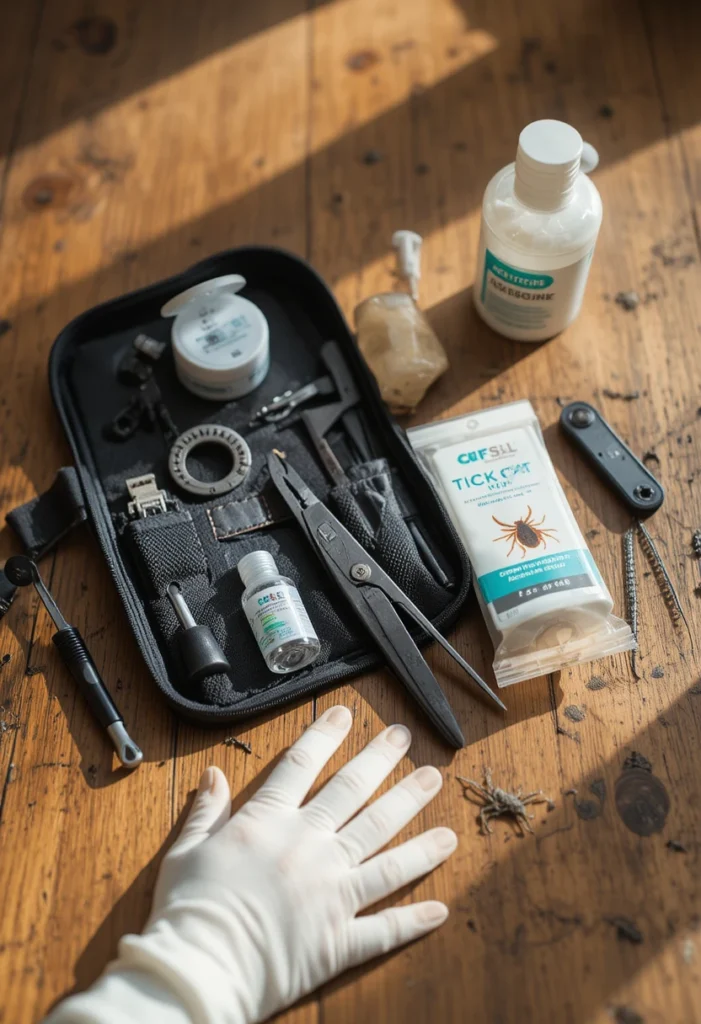
A fine-tipped tick removal tool (not tweezers, which can leave the head embedded) makes safe removal fast and simple. Grip close to the skin, pull straight up with steady pressure, and disinfect the bite site afterward. Keep this kit in your car, backpack, and at home.
18. Avoid Peak Tick Zones During High-Risk Season
Tall grass, leaf-covered trails, and dense brush are tick hotspots, especially in spring and fall. Sticking to the center of cleared trails during walks rather than letting your dog wander into brush reduces exposure without limiting your outdoor time entirely.
19. Support Your Dog’s Overall Health

A dog in good overall condition well-nourished, at a healthy weight, with a strong immune system tends to handle minor bites and stress better than one who isn’t. This isn’t a tick repellent on its own, but general wellness (talk to your vet about your dog’s specific nutritional needs) rounds out a truly complete prevention plan.
Frequently Asked Questions
What is the most effective tick prevention for dogs?
Vet-approved topical, oral, or collar preventives remain the most consistently effective option, since they’re tested at specific dosages for reliability. Natural remedies and yard care work best as supporting layers alongside one of these core methods.
Can indoor dogs get ticks?
Yes. Ticks can hitch a ride into your home on clothing, shoes, or other pets, and even a quick trip to the yard is enough exposure for an indoor dog to pick one up.
How often should I check my dog for ticks?
Daily is ideal, and always after hikes, walks through grassy or wooded areas, or time spent in the backyard during peak tick season.
Is garlic safe for tick prevention in dogs?
This is a controversial one. While some natural-remedy sources mention garlic as a repellent, many veterinarians caution against feeding garlic to dogs because, in certain amounts, it belongs to a plant family that can be toxic to dogs. If you’re curious about it, talk to your vet first rather than experimenting on your own.
What smells do ticks dislike?
Ticks tend to avoid cedarwood, lavender, lemongrass, citronella, and rosemary which is why these show up so often in natural repellent recipes.
The Bottom Line
No single product, spray, or yard trick is a silver bullet against ticks. The dogs with the strongest protection are the ones with layered defense a vet-approved preventive as the foundation, a tick-unfriendly yard, and daily habits that catch anything that slips through.
Start with one category from this list, add another next week, and before long you’ll have a complete system in place one your dog (and your peace of mind) will thank you for every tick season.