
You fill the bowl the same way every morning. But lately you’ve been staring at it a little longer, wondering if you’re doing it right. Too little and your dog is begging by 2pm. Too much and that waistline is starting to disappear. If you’ve ever stood in your kitchen with a scoop in one hand and your phone in the other, googling “how much should I feed my dog,” you’re about to get every answer you need no vet degree required.
Save this guide for later because feeding amounts change as your dog grows, ages, and moves through different seasons of life, and you’ll want to come back to this more than once.
Here are 12 practical ideas that take the guesswork out of portioning, whether you’ve got a food-obsessed Labrador or a picky Chihuahua who eats like it’s a chore.
1. Start With Your Dog’s Ideal Weight, Not the Bag

Most people scoop food based on how much their dog currently weighs. The better move is to feed based on your dog’s ideal weight the weight they’d be at if they were lean and healthy. If your dog needs to lose a few pounds, feeding for their current (heavier) weight just keeps them stuck there.
Ask your vet what your dog’s ideal weight should be, or use breed-standard ranges as a starting point. From there, every other calculation in this list gets easier, because you’re portioning for the dog you want, not just the one currently staring at you.
2. Check the Feeding Chart on the Package First
Every complete and balanced dog food is required to include a feeding chart on the bag, and it’s genuinely the fastest starting point you have. The catch: that number is almost always the total for the whole day, not per meal.
So if the chart says a 30-pound dog needs 2 cups daily and you feed twice a day, that’s 1 cup per meal not 2 cups twice. This single mix-up is one of the most common reasons dogs end up overweight, so it’s worth double-checking every time you switch foods, since formulas vary in calorie density from brand to brand.
3. Split Daily Food Into the Right Number of Meals
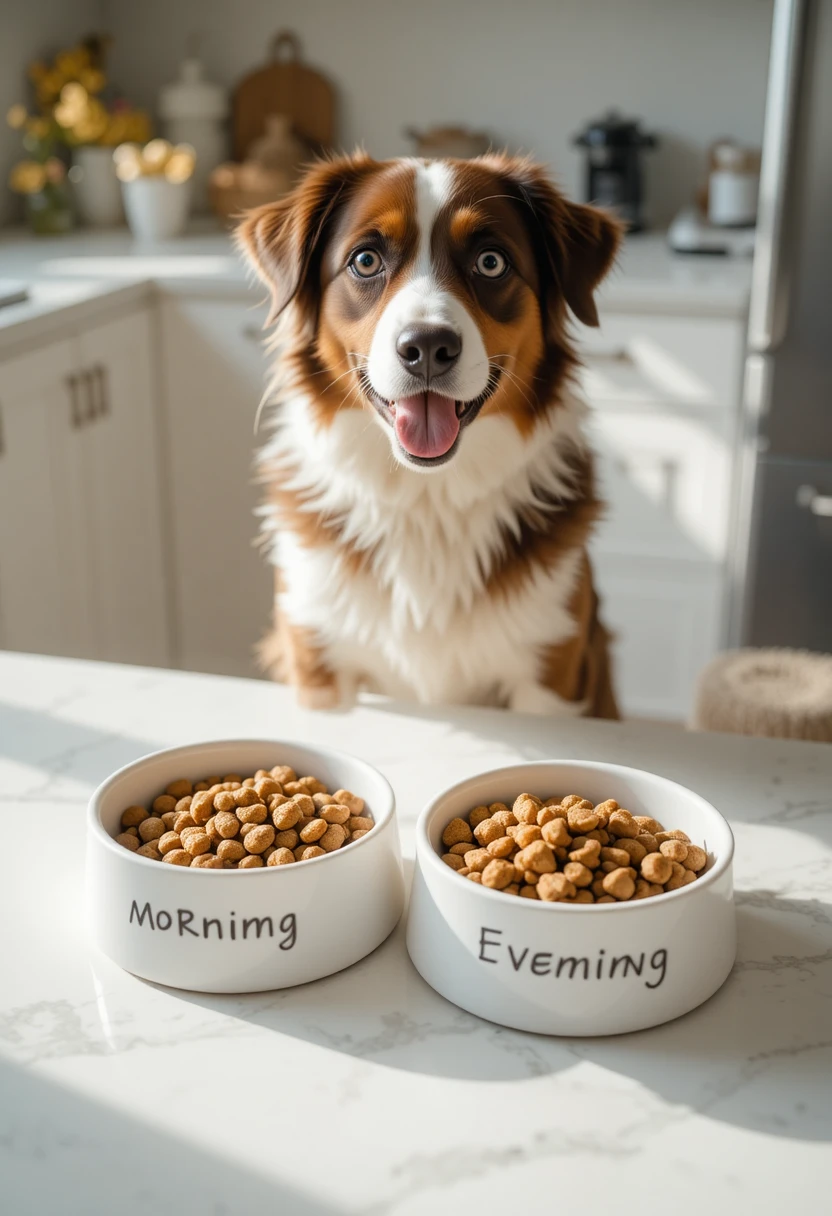
How you divide the food matters almost as much as the total amount. Most adult dogs do best on two meals a day morning and evening which helps keep energy levels steady and metabolism humming. Puppies need more frequent, smaller meals, often three to four times a day depending on age.
Quick tip: more frequent meals in smaller amounts can also help dogs who eat too fast, get an upset stomach on one big meal, or tend to beg between feedings.
Read Also: 15+ Best Dog Breeds for Kids: The Ultimate Family Dog Guide
4. Adjust for Life Stage: Puppy, Adult, or Senior
A growing puppy, a healthy adult, and a slowing-down senior are essentially eating for three different jobs.
- Puppies need more calories, more protein, and higher levels of nutrients like calcium relative to their body size to fuel rapid growth.
- Adult dogs need steady, consistent portions to maintain not build their body condition.
- Senior dogs typically need fewer calories as metabolism and activity slow, often landing around a lower percentage of body weight in calories than younger dogs.
If you’re still feeding your 8-year-old the same portion he ate at 2, that mismatch could be showing up on the scale.
5. Factor In Activity Level
A dog who hikes with you every weekend and a dog who mostly nap-supervises the living room have very different calorie needs, even at the same weight. Feeding charts are built around an “average” activity level, which means highly active dogs may need noticeably more, while low-energy or mostly indoor dogs often need less to avoid slow, steady weight gain.
Think honestly about your dog’s actual week not the walk you plan to take, but the one that actually happens and adjust portions up or down from there.
6. Use the Body Condition Score, Not Just the Scale
Weight alone doesn’t tell the whole story, especially for mixed breeds or dogs with a wide healthy-weight range. That’s where a Body Condition Score (BCS) comes in a simple visual and hands-on check.
Run your hands along your dog’s ribs: you should be able to feel them easily under a thin layer of fat, without them being visibly sharp. Looking from above, your dog should have a visible waist behind the ribs. No waist and no rib definition usually means it’s time to trim portions; a very visible spine or hip bones usually means it’s time to add more food.
7. Do the Calorie Math When Charts Feel Off
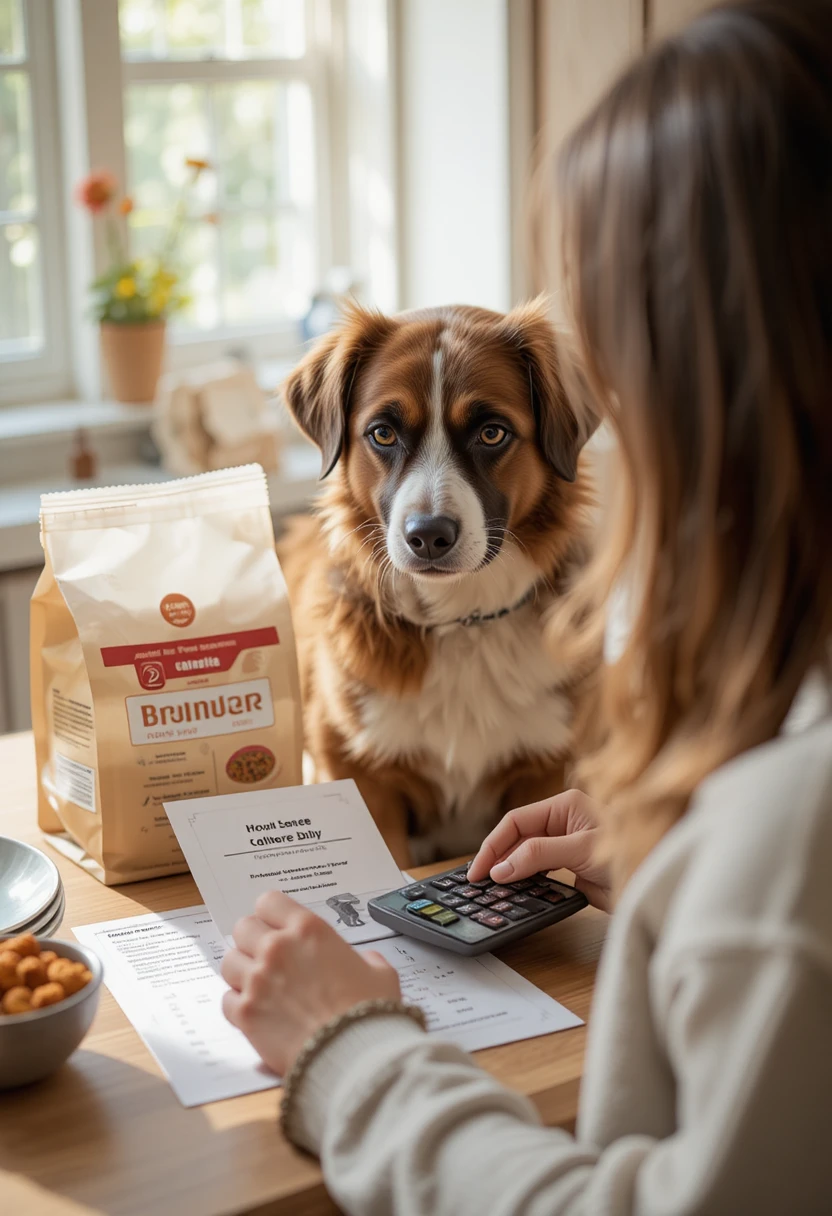
If the bag’s chart doesn’t seem to match reality your dog is gaining or losing when it shouldn’t be calculating actual daily calorie needs is the more precise route. Look up your dog’s estimated daily calorie needs based on weight and activity level, then check the calories-per-cup listed on your food’s packaging to figure out the right portion.
This is especially useful for dogs on the edge of two chart categories, dogs recovering from an illness, or dogs whose weight has been harder to manage with the standard chart alone.
8. Match Portions to Food Type (Kibble, Wet, Raw)
Not all dog food is created equal, calorie for calorie. Kibble is calorie-dense, so portions look small compared to wet food. Wet food has high moisture content, so your dog needs more of it by volume to get the same calories. Raw and freeze-dried diets tend to be nutrient-dense and lower in carbs, which also changes the math.
This matters most when switching foods never assume the same cup measurement applies just because your dog was eating “about a cup” of their old food.
9. Keep Treats Under 10% of Daily Calories
Treats, training rewards, and the occasional bite of your dinner all count toward your dog’s daily intake and they add up faster than most people realize. As a general guideline, treats shouldn’t make up more than about 10% of your dog’s total daily calories.
If treat time is a big part of your routine (hello, training-heavy households), consider subtracting a small amount from mealtime portions to keep the daily total balanced, rather than just piling extra calories on top.
10. Adjust After Spay/Neuter or Health Changes
A dog’s calorie needs can shift noticeably after being spayed or neutered, often dropping due to a slower metabolism. The same goes for major health changes pregnancy, illness, joint problems that reduce activity, or recovery from surgery can all mean the “normal” portion is suddenly too much or too little.
Anytime something significant changes in your dog’s life or health, treat it as a cue to revisit portion size rather than sticking with whatever’s always worked before.
11. Re-Check Portions Every Few Months

Feeding amounts aren’t a “set it and forget it” decision. A portion that was perfect six months ago might not be right today, especially through seasonal activity changes, aging, or a new food formula. Make it a habit to reassess every couple of months:
- Weigh your dog or check their body condition score.
- Watch energy levels and coat condition.
- Note any begging, leftover food, or sudden pickiness.
Small, regular check-ins prevent the kind of slow weight creep that’s much harder to notice day to day than it is looking back at old photos.
12. When in Doubt, Loop In Your Vet
Every idea on this list is a strong starting point but your veterinarian knows your specific dog: their breed tendencies, health history, and body condition in person. If your dog has unexplained weight changes, digestive issues, or a medical condition like diabetes or kidney disease, feeding amounts often need a more tailored approach than any chart can offer.
A quick weigh-in and BCS check at your next appointment is one of the easiest ways to confirm you’re on the right track or catch a small adjustment before it becomes a bigger issue.
Frequently Asked Questions
How many times a day should I feed my dog?
Most adult dogs do well with two meals a day. Puppies typically need three to four smaller meals, gradually reducing to two as they mature, usually somewhere between 7 and 14 months depending on breed size.
Is it better to overfeed or underfeed slightly?
Neither is ideal, but consistent overfeeding is the more common problem and a major contributor to canine obesity. If you’re unsure which way to lean, checking body condition score regularly is safer than guessing.
Do feeding charts account for treats?
No. Feeding chart amounts are based on that food alone. Treats, chews, and table scraps should be factored in separately and kept to roughly 10% of total daily calories.
Should I feed the same amount year-round?
Not necessarily. Activity often shifts seasonally, and portions may need small adjustments in a much less active winter versus an active, walk-heavy summer.
The Bottom Line
There’s no single magic number that works for every dog but there is a simple system: start with your dog’s ideal weight, use the feeding chart as a baseline, adjust for life stage and activity, and check in with a body condition score every few months. Do that consistently, and “how much should I feed my dog” stops being a daily guessing game and becomes second nature.