
Nothing makes a pet parent’s stomach drop quite like running your fingers through your dog’s fur and hitting a hard, tangled clump. Matted fur isn’t just an eyesore left untreated, it pulls on the skin, traps moisture and bacteria, and can even cut off circulation in severe cases. The good news is that most mats, when caught early, can be safely worked out at home with the right technique, tools, and a healthy dose of patience.
This guide walks you through 12+ practical ideas for brushing out a matted dog coat safely, plus how to tell when it’s time to call in a professional groomer instead.
Why Do Dogs Get Matted Fur in the First Place?
Mats form when loose, dead hair gets tangled with live hair instead of falling away naturally. Over time, more hair gets caught in the tangle, pulling it tighter and closer to the skin. Mats tend to show up most often in areas with friction or movement, such as:
- Behind and around the ears
- Under the armpits and legs
- Around the collar and neck
- Near the tail and hindquarters
- Between the paw pads
Dogs with long, curly, or double coats are especially prone to matting, but even short-haired dogs can develop tangles if they’re not brushed regularly. Wet fur is also a major culprit a bath or a romp in the rain can tighten existing tangles into dense mats if the coat isn’t brushed both before and after getting wet.
Why You Shouldn’t Ignore Matted Fur
Matting is more than a cosmetic issue. Left unresolved, mats can:
- Pull painfully on the skin every time your dog moves
- Trap moisture and bacteria, leading to skin infections or hot spots
- Restrict circulation in severe cases, especially around the legs and tail
- Hide fleas, ticks, or other parasites that go unnoticed underneath the tangle
- Prevent your dog from regulating body temperature properly
Because of this, it’s worth addressing mats as soon as you spot them rather than waiting until grooming day.
Gather Your Tools Before You Start
Before you even touch a tangle, set yourself up for success with the right supplies:
- A slicker brush for general detangling
- A metal comb with both wide and fine teeth
- A dematting rake or mat splitter for stubborn clumps
- A detangling spray or leave-in conditioner
- Blunt-tipped grooming scissors (never sharp, pointy ones)
- Treats and patience lots of both
With your toolkit ready, here are 12+ ideas to help you brush out that matted coat safely and effectively.
1. Start With a Calm, Quiet Environment
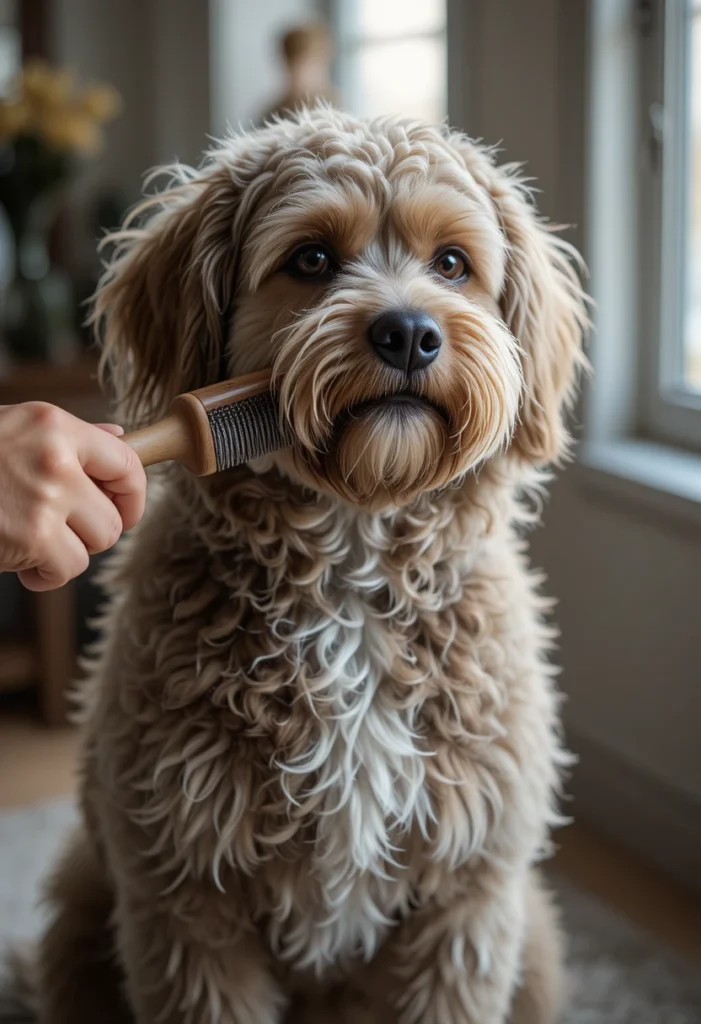
Dogs pick up on tension immediately, and a stressed dog will fight the brush every time. Choose a quiet room, put on some calm background noise, and give your dog a few minutes to settle before you begin. A relaxed dog is a cooperative dog.
2. Never Brush a Bone-Dry, Untreated Mat
Dry mats are tighter and more painful to work through. Spritz the tangled area with a detangling spray or a diluted leave-in conditioner and let it sit for a few minutes. This softens the hair and makes it far easier to separate without pulling on the skin.
3. Isolate the Mat With Your Fingers First
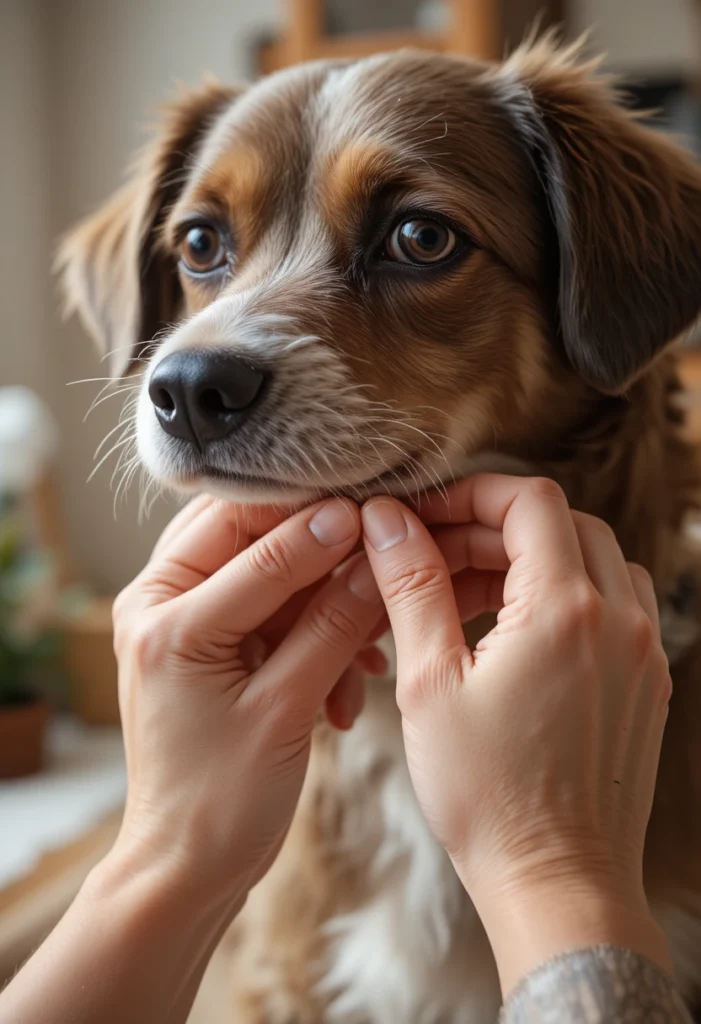
Before reaching for a brush, gently pull the mat away from the body slightly and try to separate the strands with your fingers. This lets you gauge how tight the tangle is and start loosening it without any tools at all.
Read Also: 13+ Best Family Friendly Dog Breeds
4. Hold the Base of the Mat Close to the Skin
This is one of the most important safety tips in dog grooming. Always pinch the base of the mat between two fingers, close to the skin, before you brush or comb. This technique protects the skin from being pulled or nicked as you work through the tangle from the tip inward.
5. Work From the Tips Inward, Never From the Skin Outward
Trying to force a comb through a mat starting at the skin is a recipe for pain and resistance. Instead, start at the very tip of the mat and gently work your way toward the base in small sections. This “outside-in” approach breaks the tangle apart gradually instead of yanking on it all at once.
6. Use Short, Fast Strokes With a Metal Comb
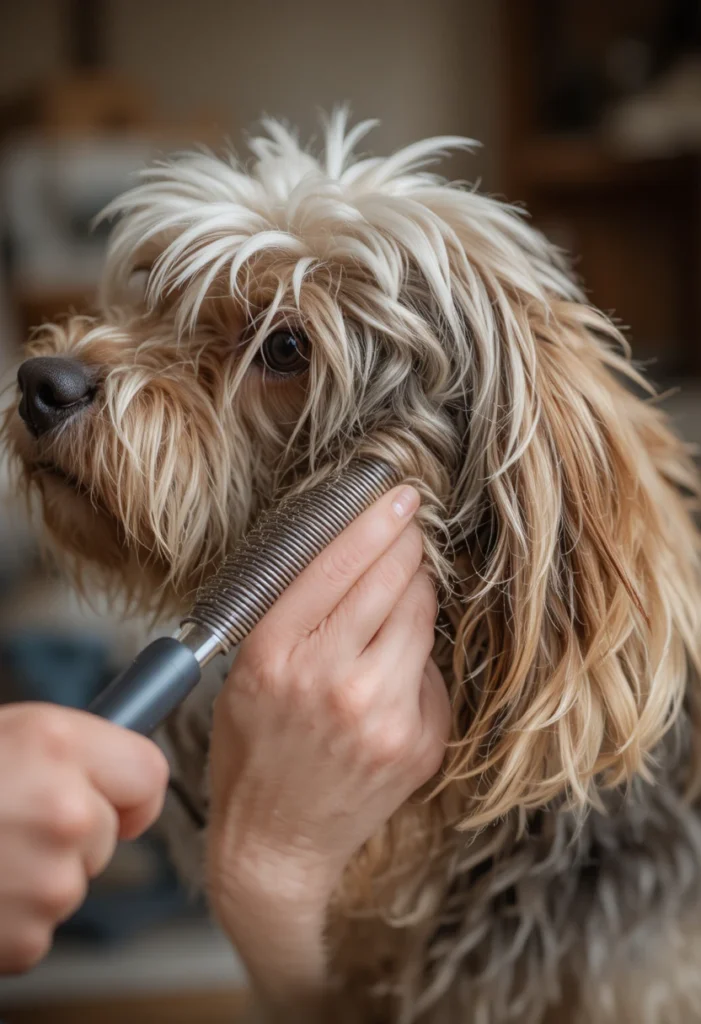
A wide-tooth metal comb is often more effective than a brush for penetrating dense mats. Use short, quick strokes rather than one long pull this reduces tension on the skin and helps you feel exactly where the resistance is.
7. Switch to a Slicker Brush for the Finishing Pass
Once the bulk of a mat has loosened with a comb, follow up with a slicker brush to smooth out the remaining tangles and fluff the coat. The fine, closely spaced bristles catch any small knots the comb might have missed.
8. Break Big Mats Into Smaller Sections
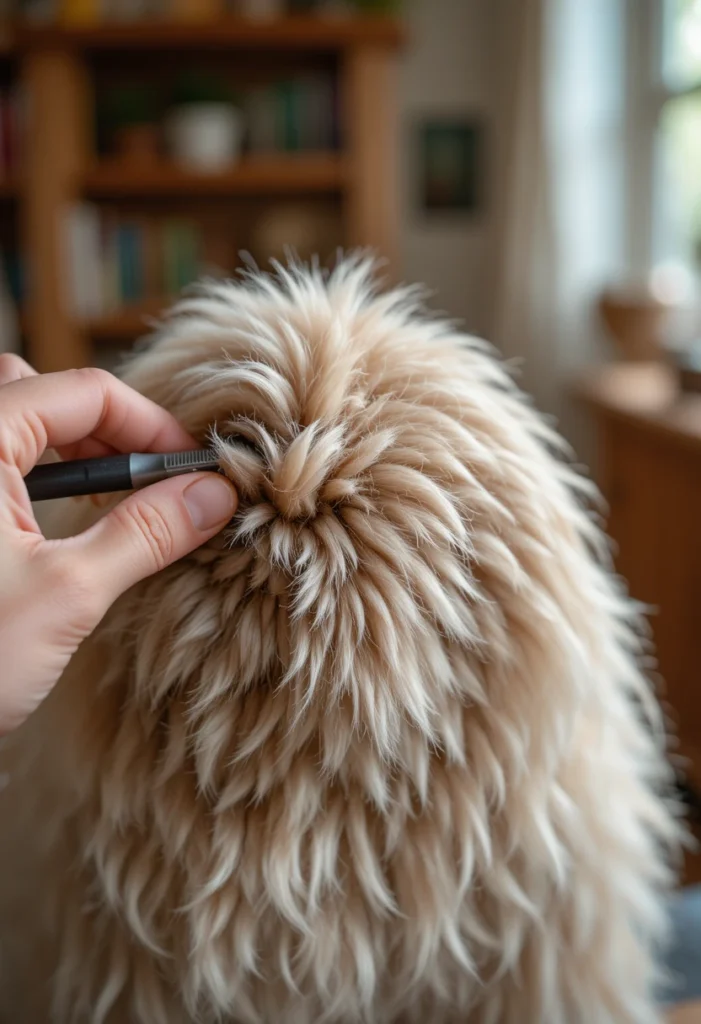
A large mat can feel overwhelming to tackle in one go. Instead, mentally (or physically, with clips) divide it into smaller sections and work through each one individually. This makes the process feel more manageable for both you and your dog.
9. Try a Dematting Rake for Stubborn, Dense Clumps
If a slicker brush and comb aren’t cutting it, a dematting rake or splitter tool is designed specifically for tougher mats. These tools have sharp, widely spaced teeth that slice through tangled hair without cutting the skin just be sure to use them slowly and check your dog’s reaction as you go.
10. Take Frequent Breaks

Grooming sessions on a heavily matted dog can take a long time, and no dog has unlimited patience for sitting still. Break the process into multiple short sessions across a day or two rather than forcing one long, stressful sitting. Reward your dog with treats and praise throughout.
11. Know When Scissors Are (and Aren’t) Appropriate
For small, isolated mats that won’t budge with a comb, trimming may be your best option but only with blunt-tipped grooming scissors, never sharp ones. Hold the mat away from the skin so you can see clearly underneath it, and cut in the direction of hair growth using the base of the blade, not the tip. Never use scissors on mats near the eyes, ears, or genitals.
12. Bathe and Condition After Detangling

Once you’ve worked through the mats, give your dog a gentle bath with a moisturizing shampoo, followed by a good detangling conditioner. This soothes any irritated skin and makes future brushing sessions easier by keeping the coat soft and manageable.
13. Blow-Dry While Brushing to Prevent New Tangles
If your dog tolerates a blow dryer on a low, cool setting, brush the coat while drying it. This lifts the hair away from the skin and helps prevent new mats from forming as the coat dries wet hair left to air-dry naturally is far more prone to re-tangling.
14. Apply Detangling Spray to High-Friction Areas Afterward
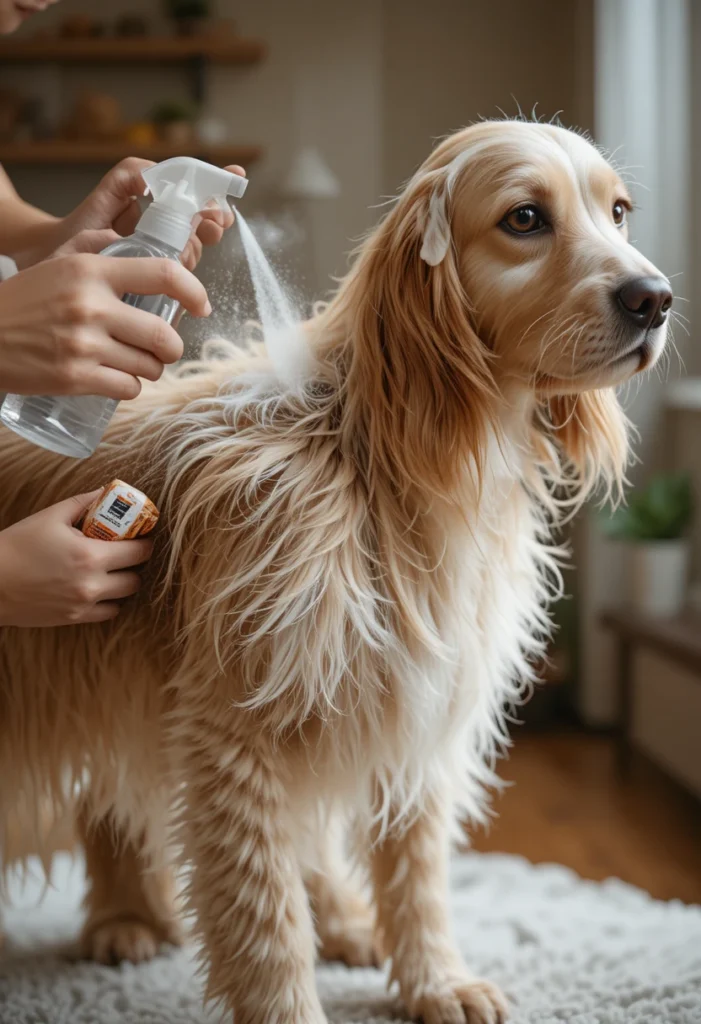
Once your dog’s coat is dry and mat-free, apply a light layer of detangling spray to the areas most prone to tangling behind the ears, under the legs, and around the collar. This creates a protective barrier that makes future brushing sessions smoother.
Bonus Idea: Build a Regular Brushing Routine to Prevent Mats Altogether
The best cure for matting is prevention. Dogs with long, curly, or double coats typically need brushing two to three times a week some daily while short-haired breeds can usually get by with a weekly session. Regular brushing removes loose hair before it has the chance to tangle, saving you (and your dog) from a much more painful dematting session down the road.
When to Call a Professional Groomer or Vet Instead
Not every mat is safe to handle at home. It’s time to call in a professional if:
- The matting covers a large portion of your dog’s body
- Mats are extremely close to the skin or you can’t see skin underneath them
- Your dog shows signs of pain, such as yelping, flinching, or trying to bite
- You notice redness, sores, or an odor coming from underneath the mat
- The mat is located somewhere risky, like the ears, groin, or tail
In severe cases, a groomer or vet may recommend shaving the affected area entirely. This isn’t a failure on your part some mats are simply too advanced, too painful, or too risky to remove safely without professional tools and experience.
Frequently Asked Questions
Can I use regular scissors to cut out a mat?
No. Sharp, pointed scissors are dangerous near mats because they sit close to the skin, making it easy to accidentally cut your dog. Always use blunt-tipped grooming scissors if trimming is necessary.
Why does my dog’s fur mat so quickly after a bath?
Water tightens existing tangles, so any mats present before a bath often get worse afterward. Always brush your dog thoroughly before bathing, not just after.
Is it painful for a dog to have mats brushed out?
It can be if not done carefully. Always hold the base of the mat close to the skin to relieve tension, work in small sections, and stop if your dog shows signs of discomfort.
How often should I brush my dog to prevent matting?
It depends on coat type. Long-haired, curly, or double-coated breeds often need brushing several times a week or even daily, while short-haired breeds may only need a weekly session.
Should I ever shave a matted dog myself?
No. Shaving should only be done by a professional groomer or veterinarian, since it requires special clippers and skill to avoid cutting the skin, which is often very close to the base of severe mats.
Final Thoughts
A matted coat doesn’t have to mean an emergency trip to the groomer every time. With the right tools, a gentle hand, and a little patience, most everyday tangles can be worked out safely at home. Just remember: when a mat is too tight, too widespread, or too close to sensitive skin, it’s always safer to call in a professional than to risk hurting your dog.