Picture this: it’s 6 p.m., dinner’s half-burnt, your kid is mid-meltdown over homework, and somehow the only calm creature in the house is the dog curled up at their feet, tail thumping like everything’s fine. That’s not luck. That’s breed selection.
Not every dog is built for the chaos of family life the sticky hands, the sudden shrieks, the toddler who thinks “gentle pets” means a full-contact hug. But the breeds on this list? They were basically made for it. Whether you’re raising a newborn, a rowdy 8-year-old, or a teenager who swears they’ll walk the dog every day (they won’t, but that’s fine these breeds don’t hold grudges), there’s a match for your household on this list.
We’ve pulled together 15 of the best family-friendly dog breeds, plus honest notes on apartment living, allergy-prone households, and the questions every parent asks before bringing a dog home. Stick around for #7 and #12 they’re two of the most underrated family dogs nobody talks about enough.
What Actually Makes a Dog “Family Friendly”?
Before diving into the list, here’s the thing: “family friendly” isn’t just code for “cute” or “good with kids.” A genuinely great family dog checks several boxes at once:
- Stable temperament — doesn’t spook, snap, or get possessive when things get loud or chaotic
- Patience — can tolerate a toddler’s version of “petting” without flinching
- Trainability — responds to consistent, positive training (because let’s be real, most families don’t have hours a day for advanced obedience work)
- Size-to-energy match — fits your space and your family’s actual activity level, not the one you wish you had
- Predictable size and coat needs — so grooming and space requirements don’t blindside you six months in
With that in mind, here are the breeds that consistently earn their spot as family favorites and why.
1. Golden Retriever
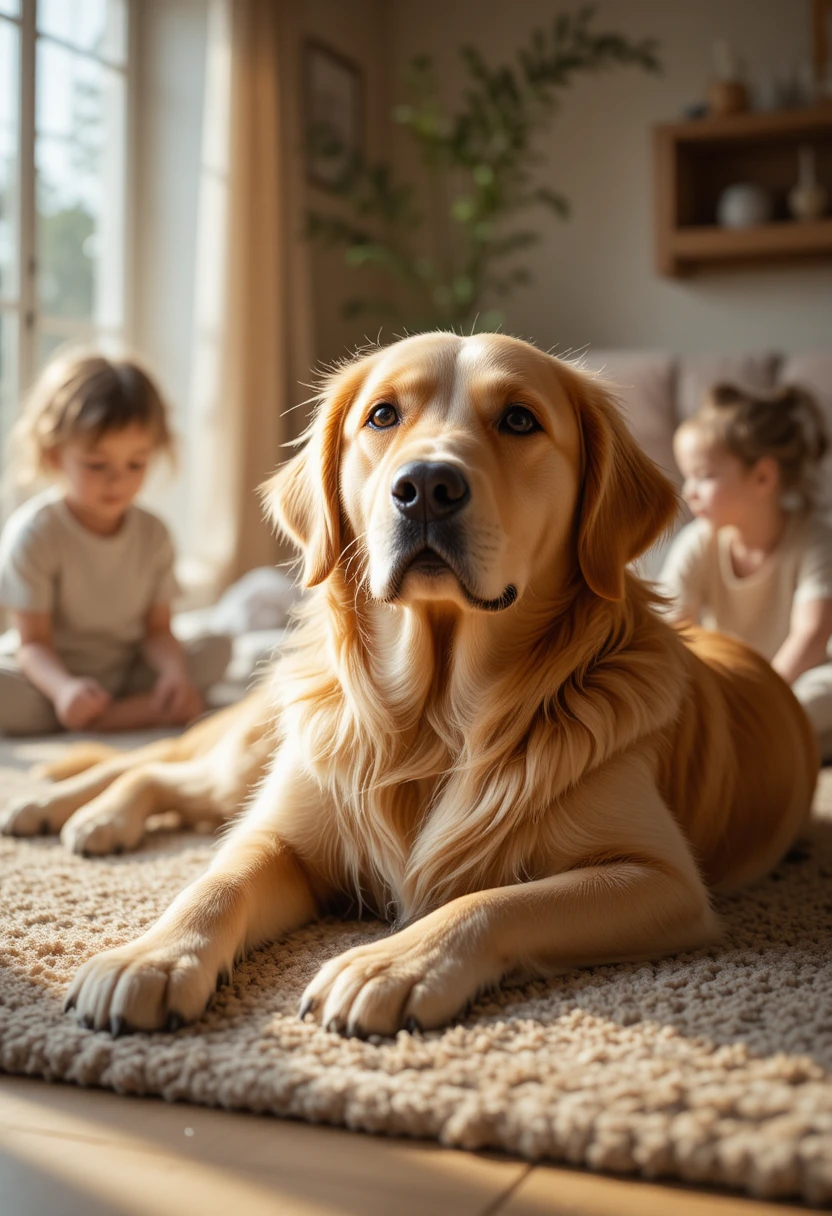
If family dogs had a mascot, it would be the Golden Retriever. This breed is known for being eager to please and having a loving nature, and when well-exercised and mentally stimulated, Goldens don’t tend to bark excessively a small but real win if you live near neighbors who value quiet afternoons.
Goldens are patient with toddlers, playful with older kids, and endlessly food-motivated (translation: easy to train). Their one demand? Consistent exercise. A bored Golden is a chewed-shoe Golden.
Best for: Active families with yard space and time for daily walks or play.
2. Labrador Retriever
America’s most popular breed didn’t get there by accident. Labs are known for their friendly, outgoing nature and get along well with children and other pets, making them one of the most popular family dog breeds. They’re food-driven, biddable, and genuinely seem to enjoy being trained, which makes obedience work feel more like a game than a chore.
Here’s the catch: Labs have serious energy, especially in the first three years. A tired Lab is a wonderful Lab; a bored one will redecorate your couch cushions.
Best for: Families with a yard, a pool, or a standing commitment to long daily walks.
3. Beagle

Small, sturdy, and endlessly curious, the Beagle brings big personality in a compact package. Beagles are as friendly as Golden Retrievers with a slightly more outgoing nature, and they’re the ideal size for toddlers quick enough to get away from them, too.
Their nose runs the show, though Beagles will follow a scent trail straight out of an open gate, so a secure yard isn’t optional. And yes, the howling is real. If you love a dog with a voice, this is your breed.
Best for: Active families who don’t mind a bit of noise and can commit to a fenced yard or leash walks.
Read Also: 16+ Calmest Dog Breeds for Families
4. Cavalier King Charles Spaniel
If your household runs on cuddles, meet your match. Cavaliers are widely regarded as one of the gentlest companion breeds, known for being tolerant and patient with children, and are typically friendly, calm, and rarely show aggression.
They’re also small enough for apartment living but sturdy enough to survive gentle rough-housing a genuinely rare combination in the toy breed world.
Best for: Families who want a lap dog that still has the patience to keep up with kids.
5. Collie
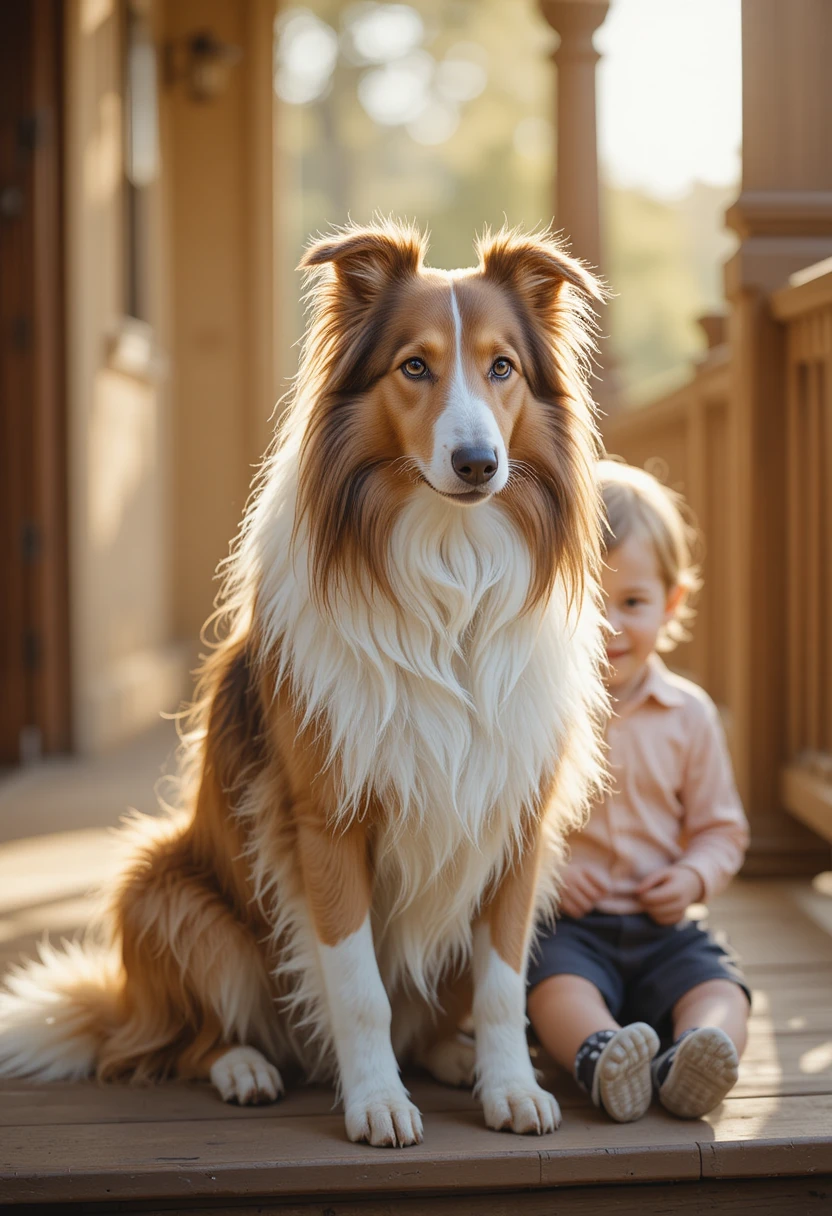
Yes, the Lassie dog is a real, wonderfully family-oriented breed and one of the most underrated on this list. Collies have a well-deserved reputation for being smart, fun-loving, and kind, and they enjoy gently “herding” kids to keep them in line something even small children find hilarious.
Coat tip: if the classic rough-coated Collie’s grooming needs feel like too much, the smooth-coat variety has the exact same sweet temperament with a fraction of the brushing.
Best for: Families with active kids who love the idea of a watchful, gentle “nanny dog.”
6. Newfoundland
Big dog, bigger heart. Newfoundlands are large dogs with big hearts to match loving, friendly, and exceptionally patient with small children though the gentle Newfie does best in families with space for a 100-pound dog.
These are the breed equivalent of a giant, drooly guardian angel. They’re famously calm around babies, but their sheer size means training and socialization early on are non-negotiable.
Best for: Families with the space (and the towel supply) for a giant, drool-prone gentle giant.
7. Irish Setter The One Most People Skip
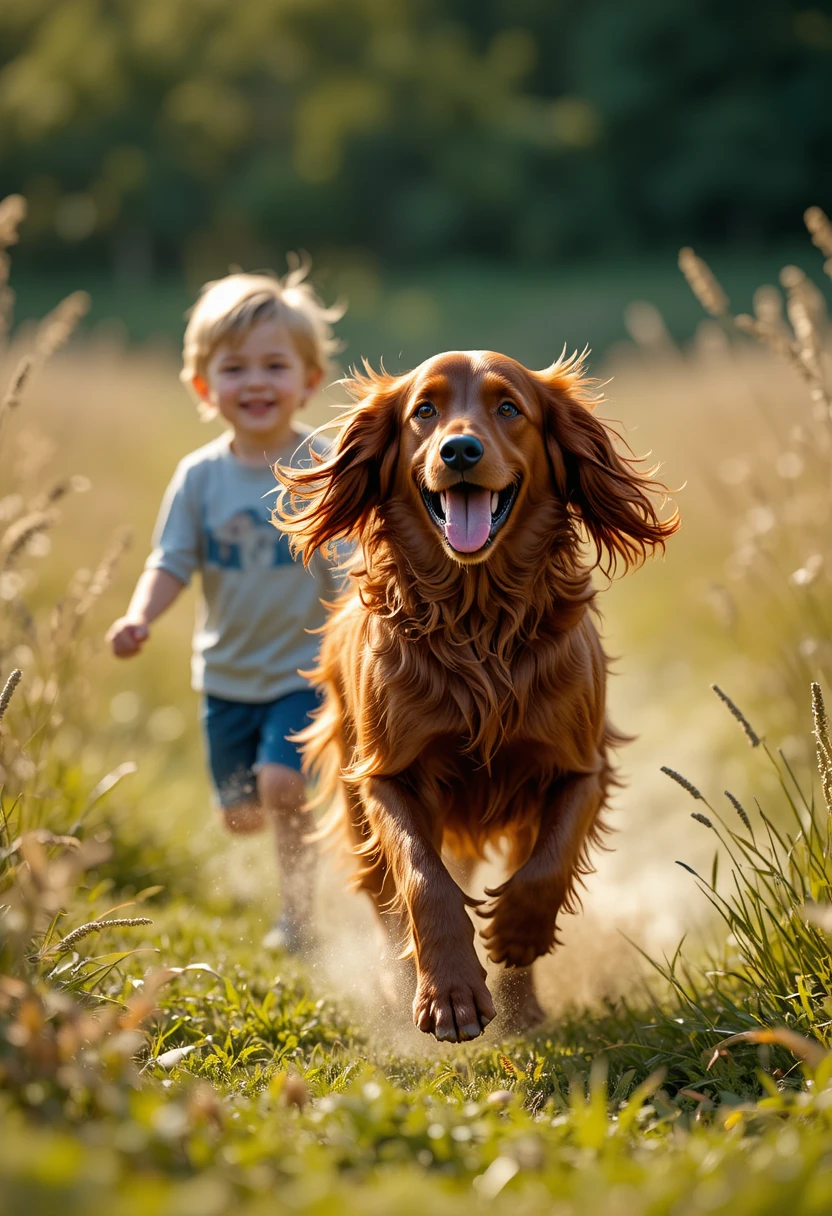
Here’s the one most lists gloss over, and it’s a mistake. The Irish Setter combines gentleness with boundless energy in a way no other breed quite matches, and is trustworthy even around babies. They do best in active families where they can play, swim, and hike alongside their humans, and their sweet, intelligent temperament makes them great companions for kids who want a cheerful, rambunctious friend.
If your family is the “weekend hike and swim” type rather than the “quiet evenings on the couch” type, the Irish Setter might just be your perfect, underrated match.
Best for: Outdoorsy families who want a dog that matches their energy, not their calm.
8. Poodle (Standard or Miniature)
Don’t let the fancy haircuts fool you Poodles are sharp, gentle, and shockingly adaptable. Poodles have perfectly pleasant personalities, and because they come in Standard, Miniature, and Toy sizes, pet parents can choose the size best suited to their home and the ages of their children.
Bonus: their low-shedding coat is a genuine relief for families managing allergies (more on that below).
Best for: Families who want a smart, trainable dog and are willing to budget for regular grooming.
9. Bichon Frise
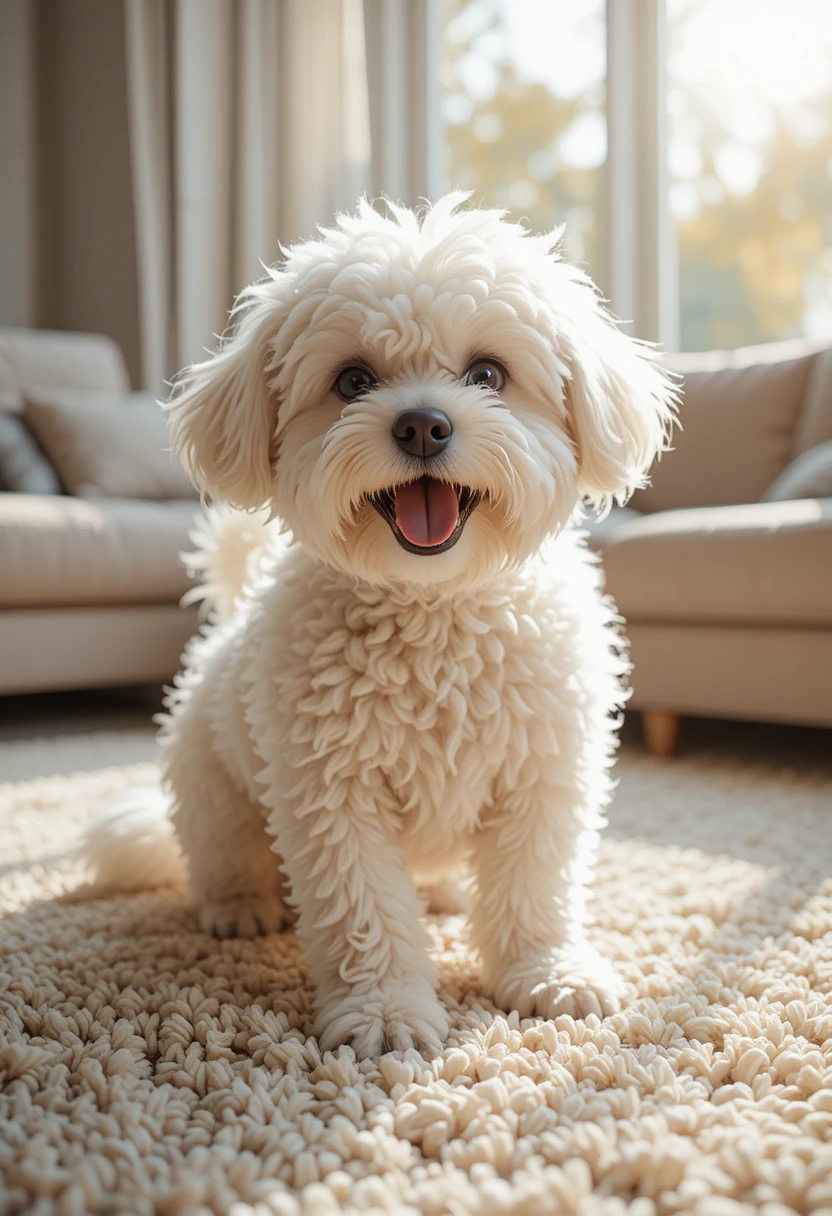
Small, cheerful, and famously good with little kids. The Bichon Frise is a cheerful, highly adaptable, and friendly breed that’s ideal for families with younger children, with medium energy needs a short neighborhood stroll is enough to keep them healthy and satisfied.
Their hypoallergenic coat makes them a go-to pick for families juggling a dog wish list against a family member’s allergies.
Best for: Families in smaller homes who want a low-exercise, high-affection companion.
10. Boston Terrier
Compact, sturdy, and packed with personality, Boston Terriers punch well above their weight class as family dogs. This breed craves companionship and loves being with the family some are high-spirited, others gentle and sweet, so meeting the individual puppy before adopting helps you find the right fit.
They’re relatively low-maintenance on the grooming front, too, thanks to a short, easy-care coat.
Best for: Apartment or city-dwelling families who want big personality without a big dog.
11. Cockapoo
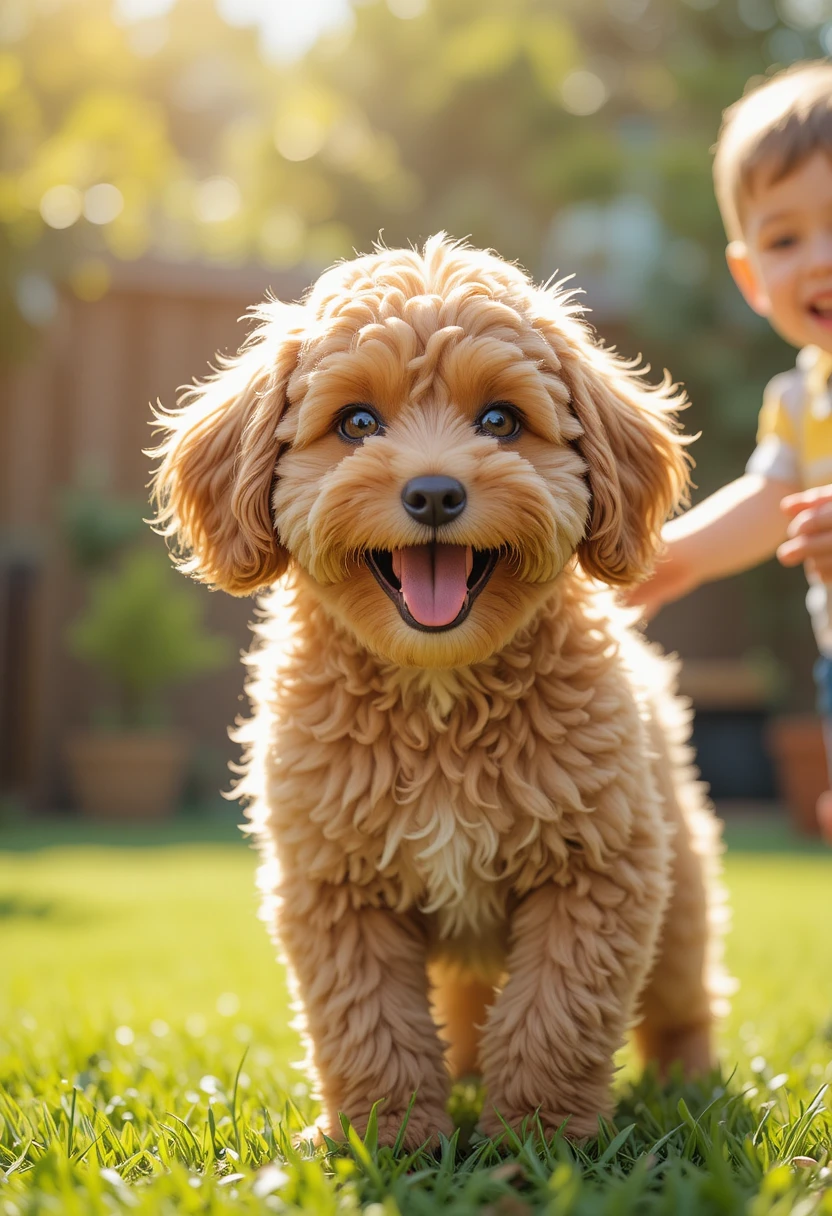
A Cocker Spaniel-Poodle mix that seems designed in a lab for maximum family appeal. Cockapoos are generally friendly, intelligent, and full of energy, love being in the middle of family life, and their intelligence makes training genuinely rewarding plus they tend to shed less, which is a plus for allergy-prone households.
One honest caveat: as a mixed breed, personality can vary more than with purebreds, so meeting the parents (when possible) helps set expectations. Cockapoos also bond hard to their people, so families with someone home most of the day are the best fit.
Best for: Families wanting an affectionate, low-shedding companion who’s happiest glued to your side.
12. Pug The Couch-Potato Champion
Not every family wants a dog that needs a five-mile run before breakfast. Enter the Pug. Behind the Pug’s smooshed face is a friendly, excitable family dog that, despite occasional bursts of energy, is mostly a couch potato content to lie with their humans just budget for the snoring.
Pugs love to lounge with their people and are happy with short walks or active indoor play, which makes them a genuinely great fit for lower-energy households, including families with older kids or limited outdoor space.
Best for: Lower-activity families or apartment dwellers who want maximum affection, minimum exercise demands.
13. Bernese Mountain Dog
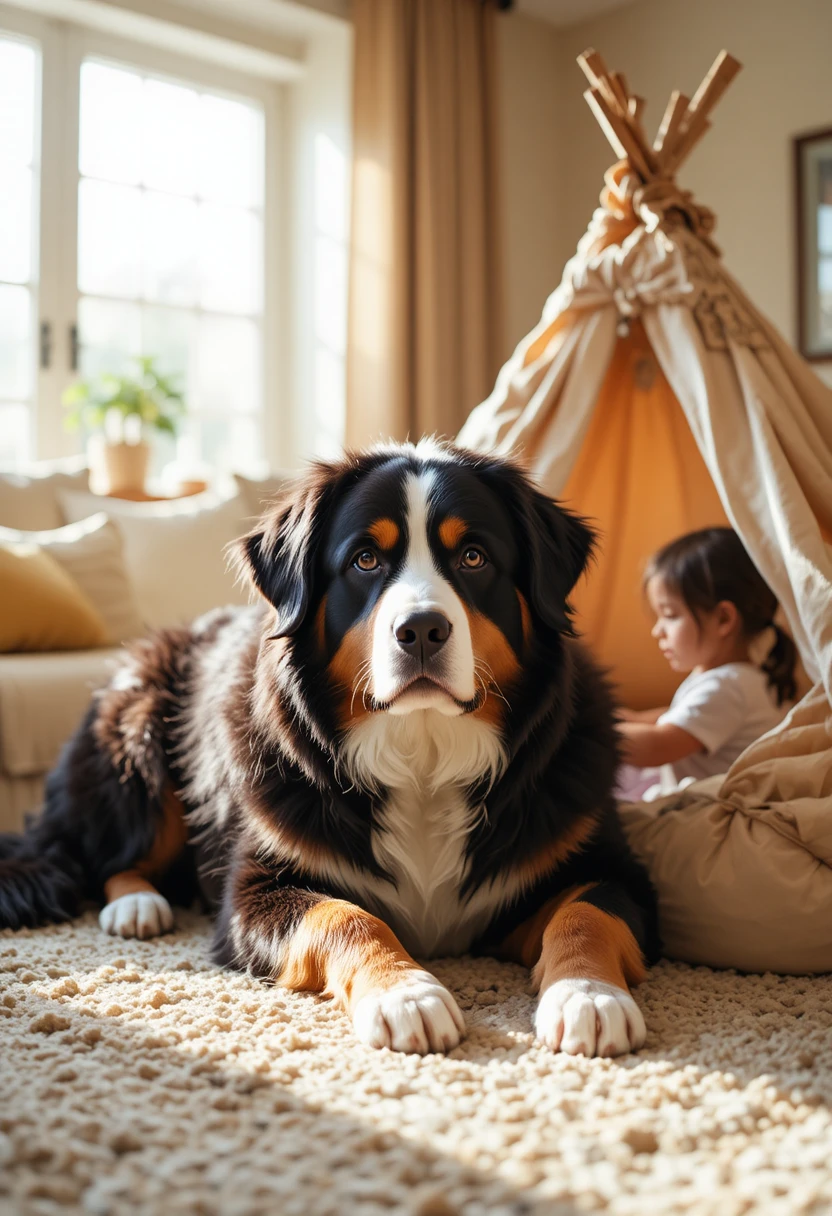
A gentle giant with a soft spot for kids, the Bernese Mountain Dog combines size, calm confidence, and a near-total lack of aggression. They’re slower-maturing and less high-strung than many large breeds, which tends to translate into a steadier presence around unpredictable toddler energy.
Heads up: this is a heavy-shedding, cold-climate breed with a shorter average lifespan than smaller dogs, so it’s worth going in with clear eyes on both fronts.
Best for: Families with space, cooler climates, and a vacuum cleaner they trust.
14. Shih Tzu
Built almost entirely for companionship, the Shih Tzu is small, sturdy for its size, and famously devoted to its people. Their calm demeanor and small size make them well-suited and adaptable to indoor environments, and they’re affectionate dogs that genuinely thrive on human interaction.
They don’t need much exercise, making them a strong option for families short on outdoor time or space.
Best for: Families wanting a low-energy, high-affection lap dog that’s equally happy in a house or a high-rise.
15. Vizsla
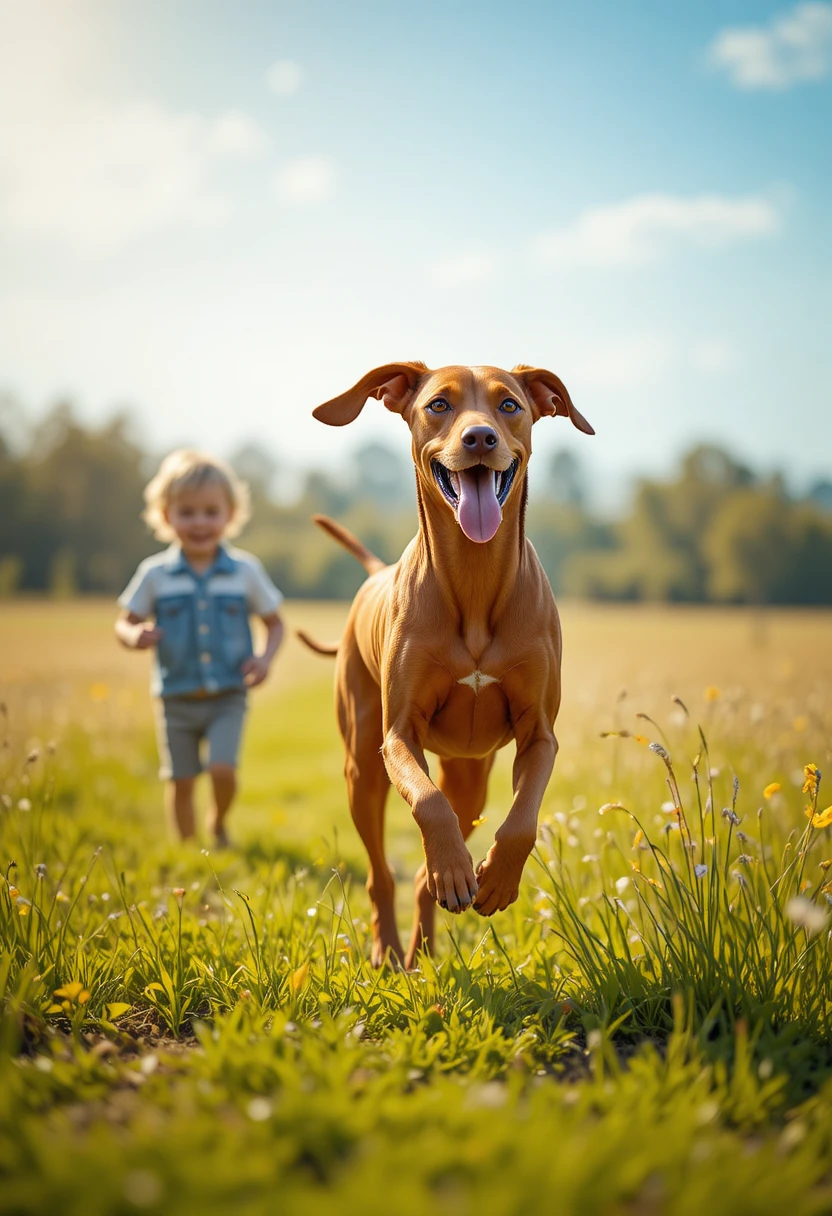
For families that live an active, outdoorsy lifestyle and want a dog that’s basically a second shadow, the Vizsla is worth a serious look. Affectionate to the point of clinginess (in the best way), they bond deeply with kids and adults alike and thrive on being included in everything hikes, runs, backyard games, all of it.
Fair warning: Vizslas do not do well left alone for long stretches. This is a “dog as a full-time family member” breed, not a “dog that’s fine home alone all day” breed.
Best for: Highly active families who want a velcro companion for every outdoor adventure.
Best Family Dogs for Small Apartments
Not every family has a backyard, and that’s completely fine plenty of family-friendly breeds thrive in smaller spaces. The Bichon Frise, Cavalier King Charles Spaniel, and Maltese are commonly recommended for apartment living thanks to their adaptable, friendly nature, and several breeds already on this list Cavaliers, Bichons, Boston Terriers, Pugs, and Shih Tzus double as excellent apartment dogs.
A few extra apartment-friendly favorites worth knowing about:
- Cockapoos and Yorkipoos — intelligent, playful mixes that are typically hypoallergenic and energetic, making them a solid pick for an active family that doesn’t mind occasional barking
- French Bulldogs — small in stature with short hair that requires minimal grooming, and they rarely bark excessively, which apartment neighbors will appreciate
- Chihuahuas — the smallest of all dog breeds, easy to care for with minimal grooming needs, and known for bold, loyal, affectionate personalities despite their tiny size (best matched with families with slightly older, gentler kids)
Best Family Dogs for Allergy-Prone Households
If someone in your family sneezes their way through dog park visits, you’re not automatically out of luck. Several breeds on this list Poodles, Bichon Frises, Cockapoos, and Yorkipoos are low-shedding and widely recommended for allergy-sensitive homes.
Keep in mind: no dog is 100% hypoallergenic. Allergens come from dander, saliva, and urine, not just fur so “low-shedding” reduces exposure but doesn’t eliminate it. If allergies are a serious concern, spend time with the specific breed (ideally the specific puppy) before committing.
How to Actually Choose the Right Family Dog
Here’s the thing nobody tells you upfront: the “best” family dog isn’t a fixed list it’s a match. Before you fall for a breed because of how it looks in photos, run through these questions honestly:
- How much daily exercise can your family realistically commit to not aspirationally, but actually?
- What’s your living space house with a yard, apartment, somewhere in between?
- How old are your kids, and how gentle are they with animals right now?
- Does anyone in the family have allergies?
- Who’s doing the grooming, training, and 6 a.m. walks when the initial excitement wears off?
Answer those honestly, and the right breed usually narrows itself down fast.
Frequently Asked Questions
What is generally considered the most family-friendly dog breed?
Golden Retrievers and Labrador Retrievers are the two most consistently recommended family dogs, thanks to their patience, trainability, and long track record with kids of all ages.
Are big dogs safer around kids than small dogs?
Not necessarily temperament matters far more than size. However, larger, sturdier breeds like Labradors and Newfoundlands are often more tolerant of rough handling from young kids simply because they’re less physically fragile than a small toy breed.
What’s the best low-energy dog for a family that isn’t very active?
Pugs and Shih Tzus are excellent choices for families who want an affectionate companion without demanding daily runs or hikes.
Which family dog breeds are best for allergy sufferers?
Poodles, Bichon Frises, and Poodle-mix breeds like Cockapoos and Yorkipoos are among the most commonly recommended low-shedding options for allergy-sensitive households.
Do mixed breeds like Cockapoos make good family dogs?
Yes, often but expect more personality variation than with purebreds, since traits can come from either parent breed unpredictably. Meeting the individual puppy (and ideally its parents) helps set realistic expectations.
How old should kids be before getting a family dog?
There’s no universal age, but most experts agree that supervision matters more than a specific cutoff. Gentle, patient breeds (Cavaliers, Collies, Labs) tend to be more forgiving of toddler-aged handling, while adopting during the early elementary years often makes training and boundary-setting easier for everyone.
The Bottom Line
There’s no single “perfect” family dog there’s a perfect dog for your family, your space, and your pace of life. Whether that’s a Golden Retriever bounding through the backyard, a Pug snoring on the couch, or a Cavalier curled up in someone’s lap, the right match comes down to being honest about your lifestyle before you fall for a face.
Take your time, meet a few breeds in person if you can, and remember: the breeds on this list didn’t earn their reputation by accident. They’ve spent generations proving they belong in the middle of family chaos happily.