
Your new puppy is finally home, and somewhere between the 3 a.m. potty break and the shoe you just rescued from tiny teeth, you’ve realized you need a plan. Fast.
Crate training is that plan. Done right, it gives your puppy a calm, safe den to retreat to, speeds up potty training, and saves your favorite sneakers from becoming chew toys. Done wrong rushed, forced, or turned into a punishment it can create a puppy who dreads the very thing that’s supposed to make life easier for both of you.
The good news? Crate training isn’t complicated once you know the order of operations. Below are 11+ tried-and-true ideas that take your puppy from “what is this box?” to curling up in their crate on their own, tail wagging, ready for a nap.
Why Crate Training Actually Works (And Isn’t Cruel)
Dogs are naturally den animals. In the wild, a den is a small, enclosed space that feels safe not a cage, not a punishment, just a cozy spot to retreat to when the world feels like a lot. A crate taps into that same instinct.
Used correctly, a crate:
- Speeds up potty training because puppies instinctively avoid soiling where they sleep
- Prevents destructive chewing when you can’t supervise
- Gives your puppy (and you) a break from constant stimulation
- Keeps your dog safe during car rides, vet visits, or travel later in life
The key word throughout this entire guide is positive. Every idea below is built around one golden rule: the crate is always a good place, never a consequence.
Before You Start: Get the Crate Size Right
You can follow every tip perfectly, but if the crate itself is the wrong size, training will be an uphill battle.
Your puppy’s crate should be just big enough for them to stand up, turn around, and lie down comfortably nothing more. A crate that’s too large gives your puppy room to potty in one corner and sleep in the other, which defeats the entire purpose of den training.
Pro tip: If you’re buying a crate for a large-breed puppy, choose one with an adjustable divider panel. You get the “just right” size now, and simply move the panel back as your puppy grows no need to buy a second crate later.
11+ Ideas to Crate Train Your Puppy the Right Way
1. Introduce the Crate on a Calm, Ordinary Day
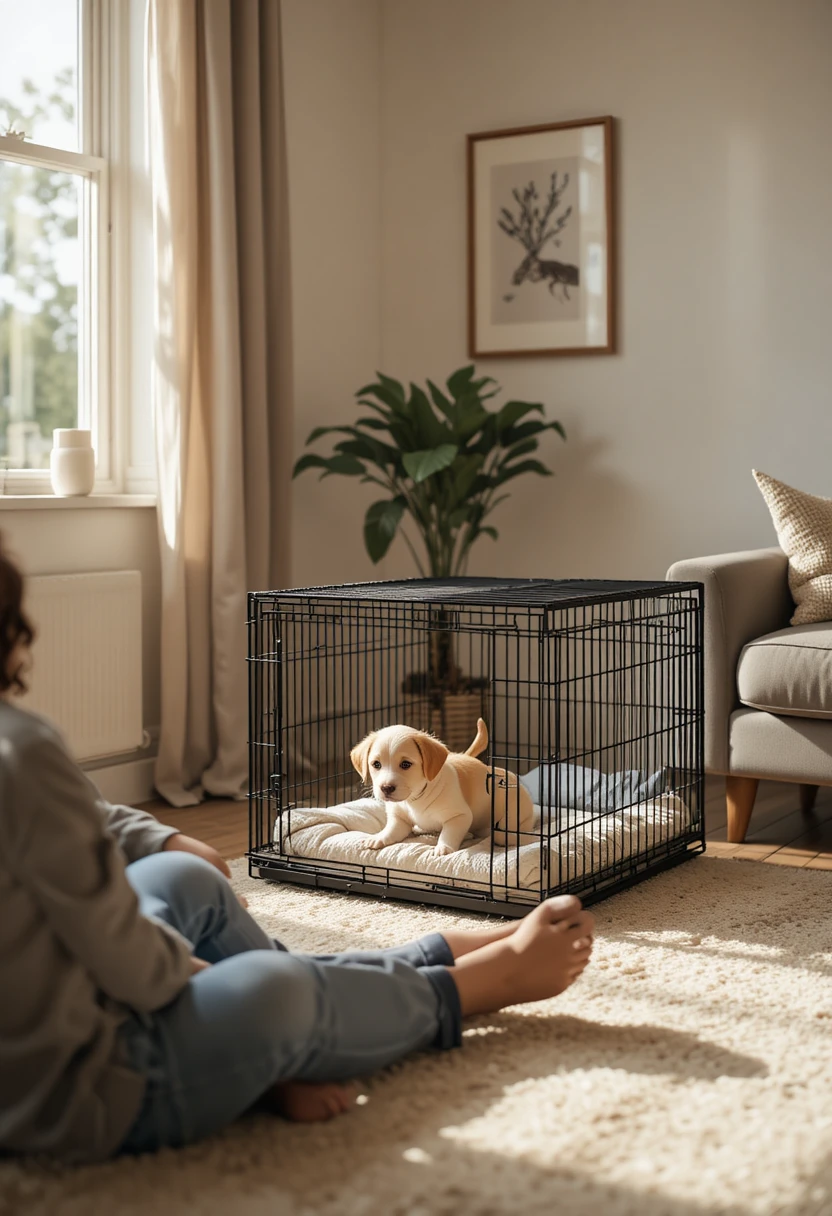
Don’t bring the crate out for the first time right before you leave for work. That timing alone teaches your puppy the crate equals “being abandoned.” Instead, set it up on a quiet afternoon, prop the door open, and let it just… exist in the room for a day or two.
2. Let Curiosity Do the Work
Puppies are nosy by nature. Toss a few treats near the entrance, then a few just inside, and let your puppy wander in on their own terms. Never scoop them up and place them inside that instantly makes the crate feel like a trap instead of a choice.
3. Lay a Treat Trail Straight to the Back Wall
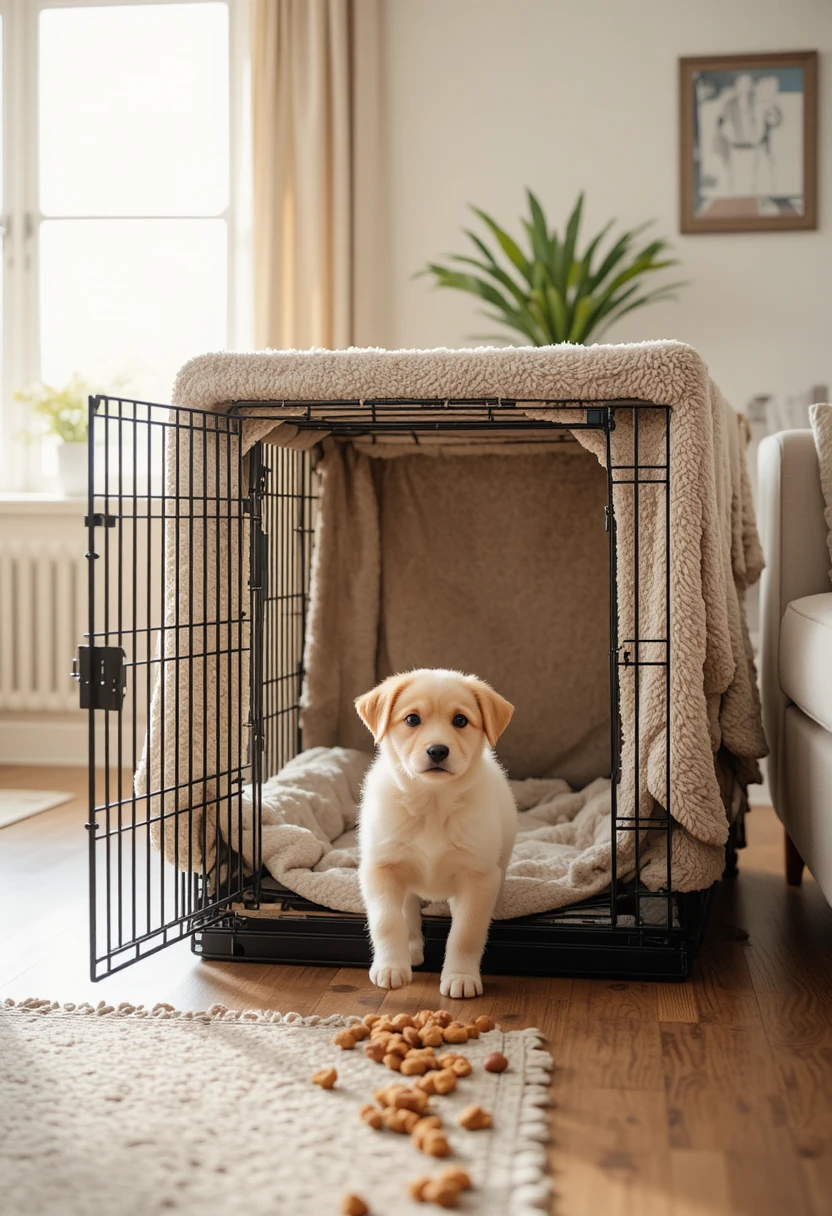
If your puppy is hesitant, a trail of small treats leading from the doorway to the back of the crate works wonders. It turns “going in the crate” into a fun little scavenger hunt instead of a scary unknown.
Read Also: How to Stop a Dog From Biting: 12 Proven Ways to Finally Get Peace at Home
4. Feed Every Meal Inside the Crate
This is one of the single most effective tricks in this entire guide. Start by placing the food bowl just inside the door, then gradually move it further back over several meals. Within a week or two, most puppies will walk straight in at mealtime without hesitation — because the crate has become the place where good things happen.
5. Add a Simple Verbal Cue
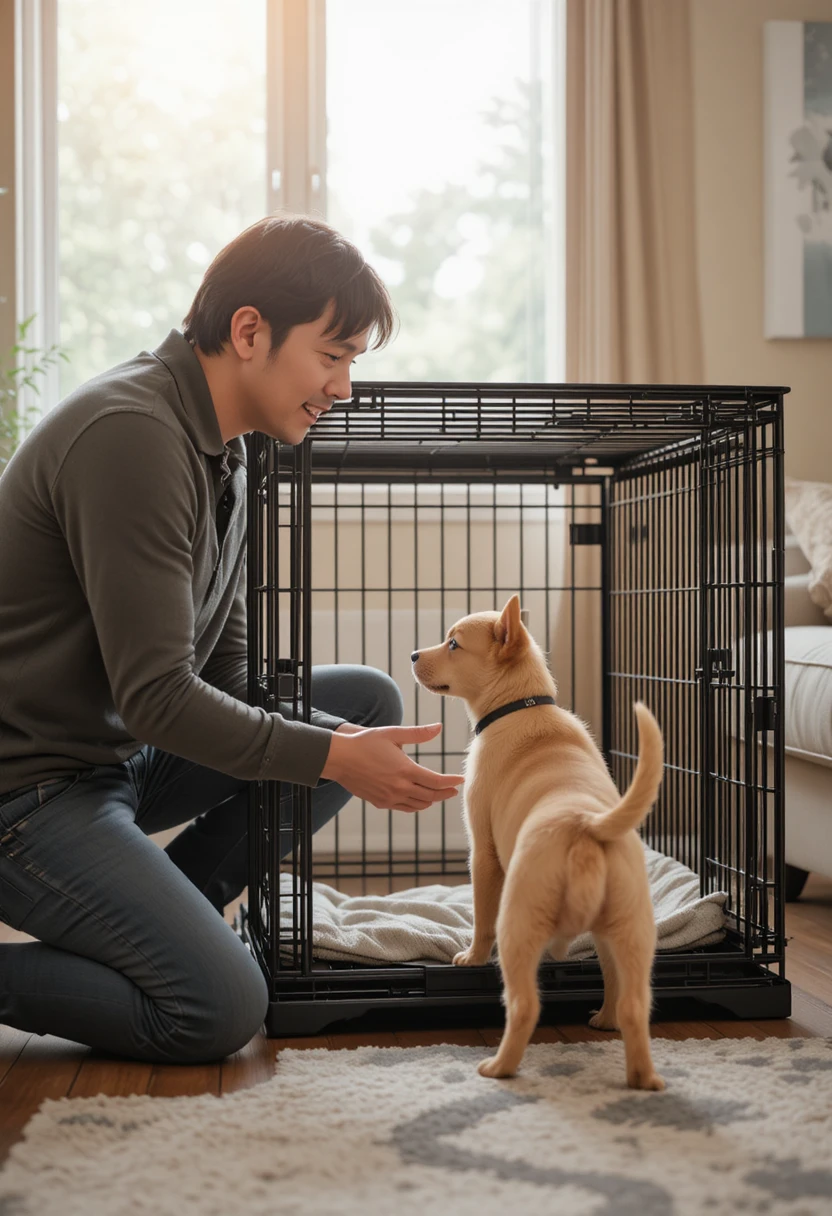
Once your puppy is comfortably walking into the crate for treats or meals, start pairing it with a word “crate,” “kennel,” or “bed” all work fine, just stay consistent. Say the word as they walk in, then reward. Over time, the word alone will send them inside.
6. Practice Short Closures Before Long Ones
The biggest mistake new owners make is closing the door too soon and for too long. Start by closing the door for just 10–30 seconds while you sit right beside the crate, then open it and reward calmly. Gradually stretch the time, only increasing duration once your puppy is relaxed not whining at the current level.
7. Follow the One-Hour-Per-Month-of-Age Rule
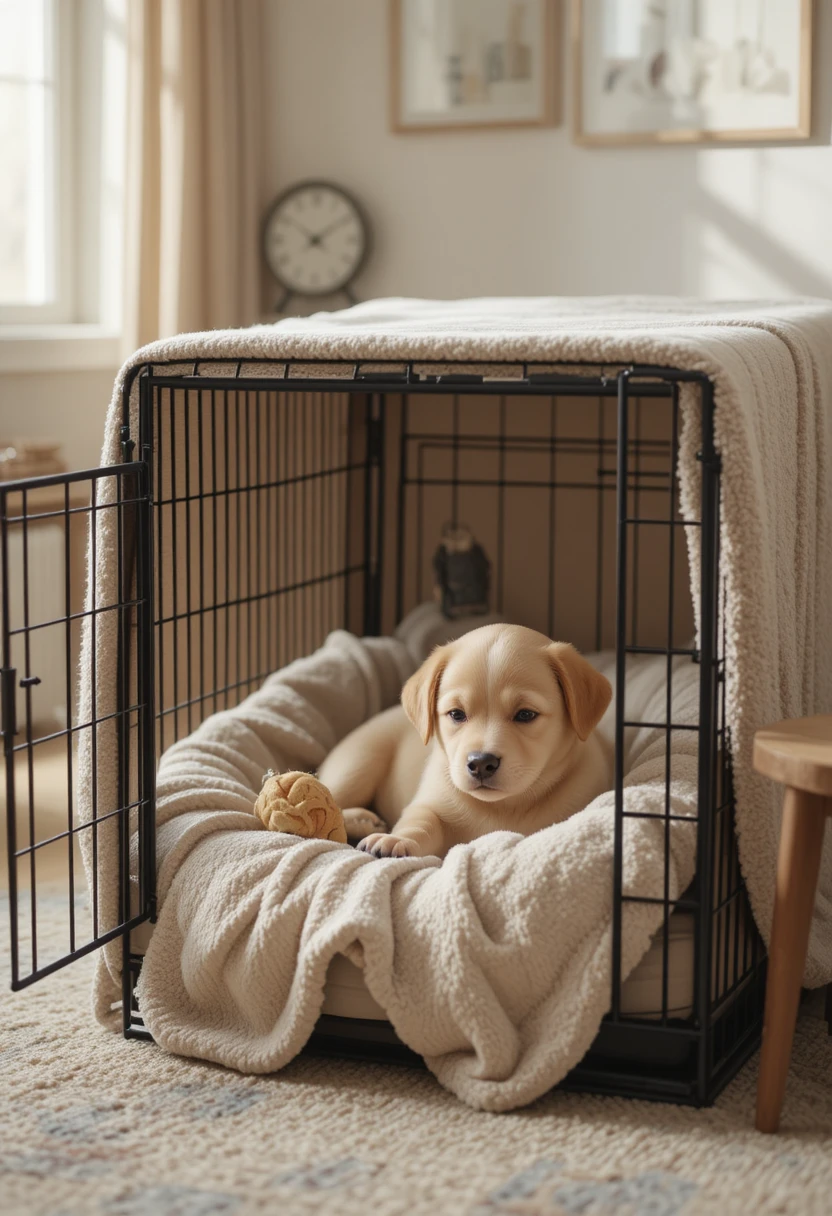
As a general guideline, puppies can comfortably hold their bladder for about one hour per month of age, plus a little extra so a 3-month-old puppy shouldn’t be crated (aside from overnight) for more than roughly 3–4 hours at a stretch. No puppy, regardless of age, should be crated for a full workday.
8. Build a Predictable Daily Rhythm
Puppies thrive on routine, and the crate works best as an anchor point in that routine rather than a random event. A simple loop looks like this:
- Wake up → immediate potty break
- Supervised play or short training session
- Back in the crate for a nap
- Repeat
Because puppies sleep an enormous amount of the day, this cycle prevents the overtired, “zoomies” behavior that owners often mistake for hyperactivity.
9. Give Them a Job to Do Inside
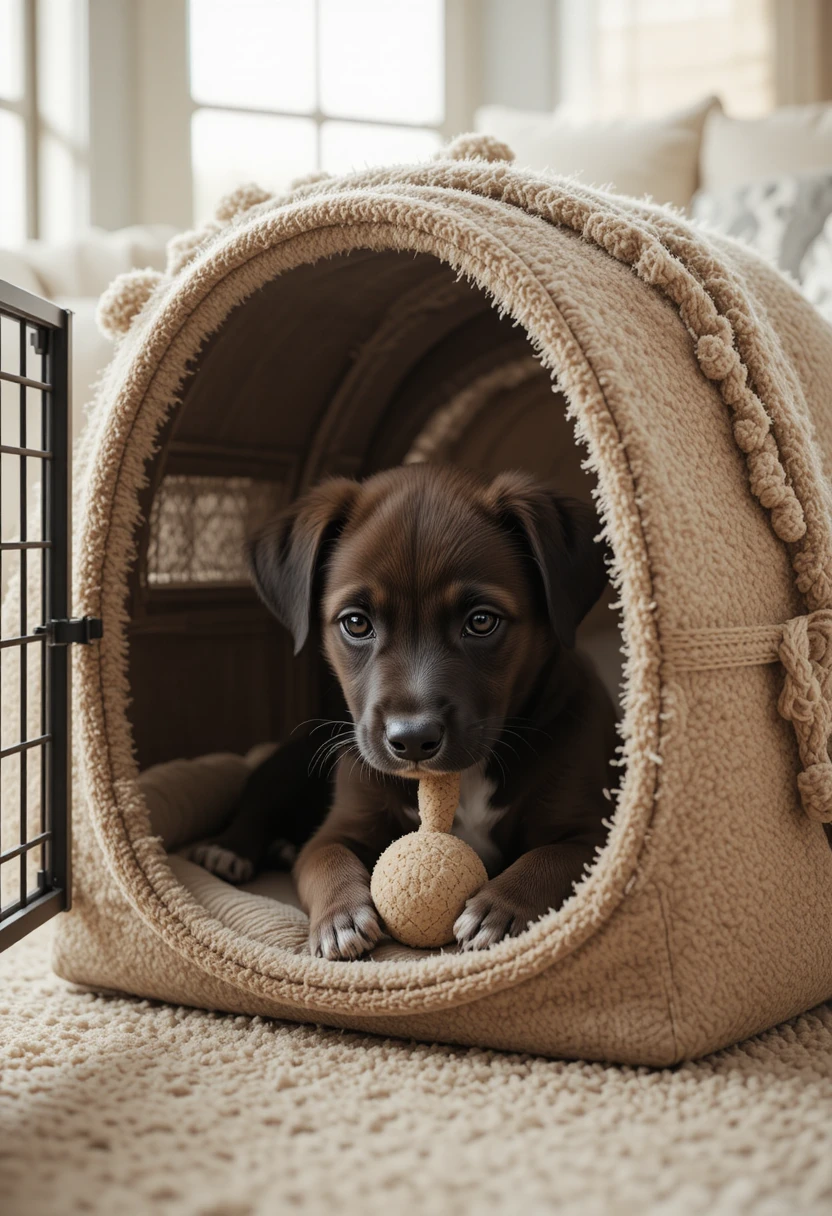
An empty crate is boring, and boredom breeds whining. A stuffed chew toy or a frozen treat-filled toy gives your puppy something productive to focus on, and it teaches them that crate time equals quiet, satisfying “me time” not isolation.
10. Reward Calm Silence, Not Crying
This one takes discipline on your end. If your puppy whines and you immediately open the door, you’ve just taught them that whining works. Instead, wait for even a few seconds of quiet then open the door and reward. You’re not ignoring genuine distress; you’re simply making sure the door opens on calm behavior, not noise.
11. Practice Real Departures in Tiny Increments
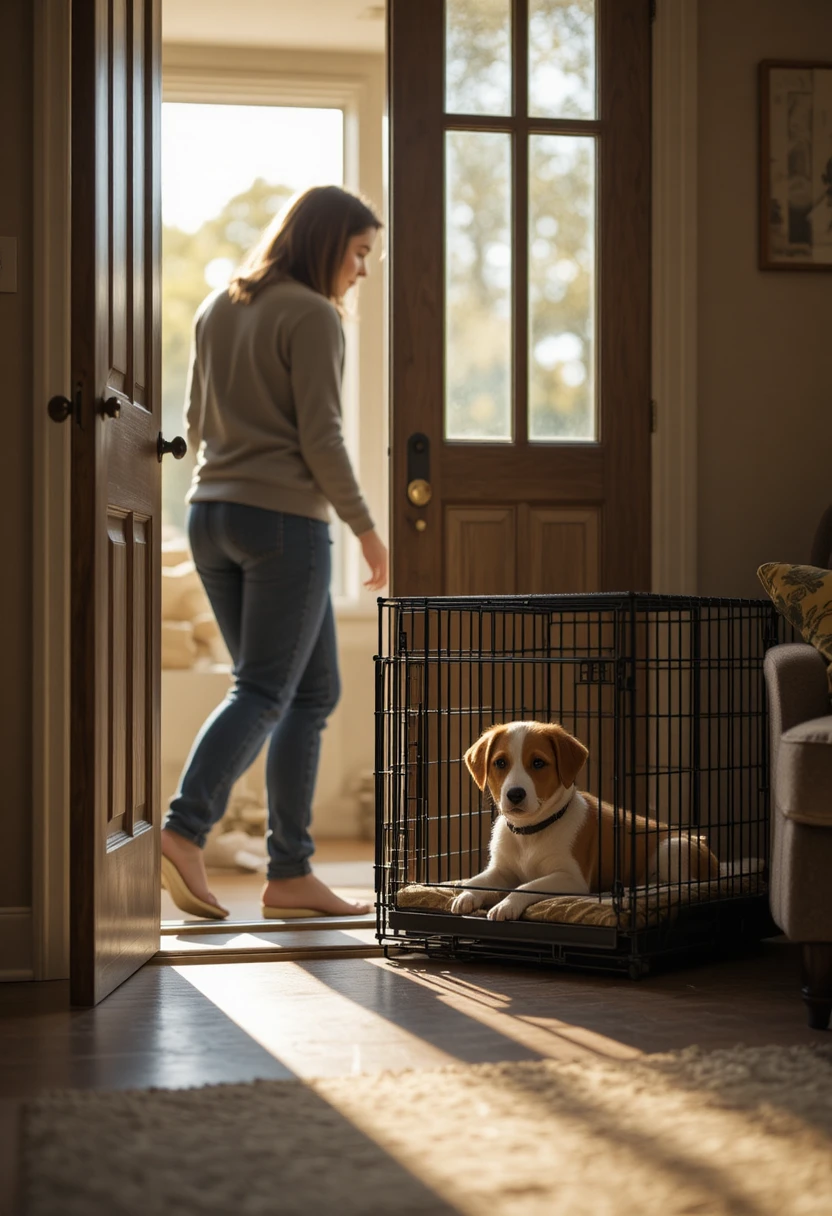
Once your puppy handles closed-door time with you in the room, start practicing actual departures. Step outside for 60 seconds, come back in like it’s no big deal, and gradually stretch the time. Skipping straight from “5 minutes with you home” to “leaving for a full workday” is where most crate training plans fall apart.
12. Bonus: Handle the First Few Nights With Patience
The first nights are often the hardest part of this whole process. Keep the crate near your bed for the first week or two so your puppy can hear and smell you nearby this alone dramatically reduces nighttime crying. Take them out for a potty break if they wake and whine, then calmly return them to the crate afterward without extra playtime, so they learn nighttime wake-ups stay boring.
13. Bonus: Never, Ever Use the Crate as a Time-Out
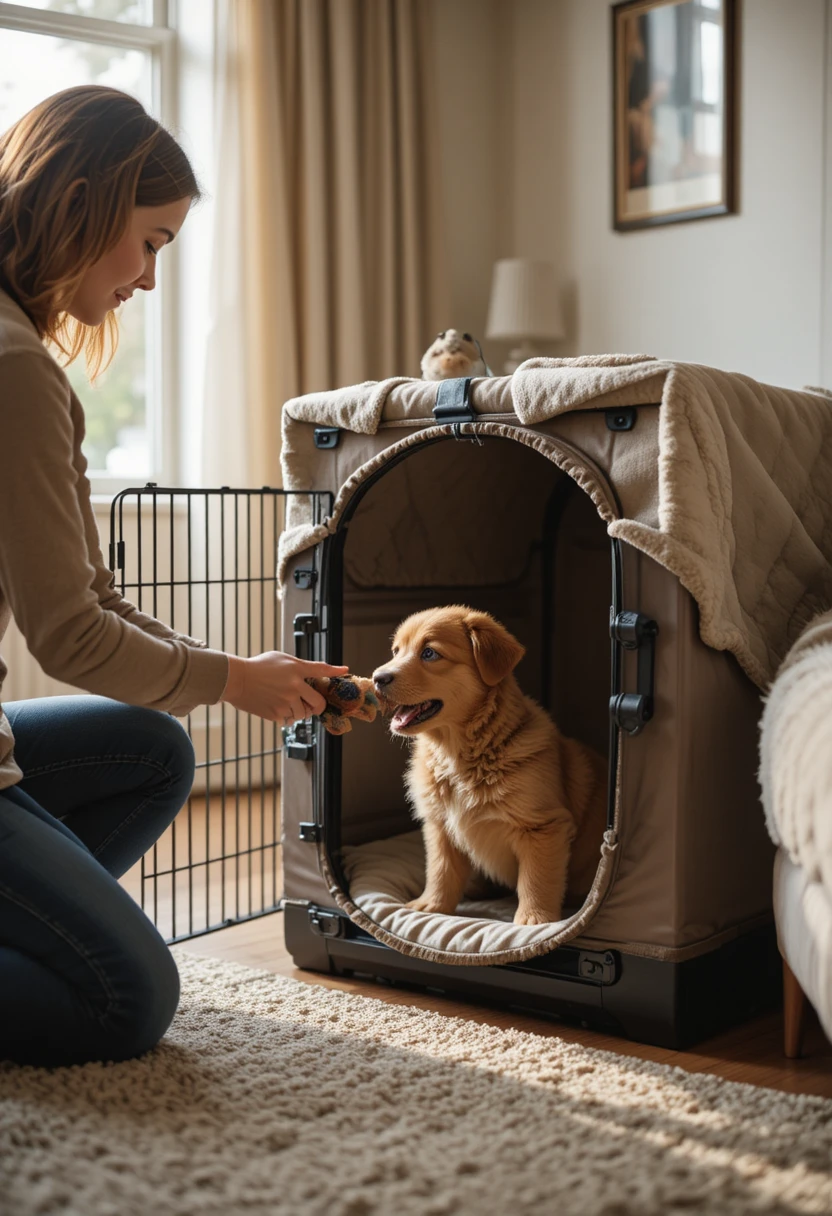
It can be tempting, especially mid-puppyhood, to scoop up a misbehaving puppy and toss them in the crate to “cool off.” Resist this urge completely. A crate used as punishment even occasionally can undo weeks of positive association, turning a safe den back into something to fear.
Sample Crate Training Schedule by Age
Every puppy learns at their own pace, but this general framework gives you a realistic starting point:
| Puppy Age | Max Daytime Crate Time | Focus |
|---|---|---|
| 8–10 weeks | 1–2 hours | Open-door exploration, meals inside |
| 3 months | 3–4 hours | Short closures, verbal cue |
| 4–5 months | 4–5 hours | Longer closures, first real departures |
| 6+ months | 5–6 hours | Full daytime routine, overnight independence |
As a rule of thumb, most trainers suggest roughly one hour of crate time per month of age during the day, with overnight sleep being the exception since your puppy is resting rather than needing constant potty access.
Common Crate Training Mistakes to Avoid
Even well-meaning owners fall into these traps:
- Going too fast. Closing the door on day one and leaving the house on day two sets training back weeks.
- Choosing the wrong size crate. Too big invites bathroom accidents; too small feels genuinely uncomfortable.
- Leaving food and water inside during short crate periods. This tends to increase accidents rather than prevent them.
- Giving in to whining. It feels kind in the moment but reinforces the exact behavior you’re trying to reduce.
- Inconsistent scheduling. A puppy who never knows when the next potty break or meal is coming struggles to settle.
Frequently Asked Questions
How long does crate training actually take?
Most puppies show real comfort within two to three weeks of consistent practice, though full independence including calm alone-time during the day can take a couple of months. Every puppy’s timeline looks a little different.
Is it cruel to crate a puppy?
Not when it’s introduced gradually and paired with positive experiences. A properly sized crate used as a den, not a punishment, taps into a dog’s natural instinct to seek out a small, safe space.
Should I cover the crate at night?
Many owners find that partially covering the crate with a light blanket helps puppies settle faster by reducing visual stimulation, as long as airflow isn’t blocked and the puppy doesn’t overheat.
What if my puppy cries every single night?
Some crying in the first few nights is normal. If it continues well beyond the first week or two, double-check crate size, make sure your puppy had a potty break and some exercise beforehand, and consider keeping the crate closer to your bed temporarily.
Can older or rescue dogs still be crate trained?
Yes the same steps apply, just expect the process to take longer. An older dog may need weeks rather than days, so slow down the pace and keep every session positive.
Final Thoughts
Crate training isn’t about locking your puppy away it’s about giving them a space that feels entirely their own. Go slow, keep every experience positive, and resist the urge to rush duration before your puppy is ready. Within a few weeks, you’ll likely find your puppy wandering into their crate on their own, simply because that’s where they want to be.