
Your puppy has been home for exactly eleven minutes, and she’s already found the one electrical cord you forgot to tuck away.
That’s not bad luck. That’s just what puppies do. Their whole world is teeth, curiosity, and zero concept of “off-limits.” Which means the difference between a calm first month and a 2 a.m. emergency vet run usually comes down to one thing: how well you puppy-proofed before she walked through the door.
Here’s the good news you don’t need to gut your house or live in a bubble-wrapped bunker for the next year. You just need to know where the real dangers hide (spoiler: it’s not always where you’d guess) and fix them room by room. Stick around, because idea #9 below is the one most new puppy owners never think of until something goes wrong.
Save this guide now you’ll want it open on your phone the day your puppy actually comes home.
Why Puppy-Proofing Matters More in the First 30, 60, and 90 Days
Think of your home through your puppy’s eyes or more accurately, through her nose and mouth, because that’s how she’ll investigate everything.
A crawling baby explores with curious hands. A puppy explores with curious teeth. Cords, coins, socks, houseplants, pill bottles if it fits in her mouth, it’s fair game. And unlike a toddler, she has zero instinct telling her that a phone charger can shock her or that a lily petal can shut down her kidneys.
Here’s the thing: the first 30 days set the pattern for everything that follows. A puppy who’s allowed to shred shoes, counter-surf, or nose through the trash in week one will keep trying it in month six because it worked. Puppy-proofing isn’t just about avoiding disaster; it’s about preventing bad habits before they start.
So before you bring your pup home (ideally a week or more in advance), get down on your hands and knees, literally, and see your rooms from her height. If something is chewable, swallowable, or dangling within reach, assume she’ll find it.
1. Tape Down or Cover Every Electrical Cord
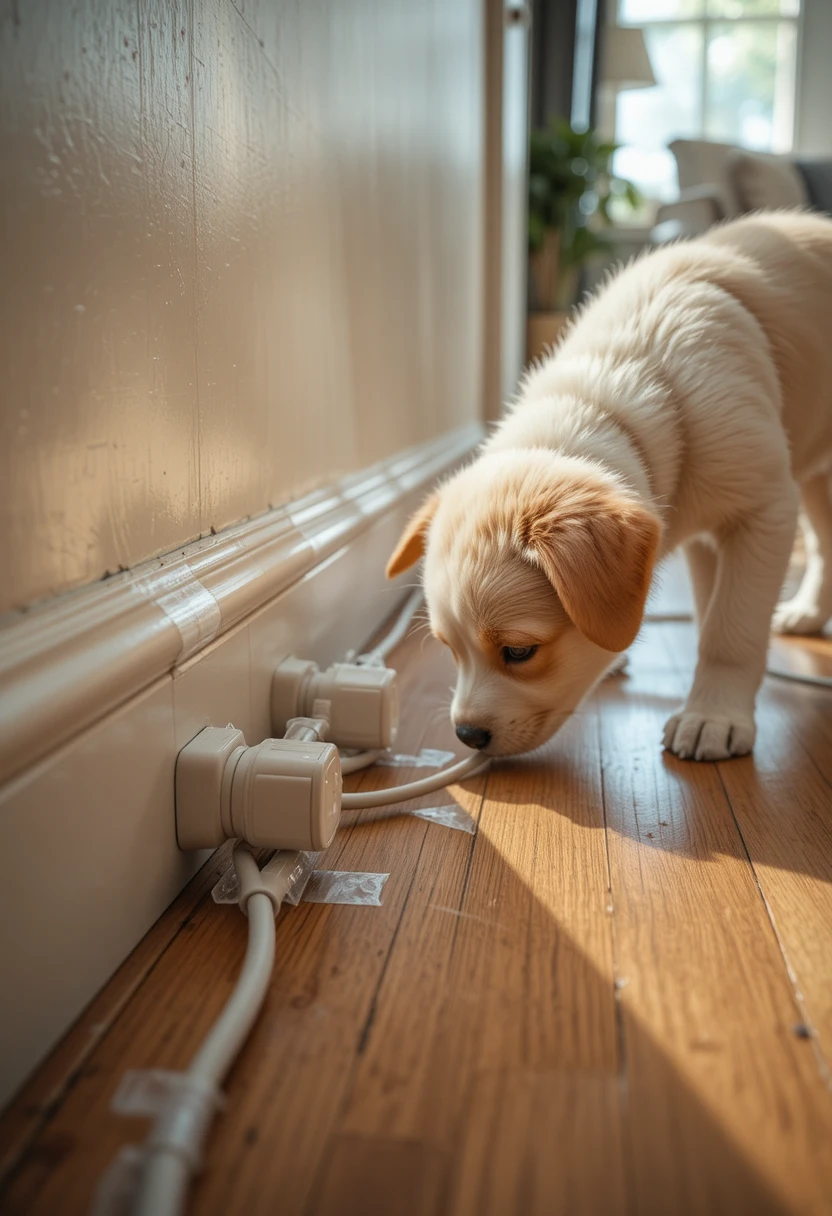
Electrical cords are, hands down, the most common hazard in any home with a new puppy. They can hide behind your TV or near a lamp, looking to a puppy exactly like a fun rubber toy and a bitten cord can cause anything from a burned mouth to a genuine electrical shock.
Fixes that actually work:
- Run cords through a cord concealer or split-loom tubing (some owners repurpose old fish tank tubing for this).
- Push furniture in front of outlets and cord bundles.
- Use outlet covers on any unused sockets at floor level.
- Unplug and coil up anything not actively in use chargers, lamps, holiday lights.
2. Puppy-Proof the Trash Inside and Out
Trash cans are basically a buffet of terrible ideas to a puppy: food wrappers, bones, coffee grounds, dental floss, and sharp cans with jagged edges. Swallowing the wrong thing can mean anything from an upset stomach to a blockage that needs surgery.
- Choose bins with locking or weighted lids so a curious nose can’t tip them over.
- Store kitchen trash inside a latched cabinet whenever possible.
- Don’t forget bathroom trash cans cotton swabs, razors, and dental floss are easy to miss.
3. Add Childproof Latches to Low Cabinets
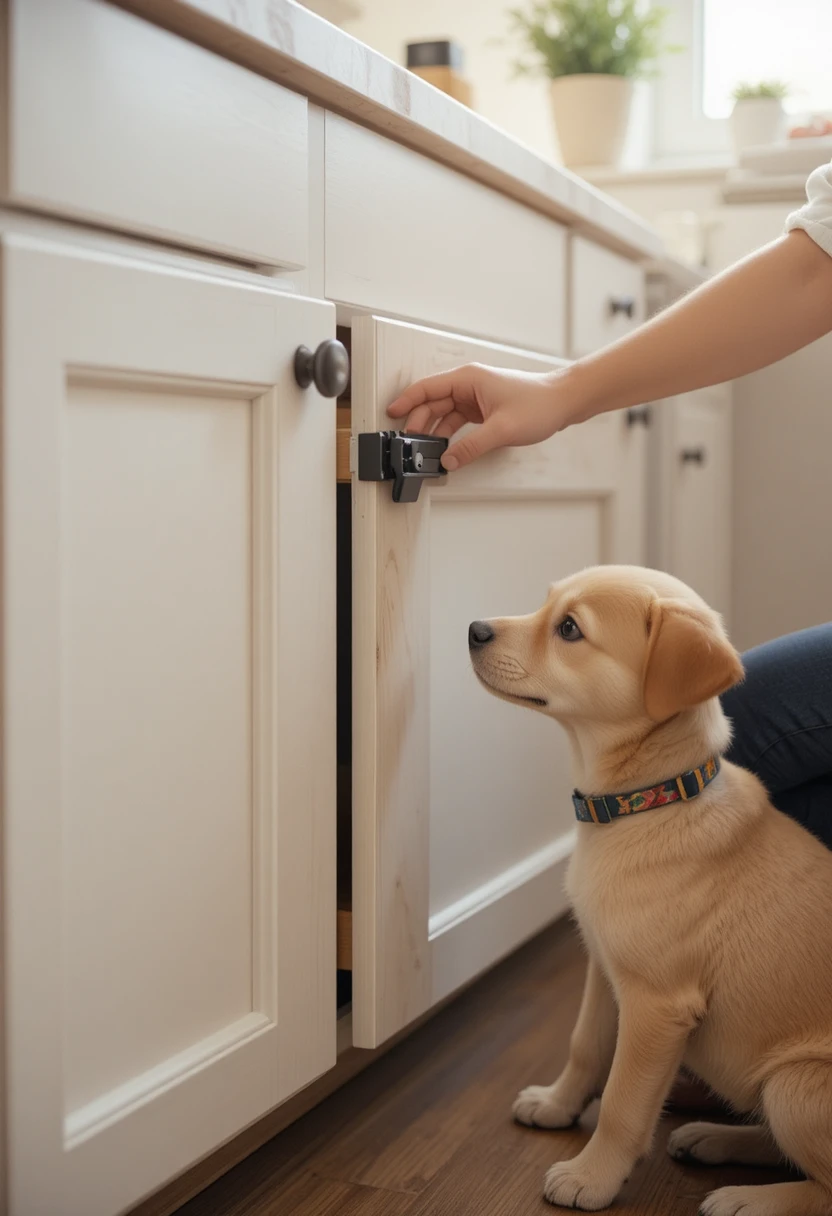
Anything below counter height is puppy territory. Cleaning supplies, trash bags, pot lids, and small appliances all live behind cabinet doors your puppy can absolutely learn to nose open.
- Install childproof latches on any cabinet holding chemicals, cleaning products, or small chewable items.
- Move anything toxic dish pods, bleach, drain cleaner to a high shelf, not just behind a door.
- Check under-sink cabinets in the kitchen, bathroom, and laundry room; these are the highest-risk spots in the whole house.
Read Also: 13+ Best Dog Food Ideas for Large Breeds
4. Identify and Remove Toxic Houseplants
This one surprises a lot of new owners: some of the prettiest houseplants are also some of the most dangerous. Lilies, philodendron, and several common indoor varieties can cause anything from mild stomach upset to serious organ damage if chewed or eaten.
- Do a full walkthrough of every room and check each plant against an ASPCA pet-safe plant list.
- Move anything toxic out of reach (remember: puppies grow, and “out of reach” today may not be out of reach in three months).
- If you love greenery, swap risky plants for pet-safe options like spider plants or Boston ferns.
5. Pick Up Small Objects Before They Become a Trip to the Vet
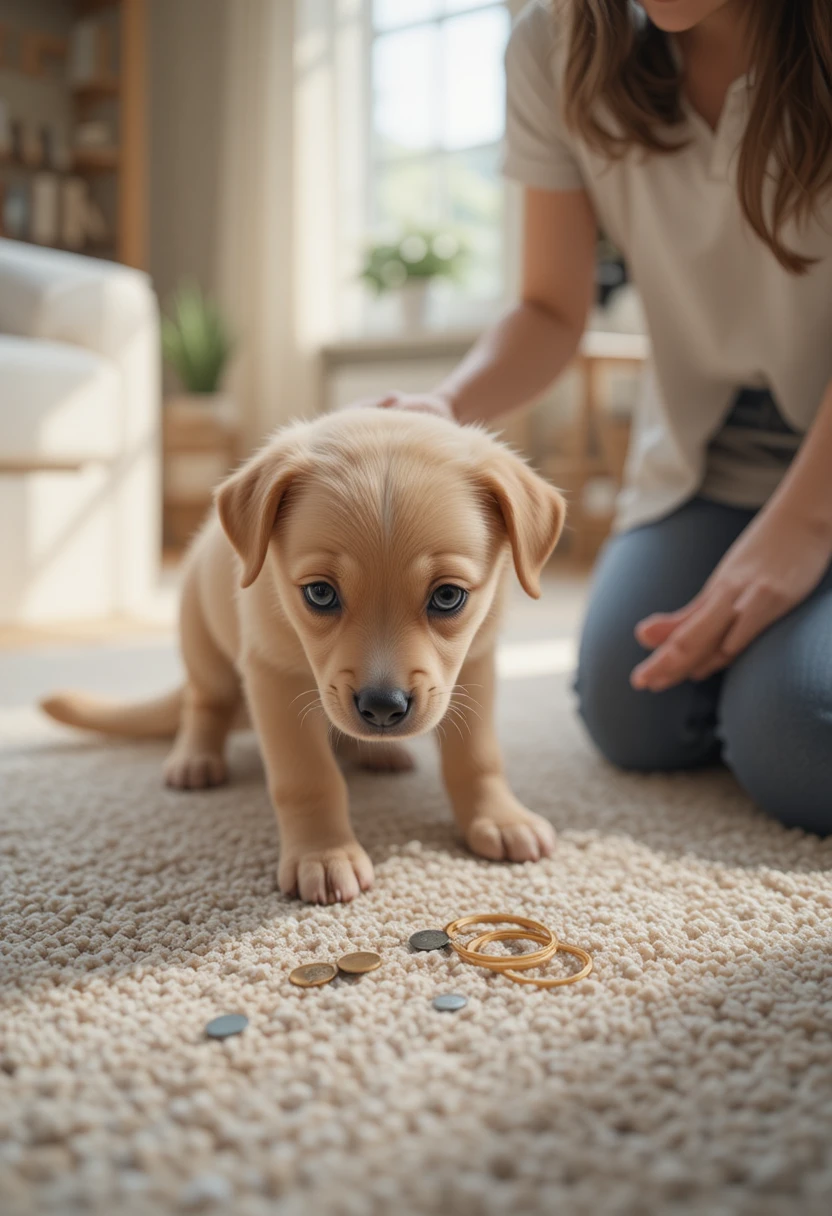
Coins, hair ties, buttons, phone chargers, kids’ Legos, bobby pins small household objects are one of the leading causes of emergency vet visits for young puppies, because swallowed items can cause choking or intestinal blockages.
Bucket brigade: But there’s a catch this isn’t a one-time cleanup. Puppies grow fast, and their reach grows with them.
- Do a “puppy-eye-level” sweep of every room weekly for the first few months.
- Get the whole household involved: kids’ toys, bags, and homework supplies need a home off the floor.
- Keep purses, backpacks, and gym bags on hooks, not the floor they often hide gum, medication, or snacks.
6. Secure Medications and Supplements
Childproof lids don’t stop a determined puppy she doesn’t need to twist a cap, just chew through a plastic bottle. Human medications, vitamins, and even pet medications left out are a real danger.
- Store all medications in a high cabinet, never on a nightstand or countertop.
- Ask overnight guests to keep their toiletry bags zipped and off the floor.
- Keep a pet poison control number saved in your phone just in case.
7. Use Baby Gates and Playpens to Create a Safe Zone
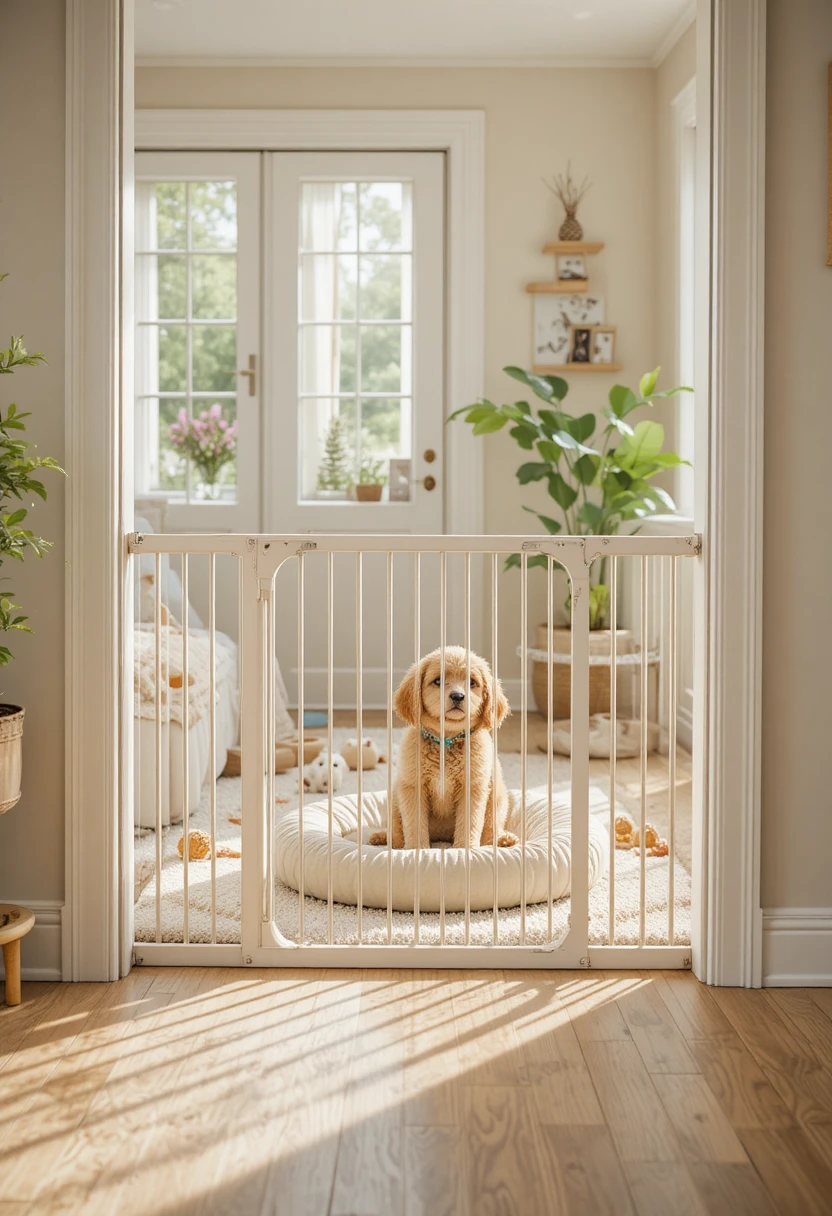
You genuinely can’t puppy-proof an entire house perfectly on day one, and you don’t need to. The smarter move: shrink the space.
- Set up a puppy pen, crate, or baby-gated area in one easy-to-clean room (kitchen and laundry rooms are popular choices).
- Use gates to block off stairs puppies are notoriously clumsy on steps and can be seriously hurt by a fall.
- Expand her access gradually as she matures and earns more freedom.
8. Give the Kitchen an Extra-Careful Pass
The kitchen deserves its own dedicated puppy-proofing round, because it’s where the highest concentration of hazards tends to live.
- Keep the dishwasher, oven, and fridge doors closed puppies can squeeze inside faster than you’d think.
- Learn the core list of foods toxic to dogs: chocolate, onions, garlic, grapes and raisins, and xylitol (a sugar substitute found in gum and some peanut butters).
- Wipe counters after cooking and never leave food unattended within jumping distance.
9. Anchor Furniture, Lamps, and Bookshelves
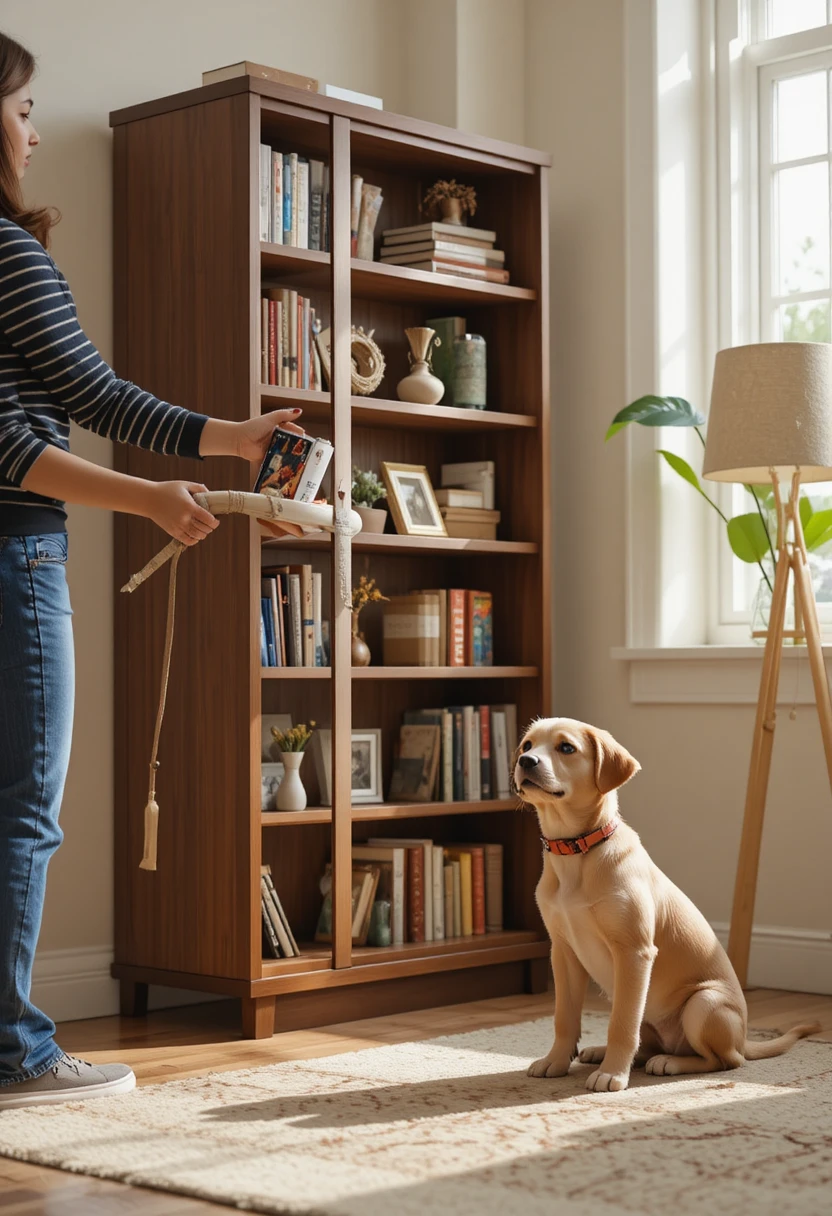
Here’s the one most people forget until it happens: puppies don’t just chew things, they also climb, jump, and paw at anything at their eye level including bookshelves, lamps, and TV stands.
- Use anti-tip furniture straps to anchor bookshelves and dressers to the wall.
- Move lamps and decorative items away from table edges a curious paw could reach.
- Secure any hanging cords from blinds or curtains these can be both a chewing and a strangulation hazard.
10. Puppy-Proof the Bathroom
Bathrooms combine two puppy magnets: water and small objects.
- Keep the toilet lid closed at all times toilet water can carry cleaning chemicals or bacteria.
- Store razors, cotton swabs, dental floss, and hair ties well out of reach; all are choking or blockage hazards.
- Move cleaning products and medications to a latched cabinet, not an open shelf.
11. Check the Yard Before Letting Your Puppy Roam
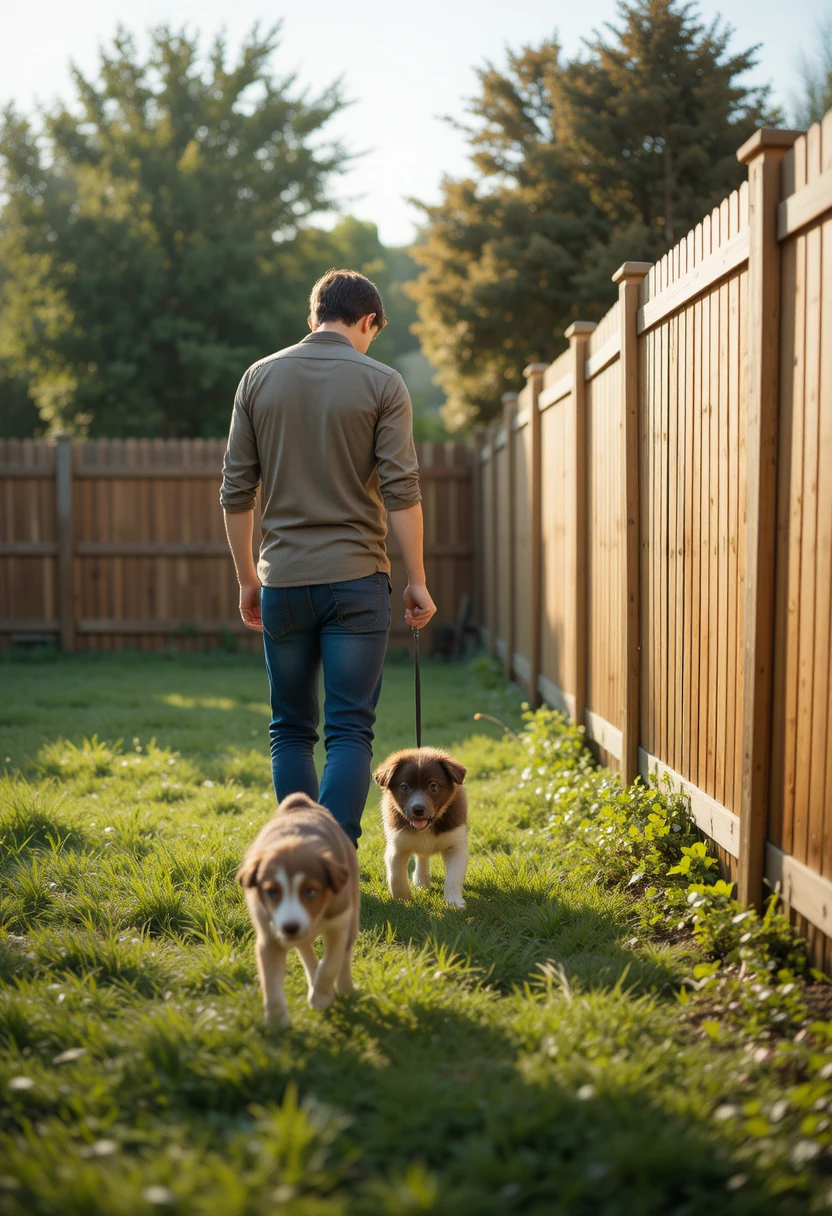
Puppy-proofing doesn’t stop at your front door. If you have outdoor space, it needs its own safety sweep before your puppy gets unsupervised access.
- Walk the fence line looking for gaps, low spots, or loose boards a puppy could squeeze through.
- Remove or fence off toxic plants, mulch made from cocoa shells, and any mushrooms growing in the grass.
- Fence off pools and water features completely they’re a serious drowning risk for young puppies.
- Store gardening chemicals, fertilizer, and tools in a locked shed, not an open garage corner.
12. Rethink Closets, Laundry Rooms, and “Forgotten” Spaces
The rooms people puppy-proof last are usually the ones puppies find first: closets, laundry rooms, and garages.
- Keep shoes and clothing off the floor they’re a top chewing target and a genuine choking risk if swallowed in pieces.
- Store laundry detergent pods up high; they’re small, colorful, and dangerously appealing to a curious mouth.
- In the garage, lock away antifreeze, fertilizer, and rodent bait all of which are highly toxic even in tiny amounts.
Bonus Idea: Build a “Puppy Station” Instead of Puppy-Proofing Room by Room
If the room-by-room list feels overwhelming, flip the approach: instead of proofing the whole house at once, build one dedicated puppy station first crate, bed, water, a few safe chews in a single easy-clean room. Expand outward from there as your puppy earns supervised access to more of the house.
This single shift does double duty: it protects your puppy on day one, and it dramatically speeds up house-training, since a smaller space is easier for a young puppy to learn in.
Frequently Asked Questions
How long does puppy-proofing take?
A focused first pass cords, cabinets, plants, trash, and small objects usually takes a weekend. Most homes then need ongoing light puppy-proofing for the first six to twelve months, since a growing puppy can reach new things every few weeks.
When should I start puppy-proofing?
Ideally, at least a week before your puppy comes home, so everything is already in place on day one instead of being handled in a panic.
Do I need to puppy-proof if I plan to supervise constantly?
Yes. Even attentive owners get distracted for a few seconds a phone call, a knock at the door and that’s often all it takes for a puppy to find trouble. Puppy-proofing is your backup plan for the moments supervision slips.
What’s the single most important room to puppy-proof first?
The kitchen, closely followed by wherever your puppy will spend the most unsupervised time. These areas tend to have the highest concentration of cords, chemicals, and small objects.
Are baby gates really necessary?
For stairs, yes falls are a common and preventable injury in young puppies. Gates elsewhere are optional but make supervision and house-training significantly easier.
The Bottom Line
Puppy-proofing can feel like a long list of chores, but really it’s one of the kindest things you’ll do for your new dog before she even arrives. A safe environment means fewer emergency vet visits, fewer ruined shoes, and a puppy who gets to explore her new world with confidence instead of getting hurt learning the hard way.