
One second your cat is battling a piece of string across the living room floor. The next, the string is gone and so is your cat’s interest in dinner. If you’re reading this because you just watched (or suspect) your cat swallowed something it shouldn’t have, take a breath: what you do in the next few minutes matters, and this guide will walk you through exactly what that should be.
Cats are curious, mouthy explorers, and that curiosity sometimes leads them to swallow things that were never meant to go down string, hair ties, ribbon, small toys, bottle caps, even sewing needles. Some of these pass through without incident. Others can lodge in the esophagus, stomach, or intestines and turn into a genuine, life-threatening emergency within hours. The tricky part is that from the outside, you often can’t tell which situation you’re in which is exactly why this guide exists. Save this now, before you need it a fast, correct response in the first hour can make all the difference.
Why a Swallowed Object Is Always Taken Seriously
Not every swallowed item causes a problem. Some small, smooth objects genuinely do pass through a cat’s digestive tract on their own. But because there’s no reliable way to predict which objects will pass safely and which will get stuck, veterinarians treat every suspected ingestion as a potential emergency until proven otherwise.
Two categories of swallowed objects carry the highest risk:
- Sharp or rigid objects (needles, bone fragments, plastic shards) can puncture or tear the esophagus, stomach, or intestinal wall as they move through the digestive tract.
- Linear foreign bodies string, yarn, ribbon, thread, tinsel, or dental floss are especially dangerous. Cats’ tongues have backward-facing barbs that grip string and make it nearly impossible to spit back out once swallowing begins. One end can anchor around the base of the tongue or in the stomach while the rest of the intestine bunches and gathers along the string’s length, which can saw through the intestinal wall from the inside.
Understanding this risk is exactly why the first response matters so much and why some of the most common instincts people have (like pulling on visible string) are actually the most dangerous things you can do.
Step 1: Stay Calm and Assess the Situation
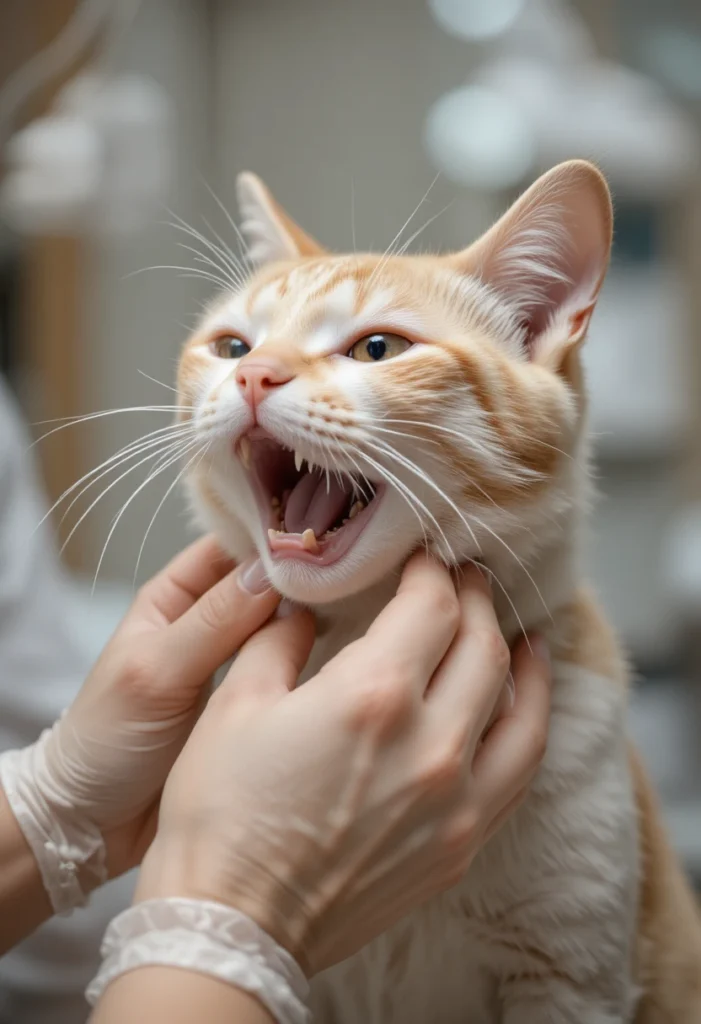
Before doing anything else, take a moment to gather information it will make the phone call to your vet faster and far more useful.
Try to answer these questions:
- What exactly did your cat swallow? If you know the object (or have the packaging, a matching item, or a photo of what’s missing), keep it handy.
- When did it happen, or when did you first notice something was missing/wrong?
- Is any part of the object still visible? Check the mouth carefully, but don’t go probing deep into the throat.
- Is your cat showing any symptoms right now? (See the warning signs below.)
Quick recap you can act on immediately: identify the object, note the timing, check for visible symptoms then call.
Read Also: How to Clean a Dog’s Ears at Home: The Complete Step by Step Guide
Step 2: Call Your Veterinarian or Emergency Animal Hospital Immediately

This is the single most important step, and it applies whether or not your cat seems fine right now. If you suspect even just suspect that your cat has swallowed a foreign object, contact your veterinarian or the nearest emergency animal hospital right away rather than waiting to see what happens.
Some objects that seem harmless in the moment can cause serious internal damage hours or even days later, once they’ve moved further into the digestive tract. Calling early gives your vet the chance to guide you through next steps, decide whether you need to come in immediately, and prepare for what might be needed when you arrive.
When you call, be ready to describe:
- The object your cat swallowed (size, shape, material, whether it had sharp edges)
- Approximately when it happened
- Any symptoms you’ve noticed so far
- Whether your cat has any existing health conditions
Step 3: Do NOT Try These Things at Home
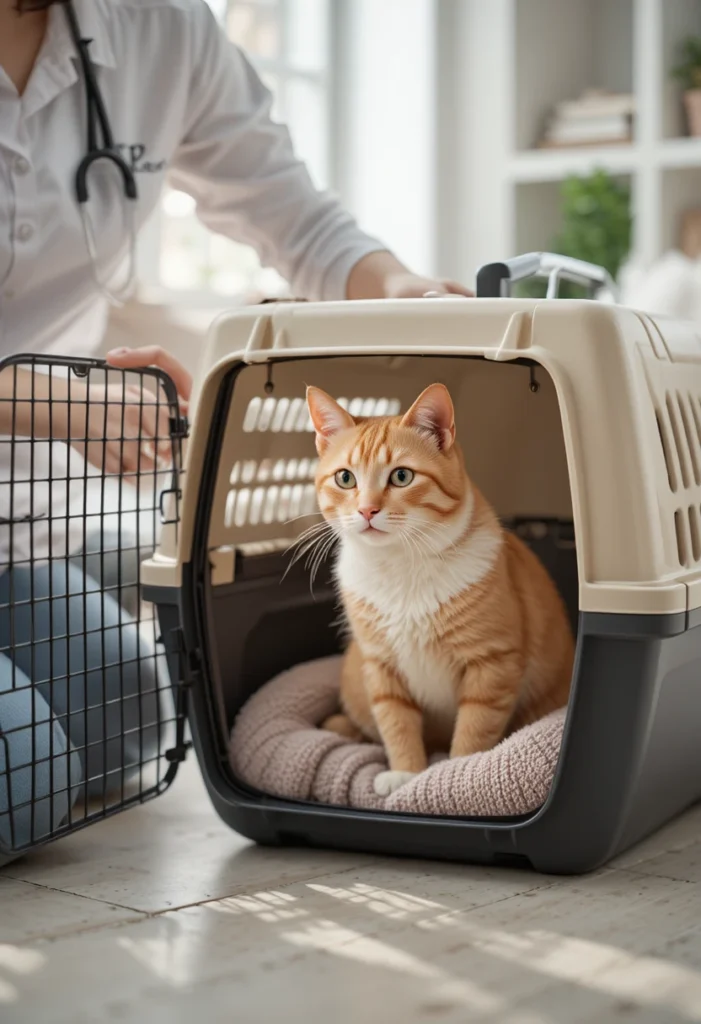
In the panic of the moment, several instincts feel helpful but can actually make the situation significantly worse. Avoid all of the following unless a veterinarian specifically instructs you to do them over the phone:
- Don’t pull on visible string. If you see string trailing from your cat’s mouth or rear end, resist the urge to pull it. If the other end has anchored around the tongue or in the intestine, pulling can saw through delicate tissue and cause severe internal injury.
- Don’t try to induce vomiting on your own. Making a cat vomit without veterinary guidance can be dangerous sharp objects can cause additional injury coming back up, and some methods used for dogs are not safe for cats at all. Only attempt this if a veterinarian explicitly walks you through it.
- Don’t reach deep into your cat’s throat. Trying to fish an object out yourself risks pushing it further down, injuring your cat’s mouth or throat, or getting bitten as a stressed, frightened cat reacts defensively.
- Don’t wait to “see if it passes” once symptoms appear. A wait-and-see approach is far riskier once your cat is showing any of the warning signs below.
Warning Signs That Mean You Need Emergency Care Right Now
Some symptoms mean the situation has escalated and you should get to an emergency vet immediately, rather than waiting for a regular appointment:
- Repeated, forceful vomiting especially if your cat can’t even keep water down
- Vomiting combined with lethargy, hiding, or complete loss of appetite
- Difficulty breathing, gagging, or choking sounds
- Visible string or object caught around the tongue or trailing from the mouth
- Straining to defecate with little or no result
- No bowel movement for more than 48 hours
- Pale gums, a racing heart, or apparent pain when the belly is touched
- Sudden aggression or unusual sensitivity when picked up, which can indicate your cat is in pain even if nothing else seems obviously wrong
Save-worthy tip: A complete blockage tends to cause repeated vomiting and rapid decline, while a partial blockage can look deceptively mild intermittent vomiting, a little less appetite, gradual weight loss. Both need veterinary evaluation; don’t assume “mild” symptoms mean “wait and see.”
What Happens at the Vet: Diagnosis and Treatment
Knowing what to expect can make the emergency visit feel less overwhelming.
Diagnosis
Your vet will typically start with a physical exam, including gently feeling your cat’s abdomen for unusual masses or discomfort. From there, imaging is usually the next step:
- X-rays are the most common first tool and can reveal many objects directly, along with secondary signs like abnormal gas or fluid buildup that suggest a blockage.
- Ultrasound may be used if X-rays are inconclusive or if a clearer, more detailed view is needed.
- In some cases, your cat may need to swallow a special contrast liquid to help an object show up more clearly on imaging.
Treatment
What happens next depends heavily on the object’s size, shape, location, and how much time has passed:
- Monitoring: If the object is small, smooth, and non-toxic, and your cat is stable, your vet may recommend hospitalization for fluids, anti-nausea medication, and repeat imaging to confirm it’s moving through and eventually passes naturally.
- Endoscopy: For objects still in the esophagus or stomach, a vet may be able to remove it using a thin, flexible camera-and-tool device passed down the throat avoiding the need for a surgical incision altogether.
- Surgery: If the object has moved into the intestines, is too large for endoscopy, or has caused a tear or perforation, surgical removal becomes necessary. This is typically the only option for a true intestinal obstruction.
Recovery time and cost vary significantly depending on which path your cat needs, which is part of why calling early before a partial blockage becomes a full emergency genuinely matters.
After Treatment: What Recovery Looks Like

Once the object has been removed or has passed, your vet will likely recommend:
- A period of rest and restricted activity, especially after surgery or endoscopy
- A bland, easily digestible diet for the first several days
- Close monitoring of appetite, energy, and litter box habits
- A follow-up visit to confirm your cat is healing well and eating normally
Most cats recover fully and return to their normal, mischievous selves but the experience is a strong reminder that prevention is far easier than treatment.
How to Prevent Future Foreign Object Emergencies
Once you’ve been through this once, prevention becomes a priority. A few practical habits go a long way:
- Store string, yarn, ribbon, and dental floss in closed drawers or containers rather than left out where a curious cat can find them.
- Check under furniture and along curtain edges for dangling cords, threads, or blind pull-strings.
- Supervise playtime with string toys and wand toys, and put them away when playtime is over rather than leaving them accessible.
- Keep small household items hair ties, bottle caps, buttons, needles and thread off counters and out of reach.
- Provide appropriate chew and play outlets for cats who seem drawn to chewing on non-food items, and mention this behavior to your vet, since it can sometimes point to an underlying issue like boredom or a compulsive tendency.
Quick recap you can save: store it, supervise it, or skip it if a stringy or small object isn’t one of those three, assume your cat will eventually find it.
Frequently Asked Questions
How long does it take for a cat to show symptoms after swallowing a foreign object?
This varies widely some cats show symptoms within hours, while others seem completely normal for a day or two before a partial blockage becomes a full obstruction, which is exactly why early veterinary contact matters even without obvious symptoms yet.
Can a cat pass a swallowed object on its own without a vet visit?
It’s possible for some small, smooth, non-sharp objects to pass naturally, but there’s no safe way to predict this at home a veterinarian should evaluate and monitor the situation, since even objects that eventually “pass” can cause internal injury along the way.
Is it ever safe to make my cat vomit at home?
Not without direct veterinary guidance. Inducing vomiting incorrectly, or with the wrong object involved (particularly sharp or linear items), can cause additional injury always call your vet first and follow their specific instructions.
What if I see string coming out of my cat’s mouth or rear end should I just pull it out?
No. Never pull on visible string. If it’s anchored internally, pulling can cause serious internal damage; contact your veterinarian immediately instead.
How long can a cat go without a bowel movement before it’s an emergency?
As a general guideline, if your cat goes more than 48 hours without a bowel movement, especially alongside other symptoms like vomiting or lethargy, it’s time to seek veterinary attention rather than waiting further.
Final Thoughts
A swallowed foreign object is scary precisely because it’s unpredictable the same object might pass harmlessly in one cat and cause a life-threatening blockage in another. That unpredictability is exactly why the guidance here stays consistent no matter what your cat swallowed: stay calm, gather what information you can, call your veterinarian right away, and avoid the well-meaning instincts pulling string, inducing vomiting, reaching into the mouth that can turn a manageable situation into a more serious one.