
Your dog yelps, another dog backs off, and suddenly you’re staring at a wound and a racing heart. Bite wounds happen fast during a dog park scuffle, a fence-line spat with a neighbor’s dog, or even rough play that went one step too far and what you do in the first few minutes can genuinely change how well your dog heals.
This guide walks through 15+ practical first-aid ideas for treating a dog bite wound at home, from immediate wound care to signs that mean you need to stop everything and get to a vet. Here’s the thing up front, though: home care is almost always step one, not the whole plan. Bite wounds trap bacteria deep under the skin in a way that’s easy to miss, and even a wound that looks minor on the surface can hide serious damage underneath.
Is This an Emergency? Assess the Situation First
Before any first aid, take 30 seconds to assess. Skip straight to an emergency vet if you see any of these:
- Heavy or spurting bleeding that doesn’t slow with direct pressure
- A deep puncture wound, especially near the neck, chest, abdomen, or a joint
- Your dog is limping severely, collapsing, or showing signs of shock (pale gums, weakness, rapid breathing)
- The attacking dog’s rabies vaccination status is unknown
- Multiple bite wounds or a “shake” injury (common in small dogs attacked by larger ones, which can cause serious internal damage even without much visible bleeding)
If none of those apply and the wound looks genuinely minor a small scrape or shallow nick with no active bleeding you can move on to first aid at home. Even then, plan on a same-day or next-day vet check. Puncture wounds close over quickly on the surface while bacteria multiply underneath, which is exactly why so many “minor” bite wounds turn into abscesses days later.
15+ First Aid Ideas for Treating a Dog Bite Wound at Home
1. Stay Calm and Approach Slowly

A dog in pain even the sweetest one can snap unpredictably. Move slowly, speak softly, and avoid sudden movements before you touch the wound.
2. Muzzle If Needed
If your dog is in pain, a soft muzzle (or even a makeshift one from a strip of cloth) protects both of you while you work. Practicing muzzle training before an emergency makes this step far less stressful.
3. Put on Gloves Before Touching the Wound
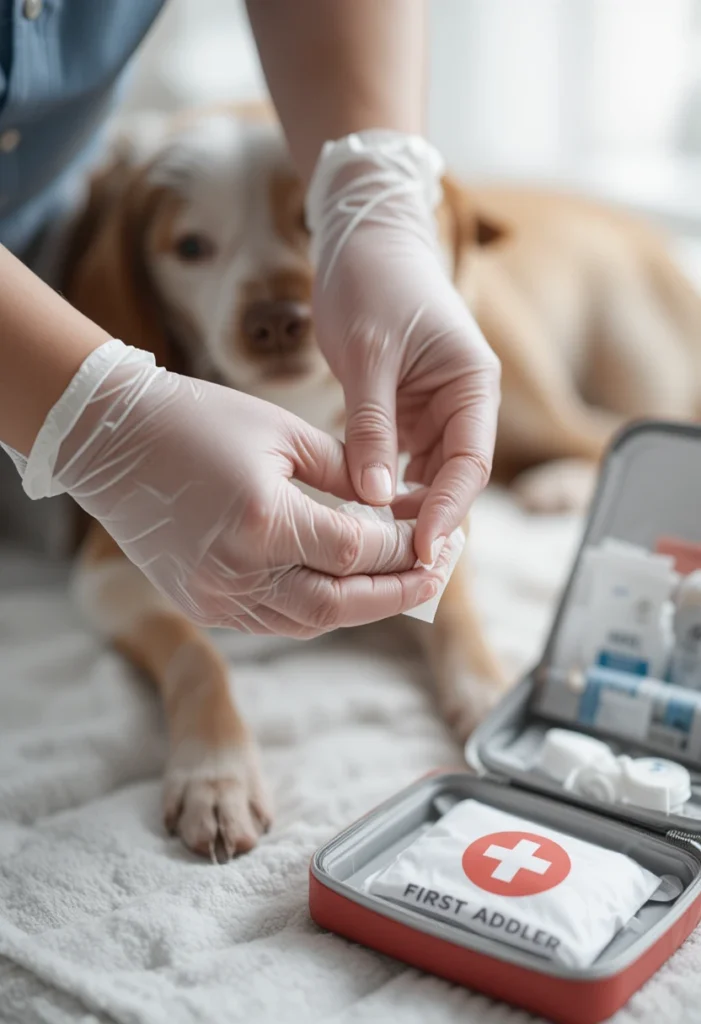
Bite wounds carry bacteria from the other dog’s mouth, and in rare cases, rabies exposure risk. Latex or rubber gloves protect you while you assess and clean.
Read Also: How to Brush a Matted Dog Coat: 12+ Ideas That Actually Work
4. Control Active Bleeding First
Apply firm, direct pressure with a clean towel or gauze pad. Hold it steady for several minutes rather than repeatedly checking lifting the cloth too soon can restart bleeding and delay clotting.
5. Clip Away Fur Around the Wound
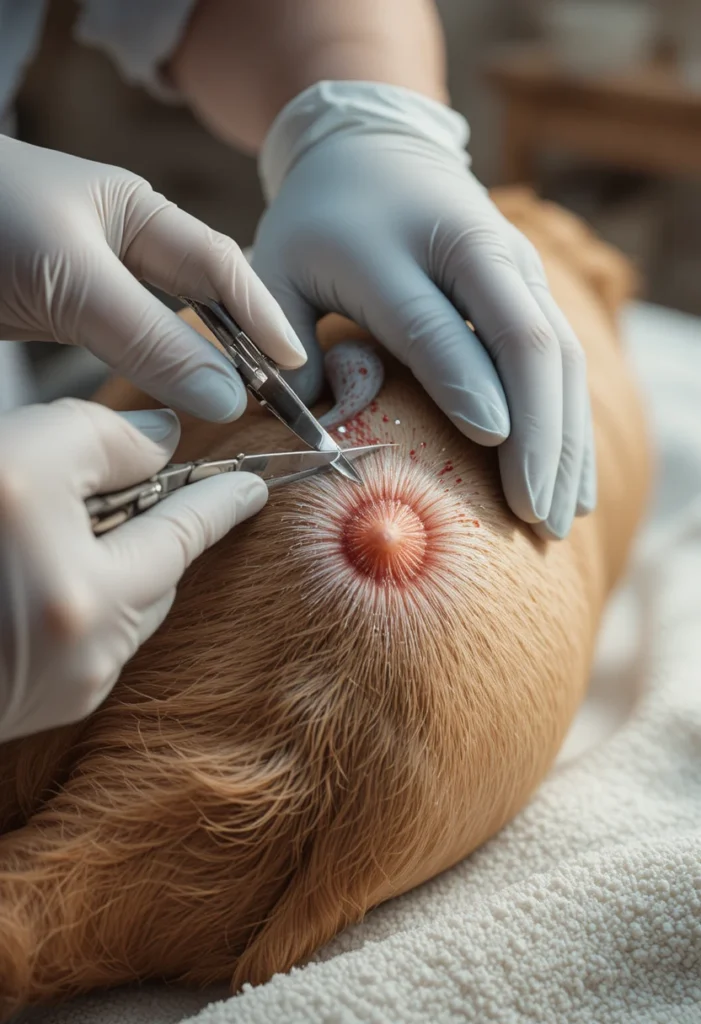
Carefully trim (don’t shave against irritated skin) the fur surrounding the bite so it doesn’t get trapped in the wound or interfere with cleaning. A dollop of water-soluble lubricant, like KY Jelly, over the area first keeps clipped hair from sticking directly to the wound.
6. Flush the Wound with Clean Water or Saline
Gently rinse the wound thoroughly with lukewarm water or sterile saline to flush out dirt, saliva, and debris. This dilution step is one of the single most effective things you can do to lower infection risk.
Save this tip: flushing matters more than any cleaning product you put on afterward.
7. Wash with Mild, Dog-Safe Soap
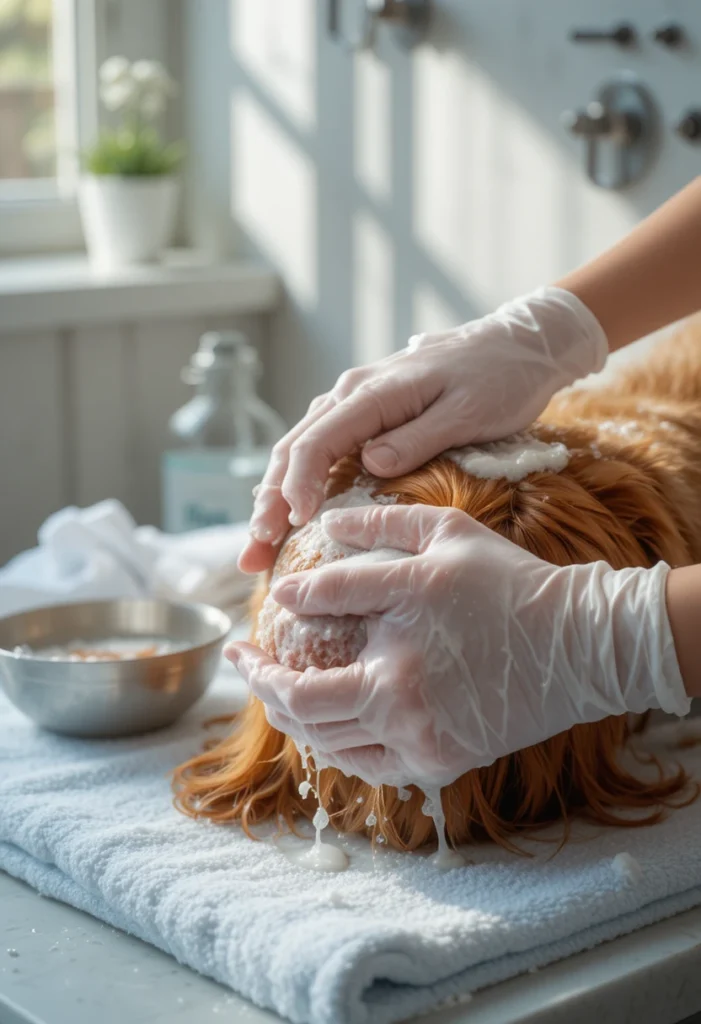
Once flushed, gently clean around (not directly into, for deeper wounds) the area with a mild, unscented soap and water to remove residual bacteria.
8. Skip the Hydrogen Peroxide and Alcohol
It’s tempting to reach for what’s in the medicine cabinet, but hydrogen peroxide and rubbing alcohol can actually damage healthy tissue and slow healing in an open wound. Stick to saline or a vet-approved wound cleanser instead.
9. Pat Dry, Don’t Rub
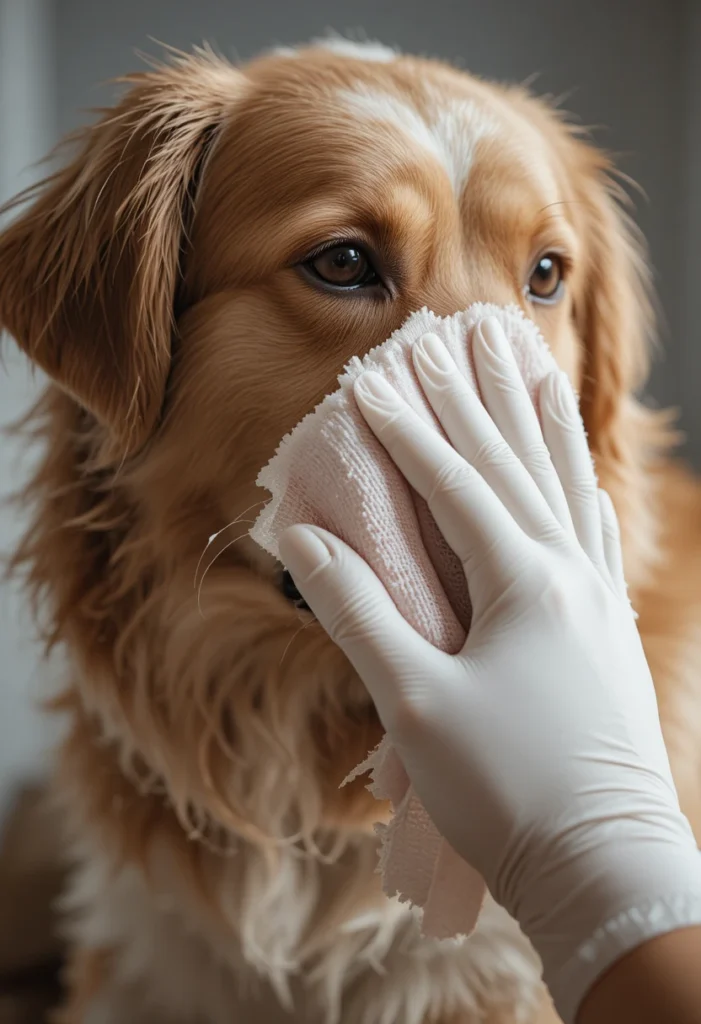
Use a clean towel to gently pat the area dry. Rubbing can reopen small clots or irritate already-sensitive skin.
10. Apply a Pet-Safe Antiseptic If Directed
Some vets recommend a diluted, pet-safe antiseptic solution for superficial wounds but check with your vet or an animal poison control line before applying anything, since many human antiseptics aren’t safe for dogs.
11. Cover Larger Wounds with a Sterile, Non-Stick Pad
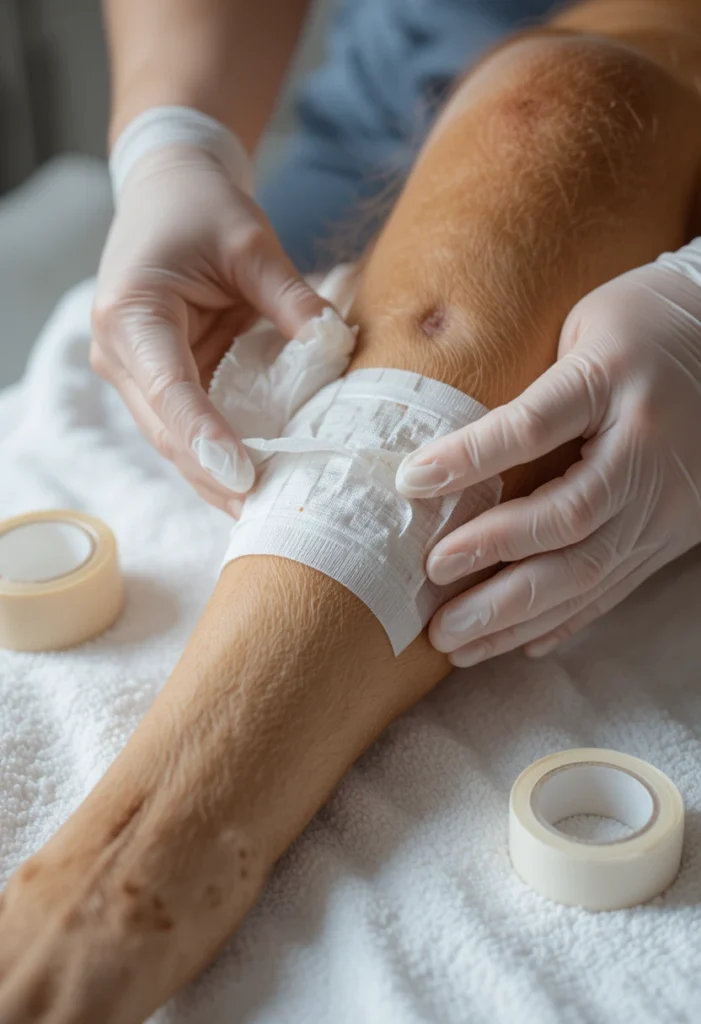
For anything beyond a tiny nick, apply a sterile non-stick pad and secure it loosely with gauze or vet wrap. Small superficial scratches usually don’t need a bandage at all covering everything isn’t always better.
12. Keep the Bandage Loose, Not Tight
A bandage that’s too tight can cut off circulation. You should be able to slip a finger comfortably underneath it.
13. Use an E-Collar to Prevent Licking
Dogs instinctively lick wounds, but excessive licking introduces more bacteria and can delay healing or remove a bandage entirely. A cone or soft recovery collar keeps the area protected while it heals.
14. Keep Your Dog Calm and Restrict Activity
Excitement and running increase blood flow and can reopen a wound that’s just started to clot. A quiet room and short, leashed bathroom breaks are enough for the first day or two.
15. Watch for Swelling in the First 24 Hours
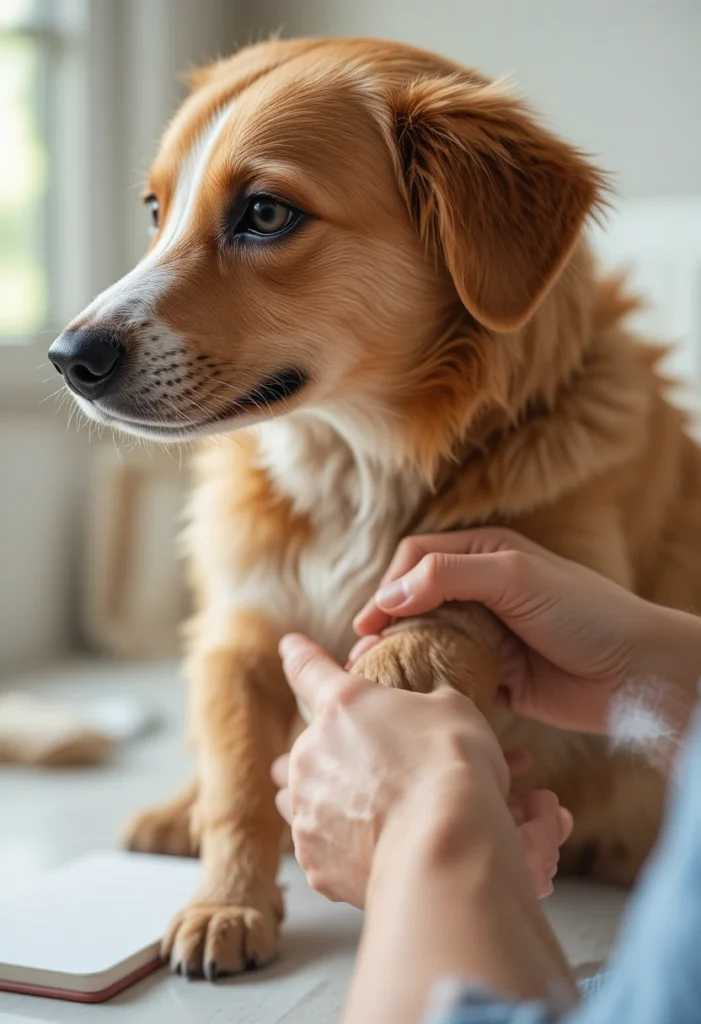
Some swelling right after a bite is normal, but a rapidly expanding, hot, or increasingly painful area is worth an urgent call to your vet it can signal a developing abscess or deeper tissue damage than was visible at first.
16. Take a Photo and Note the Time
Photographing the wound right after the bite gives your vet a helpful before-and-after reference and helps you track whether swelling or redness is getting better or worse over the following days.
17. Confirm Rabies Vaccination Status of Both Dogs
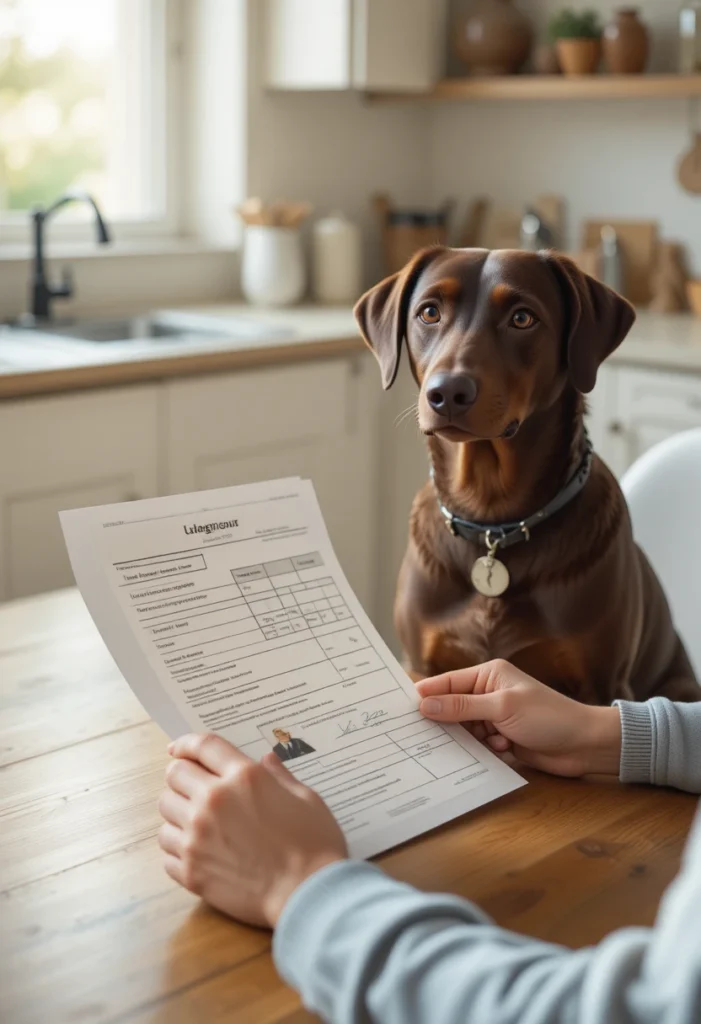
As soon as it’s safe to do so, get the contact information and rabies vaccination records of the dog that bit yours (or confirm it belongs to a known neighbor or the dog park). This detail matters far more than most owners realize if any infection develops later.
Building a Dog First Aid Kit for Bite Wounds
Save this checklist so you’re never caught without supplies:
- Non-latex gloves
- Saline solution or sterile wound flush
- Clean gauze pads and rolled gauze
- Vet wrap (self-adhering bandage)
- Blunt-tip scissors for trimming fur
- A soft muzzle
- Pet-safe antiseptic (vet-approved)
- Your vet’s phone number and the nearest emergency animal hospital’s number, saved and easy to find
What to Expect in the Days After a Bite Wound
Quick summary: healing isn’t always a straight line, and that’s normal to watch for not panic over.
- Day 1–2: Mild swelling, tenderness, and some bruising around the wound is expected.
- Day 2–4: This is when hidden infections often surface watch closely for increasing redness, warmth, or discharge.
- Day 5–7: Swelling should be visibly decreasing; a wound that’s still growing at this point needs a vet visit.
- Week 2+: Most minor wounds are visibly healing well; deeper puncture wounds may still need monitoring for abscess formation even after the surface looks fine.
Signs of Infection: When Home Care Isn’t Enough Anymore
Call your vet promptly if you notice:
- Increasing redness, swelling, or warmth around the wound
- Pus or foul-smelling discharge
- A wound that reopens or won’t stop weeping fluid
- Your dog becomes lethargic, feverish, or stops eating
- A firm, painful lump forming near the bite site (a possible abscess)
This is the idea most home-care guides bury: bite wounds create the perfect environment for bacteria because they’re deep, narrow, and close over on the surface fast which is exactly why even a “small” bite almost always deserves a vet check, not just home treatment.
Frequently Asked Questions
Can I treat my dog’s bite wound completely at home without a vet visit?
Only for truly superficial scratches with no puncture, swelling, or bleeding. Most bite wounds even ones that look minor should still be checked by a vet within 24 hours because puncture wounds trap bacteria beneath the skin’s surface.
Should I use hydrogen peroxide to clean a dog bite wound?
No. Hydrogen peroxide and rubbing alcohol can damage healthy tissue and slow healing. Stick to saline solution or a mild, pet-safe cleanser.
How do I know if my dog’s bite wound is infected?
Watch for increasing redness, swelling, warmth, pus or discharge, a foul odor, or your dog becoming lethargic or losing their appetite. Any of these warrant a prompt vet visit.
Does my dog need antibiotics after a bite wound?
Many dogs do, since bite wounds carry a high risk of bacterial infection. Only a vet can determine if and which antibiotic is appropriate never give your dog human medication or leftover prescriptions without veterinary guidance.
What if I don’t know the biting dog’s vaccination status?
Contact your vet as soon as possible. They can advise on monitoring, and if there’s any rabies exposure risk, your dog’s own vaccination records will guide next steps.
Final Thoughts
A calm, prepared response in the first few minutes after a dog bite can make a real difference in how smoothly your dog heals but home first aid is the first chapter, not the whole story. Clean the wound, control the bleeding, keep your dog calm and protected, and treat a same-day or next-day vet visit as the default, not the exception. Bite wounds are sneaky, and the ones that look the most minor are often exactly the ones that need a professional set of eyes.