
Ever caught your dog staring at your dinner plate like it holds the secrets of the universe? That look is basically your dog begging you to let them in on the good stuff. And honestly, they’re onto something because what goes into a bowl of homemade dog food is worlds apart from what’s hiding in a bag of mystery-meat kibble.
If you’ve ever stood in the pet food aisle squinting at an ingredient list you can’t pronounce, you’re exactly who this guide is for. Below you’ll find 11+ homemade dog food recipes that are simple enough for a weeknight, balanced enough for regular feeding (with a vet’s sign-off), and tasty enough that your dog will do that full-body wiggle the second the bowl hits the floor.
We’ll cover protein-packed meals for active dogs, gentle recipes for sensitive tummies, freezer-friendly batches for busy weeks, and a few bonus treat ideas to sneak in at the end. Grab a notebook (or just bookmark this page) your dog’s new favorite dinner is coming right up.
Why Make Your Own Dog Food at Home?
Before we get to the good stuff, let’s talk about why so many pet parents are ditching the kibble bag for a mixing bowl.
- You control every ingredient. No fillers, no mystery meat, no preservatives you can’t spell.
- It’s easier to manage allergies. If your dog reacts to chicken, dairy, or grains, homemade meals let you swap ingredients without guesswork.
- Freshness matters. Home-cooked meals are made with real food, cooked shortly before storing, not processed and sealed months in advance.
- It can be surprisingly budget-friendly. Buying proteins and veggies in bulk and batch-cooking often costs less than premium commercial food.
One important note before you start: homemade dog food should be nutritionally balanced, which usually means adding a vet-approved supplement or vitamin blend, especially for long-term feeding. A quick check-in with your vet or a canine nutritionist can help you fine-tune portions and supplements for your dog’s breed, age, and health needs. Think of the recipes below as a fantastic starting point, not a substitute for that conversation.
Quick Ground Rules Before You Start Cooking
Save this section it’s the cheat sheet you’ll want to reference every time you cook.
Safe, dog-friendly staples:
- Proteins: chicken, turkey, lean beef, lamb, white fish, eggs
- Carbs: brown rice, white rice, oats, sweet potato, pumpkin, quinoa
- Veggies: carrots, green beans, peas, spinach, zucchini, broccoli (in moderation)
- Healthy fats: a small drizzle of olive oil or fish oil
Foods to never feed your dog:
- Onions and garlic
- Grapes and raisins
- Chocolate
- Xylitol (found in sugar-free products)
- Cooked bones (they splinter)
- Excess salt, sugar, or seasoning
Storage basics:
- Refrigerate cooked dog food in an airtight container for up to 4–5 days.
- Freeze individual portions for up to 2–3 months ice cube trays or silicone muffin molds make perfectly portioned, grab-and-go servings.
- Always thaw in the fridge overnight, never on the counter.
Alright, aprons on. Let’s get cooking.
1. Classic Chicken & Rice Comfort Bowl
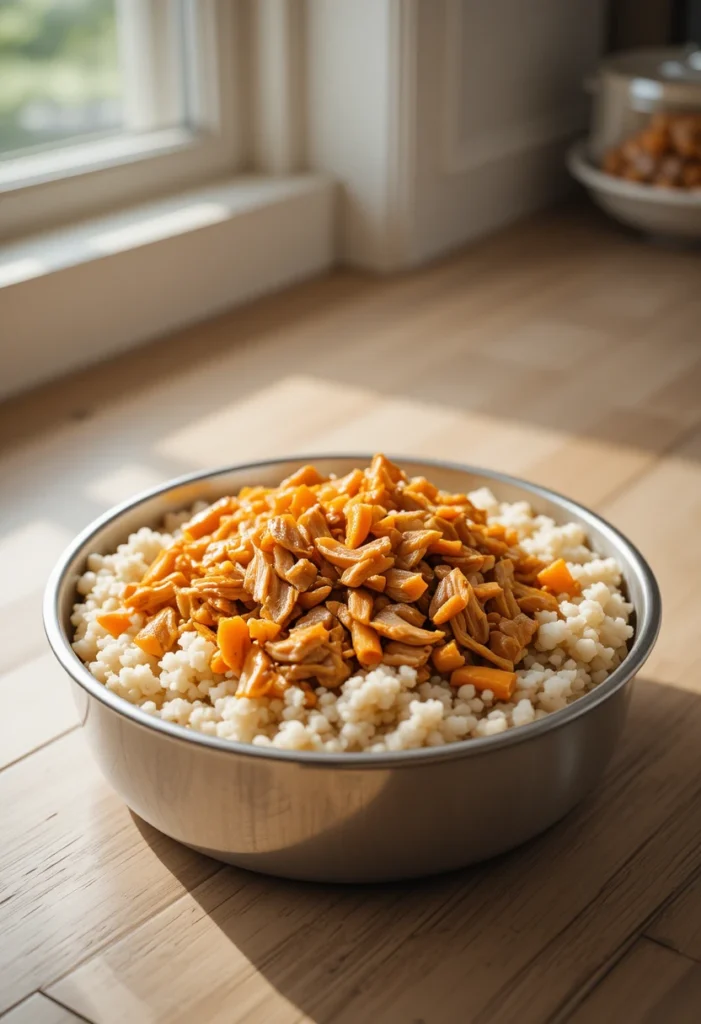
This is the homemade dog food equivalent of a warm hug it’s often the first recipe vets recommend when a dog has an upset stomach.
You’ll need: boneless chicken breast, white rice, carrots, green beans, a splash of olive oil.
Simmer the chicken in water until fully cooked, then shred it. Cook the rice separately, steam the carrots and green beans until soft, and combine everything with a light drizzle of olive oil. Let it cool completely before serving.
Read Also: 12+ Grain-Free Dog Food Pros and Cons Every Owner Should Know Before Switching
2. Ground Turkey & Sweet Potato Power Bowl
A lean, muscle-friendly meal that’s especially great for active or working dogs.
You’ll need: ground turkey, mashed sweet potato, spinach, peas.
Brown the turkey thoroughly in a skillet, breaking it apart as it cooks. Steam and mash the sweet potato, then wilt the spinach in with the peas. Mix everything together in one big pot for an easy one-bowl meal.
3. Beef & Brown Rice Recovery Meal
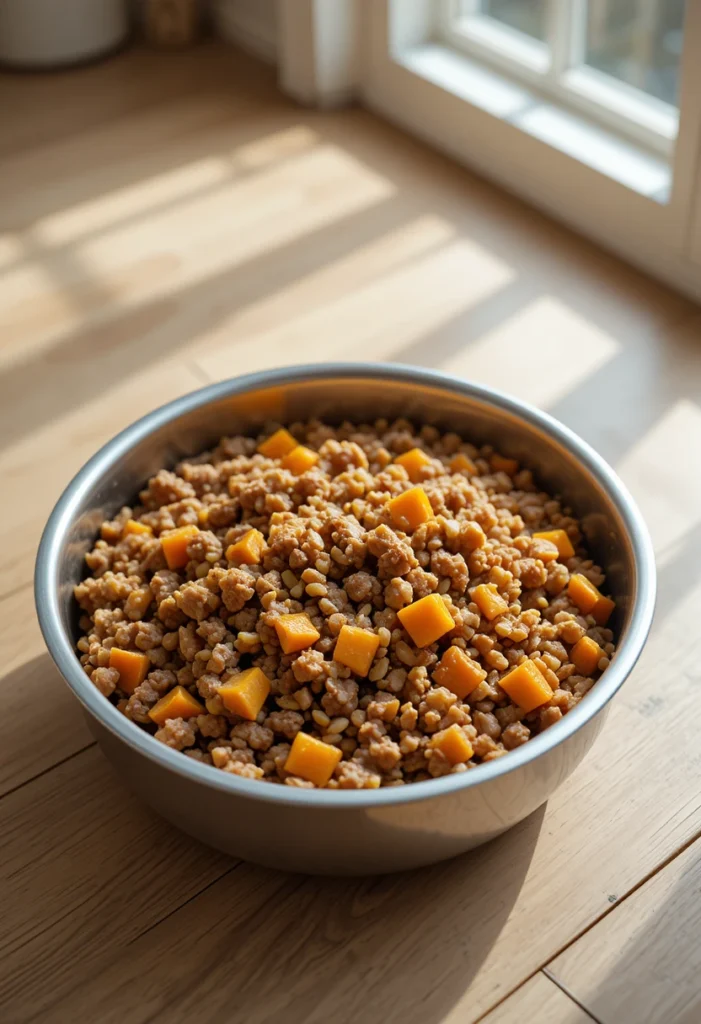
This hearty combo is a favorite for dogs who need a little extra iron and protein, like larger breeds or dogs bouncing back from illness.
You’ll need: lean ground beef, brown rice, carrots, a few spoonfuls of plain pumpkin puree.
Cook the brown rice ahead of time since it takes longest. Brown the beef fully, drain excess fat, then fold in the cooked rice, shredded carrots, and pumpkin puree for extra fiber and a naturally sweet flavor dogs love.
4. Salmon & Quinoa Omega Bowl
For dogs with dull coats or dry, itchy skin, this one’s a game-changer thanks to the omega-3s in salmon.
You’ll need: cooked, deboned salmon (fresh or canned in water), quinoa, zucchini, a small amount of fish oil.
Cook the quinoa according to package directions and steam the zucchini until tender. Flake the salmon (double-check for bones), then combine everything with a touch of fish oil for extra shine-boosting benefits.
5. Lamb & Barley Stew for Sensitive Stomachs
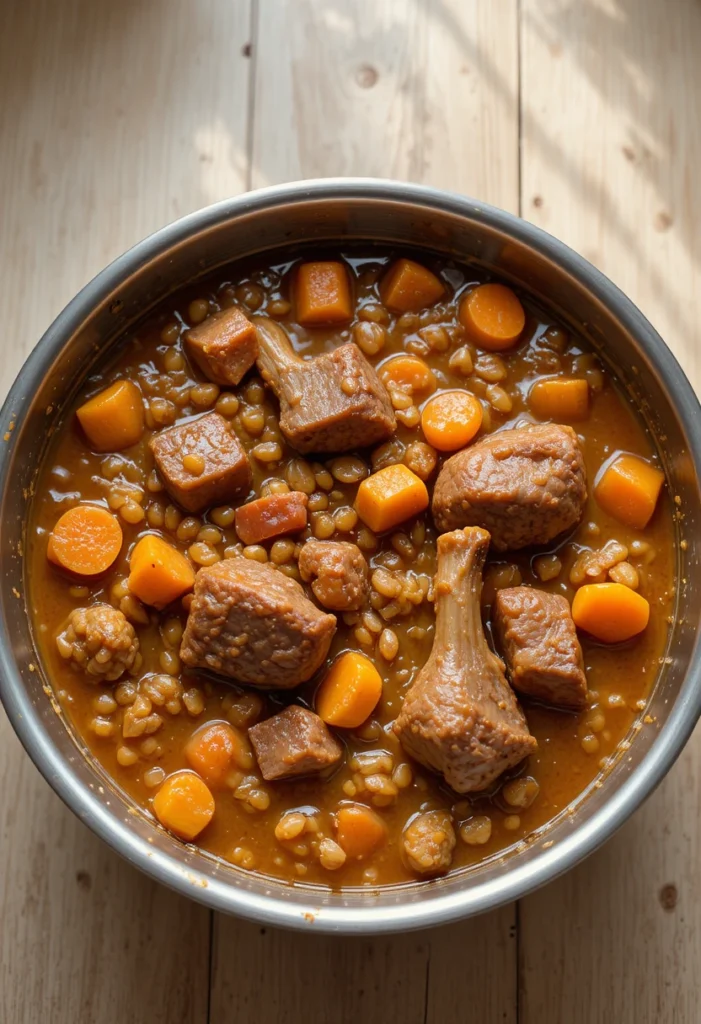
Lamb is a novel protein for a lot of dogs, which makes this a great option if your pup has never tried it before and may have chicken or beef sensitivities.
You’ll need: ground lamb, barley, green beans, carrots.
Cook the barley separately since it takes a while to soften. Brown the lamb, drain any excess fat, then combine with the cooked barley and steamed veggies.
6. Turkey & Pumpkin Slow Cooker Stew
This is the ultimate “set it and forget it” recipe for busy weeks.
You’ll need: ground turkey, pumpkin puree, carrots, rice, low-sodium broth.
Add everything to a slow cooker on low for 4–6 hours, stirring occasionally. The pumpkin naturally thickens the stew and adds a gentle dose of fiber that’s great for digestion.
7. Grain-Free Chicken & Veggie Medley
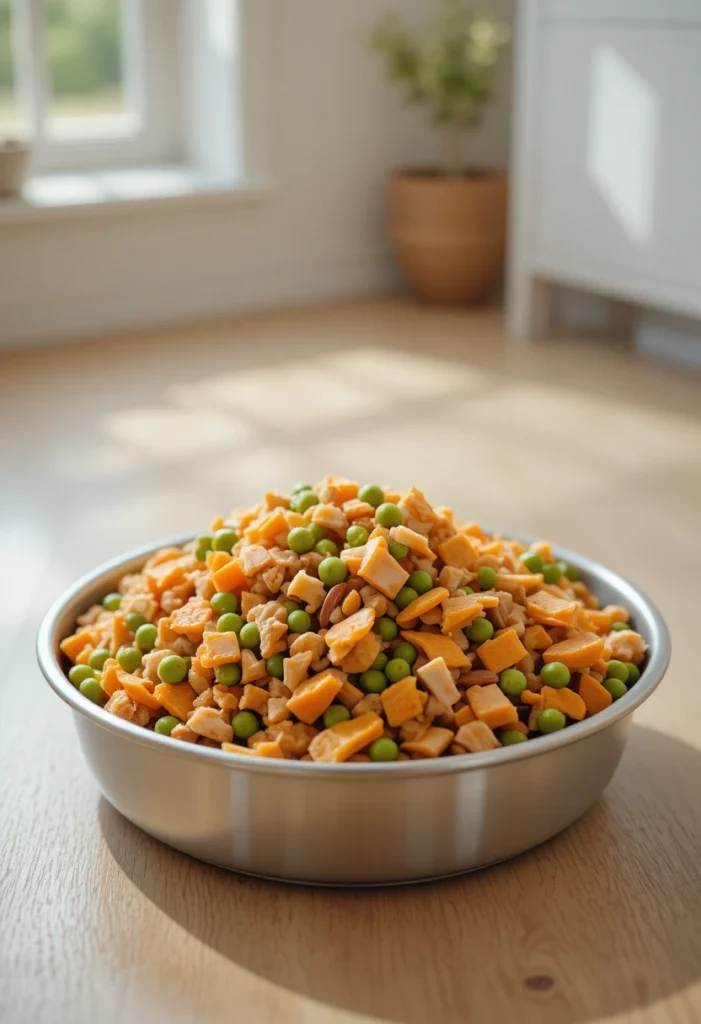
Perfect for dogs with grain sensitivities or owners who simply prefer a grain-free diet.
You’ll need: chicken thighs (skinless), sweet potato, green beans, carrots, peas.
Boil and shred the chicken thighs, then steam all the vegetables until fork-tender. Mash the sweet potato slightly so it binds the mixture together, then mix everything in a large bowl.
8. Egg & Oatmeal Breakfast Bowl for Puppies
Growing puppies need extra protein and calcium, and this gentle breakfast bowl delivers both.
You’ll need: scrambled eggs (no oil, salt, or butter), plain oatmeal, a spoonful of plain yogurt.
Cook the oatmeal with water (never milk), scramble the eggs plain, and mix in a small spoonful of plain, unsweetened yogurt once everything has cooled. This is a great topper meal rather than a full standalone dinner.
9. Senior Dog Soft Stew
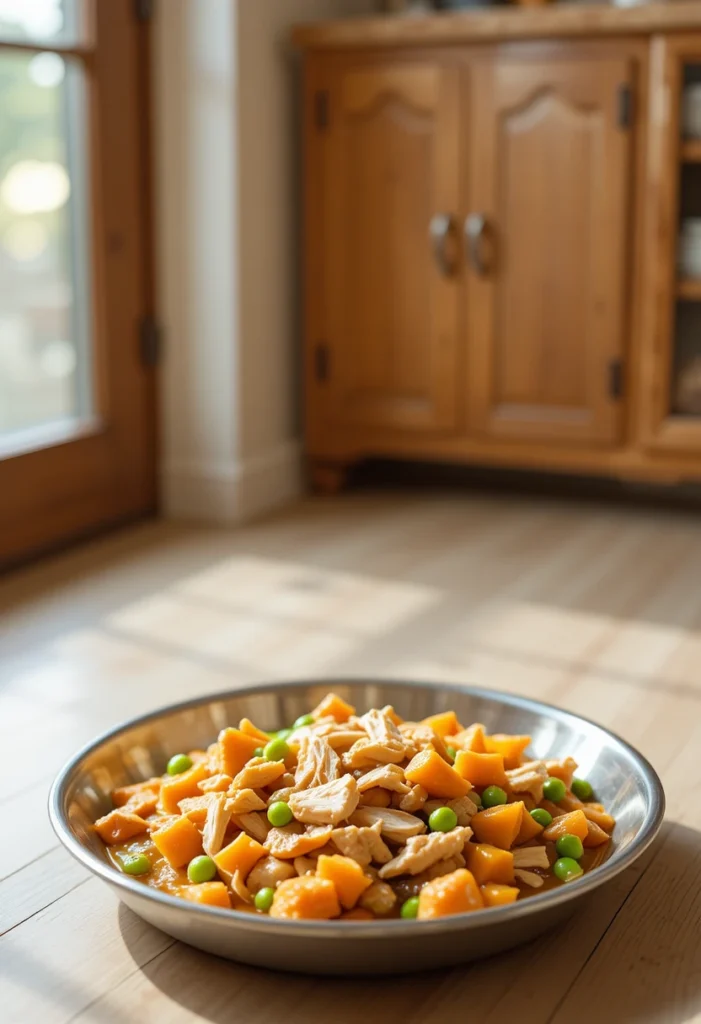
Older dogs often need softer textures and joint-friendly ingredients, and this stew checks both boxes.
You’ll need: ground turkey or shredded chicken, mashed sweet potato, pumpkin puree, a small amount of fish oil for joint support.
Cook the protein thoroughly, then mash it slightly with a fork for easier chewing. Combine with the mashed sweet potato and pumpkin for a soft, easy-to-digest texture that’s gentle on aging teeth and stomachs.
10. Weight-Management Turkey & Green Bean Bowl
For dogs who need to shed a few pounds, this lean, high-fiber, low-fat recipe keeps them satisfied without excess calories.
You’ll need: extra-lean ground turkey, green beans, carrots, a small portion of brown rice.
Brown the turkey and drain thoroughly to remove excess fat. Steam the green beans and carrots (green beans are naturally low-calorie and filling), and mix with a modest portion of brown rice to round out the meal.
11. No-Cook Frozen Fruit & Veggie Bites (Bonus Treat Recipe)
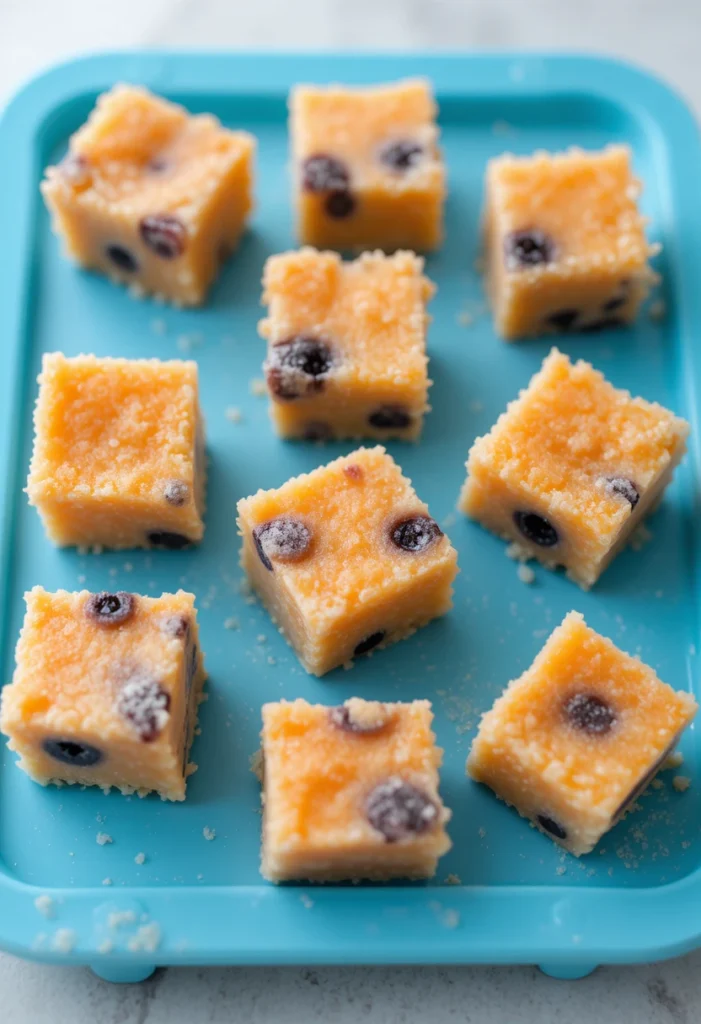
Not a full meal, but a refreshing, hydrating treat, especially in warmer months.
You’ll need: plain yogurt, mashed banana, a few blueberries.
Mix the yogurt and mashed banana together, fold in the blueberries, then spoon the mixture into an ice cube tray or silicone mold and freeze for a few hours.
12. Peanut Butter & Banana Baked Bites (Bonus Treat Recipe)
A crowd-pleasing treat that doubles as a great training reward.
You’ll need: mashed banana, natural peanut butter (xylitol-free), oat flour.
Combine the mashed banana and peanut butter, then stir in enough oat flour to form a soft dough. Roll into small balls, flatten slightly, and bake at 350°F for about 15–18 minutes until firm.
How to Meal Prep Homemade Dog Food Like a Pro
Batch cooking is where homemade dog food really earns its keep. Here’s how to make it painless:
- Pick one or two recipes and double the batch.
- Portion into daily servings using containers or silicone muffin trays.
- Freeze what you won’t use in 4–5 days.
- Label everything with the recipe name and date so nothing gets forgotten in the back of the freezer.
- Thaw overnight in the fridge, never at room temperature.
A few hours of cooking on a Sunday can easily cover an entire week of meals, which makes this way more sustainable than it sounds.
Frequently Asked Questions
Is homemade dog food actually healthier than store-bought?
It can be, especially because you control every ingredient and avoid fillers or preservatives. That said, homemade meals need proper balancing (vitamins, minerals, calcium) to be safe as a long-term, everyday diet, so it’s worth checking in with your vet.
How much homemade food should I feed my dog?
Portions depend on your dog’s weight, age, activity level, and health, so there’s no single answer. A good starting point is feeding a similar volume to what you’d normally serve in kibble, then adjusting based on your vet’s guidance and your dog’s body condition.
Can I switch my dog to homemade food overnight?
It’s best to transition gradually over 5–7 days, mixing in a little more homemade food each day, to avoid an upset stomach.
Do I need supplements for homemade dog food?
Usually, yes, for regular long-term feeding. Meat and veggies alone often miss certain vitamins and minerals, so a vet-recommended supplement blend helps round out the meal.
Can puppies eat homemade dog food?
Yes, but puppies have different nutritional needs than adult dogs, especially around calcium and protein ratios, so it’s best to work with your vet to build a puppy-appropriate version of these recipes.
Final Thoughts
Cooking for your dog doesn’t have to mean hours in the kitchen or a culinary degree it just means real ingredients, a little planning, and a lot of tail wags waiting on the other side. Whether you start with the classic chicken and rice bowl or go straight for the salmon and quinoa combo, your dog is about to have some seriously good dinners ahead.