
Here’s the thing: the milk your puppy’s mother gave them in their first days of life came loaded with maternal antibodies, a temporary shield that protects them from disease. But that shield doesn’t last. It starts fading around 6 weeks and can be completely gone by 16 weeks and until your puppy’s own immune system takes over the job, they’re vulnerable to some of the deadliest diseases in dogs, including parvovirus and distemper.
That’s exactly why the puppy vaccination schedule isn’t a “get it done whenever” task. It’s a week-by-week countdown, and the timing matters almost as much as the shots themselves. Get it right, and your puppy builds bulletproof immunity right on schedule. Get it wrong skip a booster, wait too long between doses and you leave a window open for exactly the diseases the vaccines were designed to block.
Below is the complete puppy vaccination schedule broken down week by week, from 6 weeks old all the way to their 1-year booster, plus exactly what to expect after each shot, what it actually costs, and the mistakes that quietly delay your puppy’s protection.
Why Timing Matters More Than the Vaccine Itself
Every puppy is born with almost no working immune system of their own. The antibodies they get from their mother’s first milk (colostrum) act as a stand-in defense system but here’s the catch: those same maternal antibodies can also block a vaccine from working if it’s given too early.
That’s why vaccines aren’t given as a single shot. They’re given in a series, spaced two to four weeks apart, so that as the maternal antibodies fade, a vaccine dose is timed to land right when your puppy’s own immune system can actually respond to it. Miss that window on either side, and the vaccine has to be repeated.
Puppy Vaccination Schedule Week by Week
Here’s the full breakdown. Bookmark this section it’s the one you’ll return to before every vet visit.
Weeks 6-8: The First Round
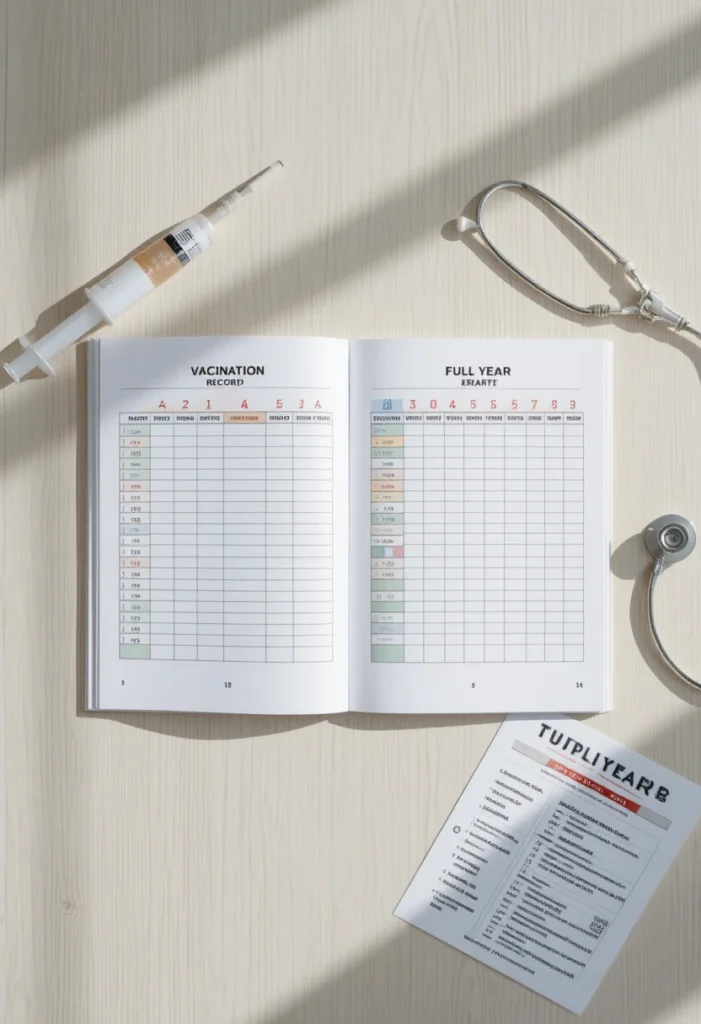
This is where the vaccination clock officially starts.
- Vaccine given: First dose of the core combination vaccine, commonly called DHPP or DAPP (protects against distemper, adenovirus/hepatitis, parvovirus, and parainfluenza)
- Optional at this stage: Bordetella (kennel cough), if your puppy will be around other dogs early (daycare, group puppy classes)
- What it protects against: The most contagious and often fatal illnesses in young dogs this first shot is the single most important one on the entire schedule
Read Also: How to Treat a Dog Bite Wound at Home: 15+ First Aid Ideas Every Owner Should Know
Weeks 9-11: Building the Foundation
- Vaccine given: Second DHPP dose
- Optional: Leptospirosis (if recommended based on your area) and continued Bordetella if not yet given
This booster reinforces the first dose and starts layering real protection on top of what’s fading from the mother’s antibodies.
Weeks 12-14: The Critical Middle Stretch
- Vaccine given: Third DHPP dose
- Optional: Lyme disease vaccine (in areas with high tick exposure), Leptospirosis second dose if the series was started
This is often the stage where new puppy parents start easing into supervised socialization more on exactly what’s safe and what isn’t a little further down.
Weeks 14-16: Core Series Wraps Up + Rabies Begins
- Vaccine given: Final DHPP booster, plus the rabies vaccine (required by law in most places)
- Optional: Final Leptospirosis or Lyme dose if that series is running
Save-worthy callout: By the end of week 16, your puppy should have completed their entire core vaccine series. This is the milestone every previous shot was building toward.
Weeks 16-18: The “Fully Protected” Checkpoint
Your puppy isn’t instantly bulletproof the moment the last shot is given their immune system needs roughly one to two weeks after the final booster to build full protection.
- Most vets confirm full core protection somewhere in this window
- This is generally the point where unrestricted walks, dog parks, and off-leash areas become safe (always confirm with your own vet first)
6 Months: Bordetella/Lifestyle Boosters Check-In
If your puppy is in daycare, boarding, training classes, or dog parks regularly, this is a natural point to confirm any lifestyle vaccines (Bordetella, canine influenza) are current, since some of these need annual or even twice-yearly boosters depending on exposure.
1 Year: The Adult Booster Round
- Vaccines given: DHPP booster, rabies booster (frequency depends on your state/local law — sometimes annual, sometimes every 3 years), plus any lifestyle vaccines your dog’s routine calls for
This is the shot that officially transitions your dog from “puppy schedule” to “adult maintenance schedule,” usually annual or triennial from here on.
Core vs. Non-Core (Lifestyle) Vaccines: What’s the Difference?
Not every vaccine on this list applies to every puppy and that trips a lot of new owners up.
Core vaccines are considered essential for every puppy, everywhere, regardless of lifestyle:
- DHPP (distemper, hepatitis/adenovirus, parvovirus, parainfluenza)
- Rabies
Non-core (lifestyle) vaccines depend on your specific dog’s environment and risk exposure:
- Bordetella (kennel cough) — recommended for dogs going to daycare, boarding, or group classes
- Leptospirosis — recommended in areas with wildlife, standing water, or farmland exposure
- Lyme disease — recommended in regions with high tick populations
- Canine influenza — recommended for dogs frequently around large groups of other dogs
So what does this mean for you? Your vet will tailor the “optional” portion of this schedule to where you live and how your puppy will spend their time the core vaccines, though, are non-negotiable for every puppy.
What Each Vaccine Actually Protects Against
It’s easy to nod along at vet visits without really knowing what’s in the syringe. Here’s the plain-language breakdown:
- Distemper: A highly contagious virus attacking the respiratory, nervous, and digestive systems often fatal, and there’s no cure once a dog is infected.
- Hepatitis (Adenovirus): Targets the liver and respiratory system.
- Parvovirus: One of the most dangerous puppy diseases causes severe vomiting and bloody diarrhea and can be fatal within days without treatment.
- Parainfluenza: A respiratory virus and one of several contributors to kennel cough.
- Rabies: A fatal viral disease affecting the brain and nervous system, transmissible to humans which is why it’s legally required almost everywhere.
- Leptospirosis: A bacterial infection that can cause kidney and liver failure, and is also transmissible to people.
- Bordetella: The primary bacterial cause of kennel cough, especially relevant for social puppies.
What to Expect After Each Shot (Normal vs. When to Call the Vet)
This is the part that worries new puppy parents the most so let’s make it simple.
Completely normal, and usually gone within 24-48 hours:
- Mild tiredness or extra sleepiness
- Slight soreness or a small bump at the injection site
- A mild, short-lived drop in appetite
- A slightly lower-than-usual energy level
Bucket brigade: But there’s a short list of signs that mean it’s time to call your vet, not wait it out.
Contact your vet if you notice:
- Persistent vomiting or diarrhea
- Facial swelling, hives, or difficulty breathing
- Collapse or extreme weakness
- Swelling or pain that’s getting worse instead of better after a couple of days
Serious reactions are genuinely rare. The overwhelming majority of puppies have, at most, a sleepy afternoon after their shot and are back to their normal selves the next day.
What Puppy Vaccinations Actually Cost
Budgeting for this matters, because it’s not a one-time expense it’s spread across several visits.
Individual shots typically range from around $15 to $70+ each, depending on your location and vet. Across the full 6-to-16-week core series, most owners end up spending somewhere in the range of $75-$200 total for the core series alone, before adding rabies or any lifestyle vaccines.
Ways to reduce the cost:
- Ask your local animal shelter about low-cost vaccine clinics
- Look into multi-shot wellness packages many vet clinics bundle for puppies
- Check with local pet stores or nonprofits that sometimes host discounted vaccine days
Common Mistakes That Quietly Delay Your Puppy’s Protection
Here’s what most first-time puppy owners get wrong:
- Waiting too long between boosters. Every dose has a window stretching it out doesn’t cause harm, but it does leave your puppy unprotected longer than necessary.
- Assuming one shot equals “done.” A single DHPP dose provides essentially no protection on its own it’s the full series that counts.
- Skipping the “two-week buffer” after the final shot. Full protection isn’t immediate. Give it that extra week or two before assuming your puppy is in the clear.
- Avoiding all socialization until 18+ weeks. This backfires just as much as vaccinating too early puppyhood has a critical socialization window that closes around 12-16 weeks, so missing it entirely can create long-term behavior issues.
Safe Socialization Before Vaccines Are Complete
You don’t have to lock your puppy indoors until every shot is done you just have to be smart about where they go.
Generally considered lower-risk:
- Your own backyard (if no unvaccinated or sick dogs have been there recently)
- Homes of friends/family with fully vaccinated, healthy dogs
- Carrying your puppy (not letting paws touch the ground) in public places to soak up sights and sounds
Best to wait on until the core series is complete:
- Dog parks
- Pet stores with open floor access
- Group walks with unknown dogs
- Boarding or communal daycare (unless the facility requires proof of at least partial vaccination)
Frequently Asked Questions
What if I miss a scheduled vaccine appointment?
Your vet will adjust the timeline you don’t have to restart from scratch in most cases, but don’t wait too long to reschedule, since gaps can weaken the immune response the series is designed to build.
Can puppies play with each other before they’re fully vaccinated?
Supervised interaction with other healthy, vaccinated puppies in a controlled setting (like a reputable puppy class that requires proof of first shots) is generally considered acceptable open dog parks are the bigger risk.
Do small breeds need a different schedule than large breeds?
The core timing is the same across breeds size doesn’t change the immunology, though your vet may adjust dosing or scheduling slightly for very small or fragile puppies.
Is the rabies vaccine really required?
In most U.S. states and many countries, yes it’s legally mandated, not optional, separate from the core disease-protection vaccines.
How long does puppy vaccine immunity last?
Core vaccines typically provide protection for at least a year, often longer, which is why the schedule shifts to annual or multi-year boosters after the 1-year mark.
The Bottom Line
Your puppy’s vaccination schedule looks like a lot of appointments crammed into a few short months because it is. But every single one of those visits, from week 6 through the 1-year booster, is closing a gap that disease could otherwise slip through.